Blog
How to Modernize Your Medical Lab Without Disruption
July 22, 2026
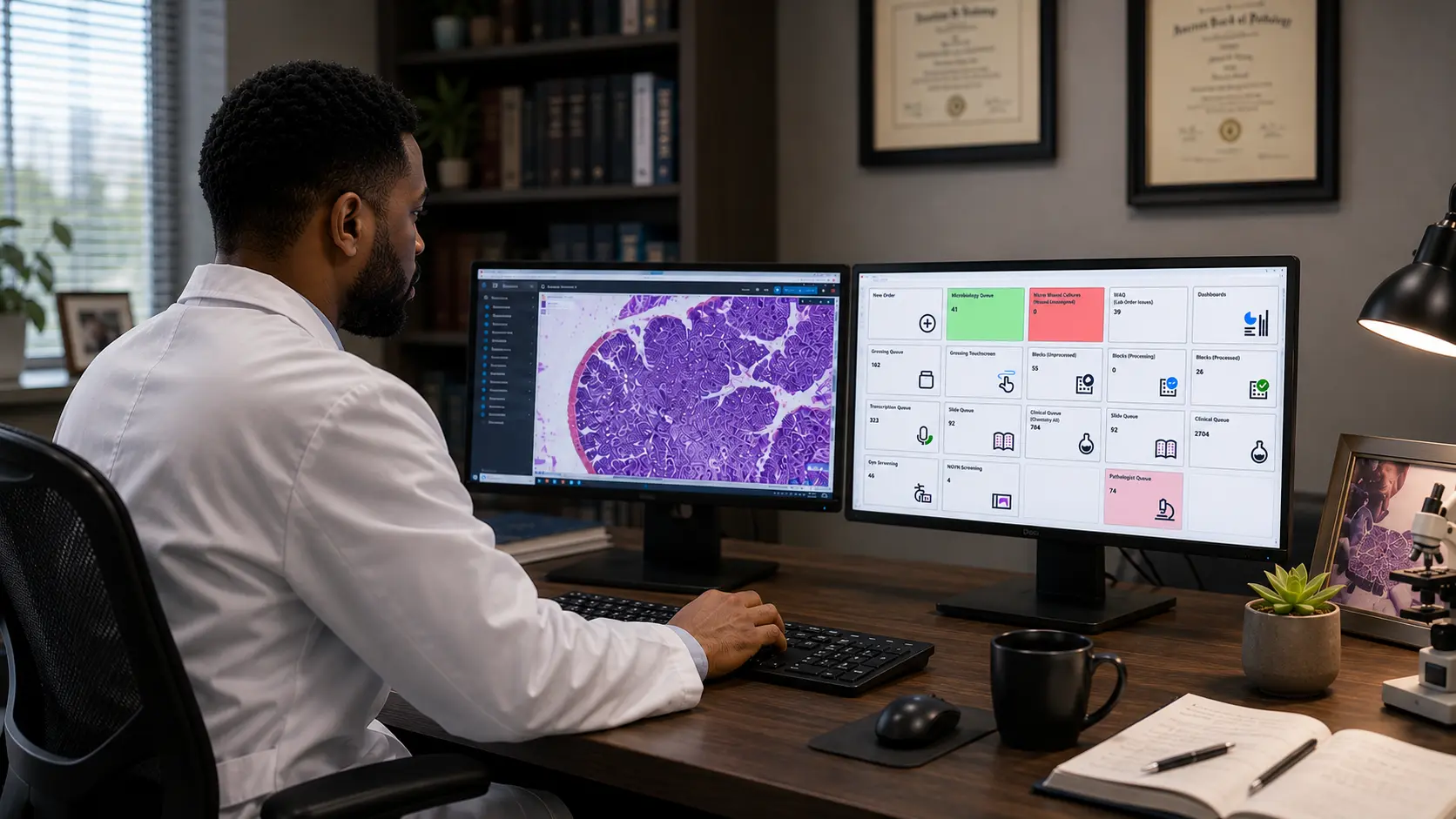
Clinical laboratories and pathology practices have never faced more competing pressures. Staffing shortages continue to strain operations, reimbursement rates are declining, testing volumes and complexity are increasing, regulatory requirements are evolving, and healthcare providers expect no less than faster turnaround times, greater transparency, and seamless digital connectivity. At the same time, laboratories must find ways to improve productivity, control costs, expand services, and maintain exceptional quality without overburdening already stretched teams.
Given these challenges, it's understandable why many lab leaders hesitate to replace their laboratory information system (LIS) software, fearing widespread disruption that would negatively impact essential patient care. Yet delaying modernization creates even greater risks. Legacy laboratory information system software and disconnected laboratory software systems become increasingly difficult to maintain, limiting automation, restricting growth, reducing visibility, and making it harder to compete in an industry that continues to evolve at a rapid pace.
The testing organizations that continue to thrive aren't necessarily those with the largest budgets or the most staff. They're the labs willing to invest strategically in technologies that improve laboratory workflow management, streamline clinical and pathology operations, and position them for long-term success. With a modern laboratory information system and an experienced implementation partner, laboratories can modernize with minimal disruption, protect revenue throughout the transition, and build a more agile organization that's ready for whatever comes next.
Industry Insights: Best LIS Systems - Top Laboratory Information Systems Compared for Clinical, Pathology, and Outreach Labs
Why Laboratory Modernization Can No Longer Wait
Today's laboratory leaders have moved far beyond managing specimens. They're now overseeing complex organizations responsible for clinical quality, operational efficiency, financial performance, regulatory compliance, physician satisfaction, patient engagement, and business growth.
Modern laboratories require technology capable of supporting:
- Silo-free laboratory workflow management across every department
- Transparent laboratory revenue cycle management
- Advanced digital pathology solutions
- High-performing outreach programs
- Scalable direct-to-consumer lab testing
- Connected AI-enabled automation
- Market-leading reporting and analytics
- Streamlined interoperability with EHRs, analyzers, and third-party applications
Unfortunately, many laboratories continue operating with laboratory information systems originally designed decades ago. These legacy platforms often struggle to support modern diagnostic workflows because they were built for a very different healthcare environment.
Industry Insights: The Rise and Fall of CoPath LIS - A Legacy Casualty of the Modern Lab Information System Era
The Hidden Cost of Delaying Modernization
Many laboratories delay replacing their LIS because their existing platform still appears to be "good enough."
However, what appears to be stability often masks high operational costs.
Legacy laboratory information system software frequently creates:
- Manual data entry and duplicate work
- Fragmented laboratory workflow management
- Limited automation
- Poor interoperability
- Data silos between operations and laboratory billing departments
- Slow or rigid report customization
- Limited business intelligence
- Growing cybersecurity concerns
- Difficulty supporting new testing services
- Higher labor costs
Most importantly, outdated laboratory information systems limit an organization's ability to adapt as healthcare continues to evolve.
The opportunity cost of delaying modernization often exceeds the investment required to implement a modern medical LIS solution.
Discover More: Is Your Laboratory Information System Able to Support the Latest LIS System Technology?

Why Some Laboratories Hesitate
Despite understanding these challenges, many organizations still postpone modernization.
Common concerns include:
"Implementation will interrupt operations."
Clinical laboratories process hundreds or thousands of specimens every day. Leaders naturally worry that replacing their laboratory information system could delay testing or disrupt patient care.
"Staff won't adapt."
Employees who have used the same lab information system application for years may be reluctant to change familiar workflows.
"We'll lose productivity."
Many laboratories fear temporary productivity losses during an implementation.
"The financial investment is too large."
Leadership teams often focus on implementation costs without considering the ongoing expense of maintaining inefficient workflows.
"Our current system still works."
This may be the most common reason of all.
But "working" and "supporting long-term growth" are not the same thing.
Discover More: The Foundation of Digital Pathology - Flexible Laboratory Information Systems Built for Growth
Successful Laboratories Choose Progress Over Comfort
The laboratories achieving the greatest success today didn't eliminate uncertainty before modernizing; they developed a strategy to manage it.
Rather than asking whether change would be disruptive, they asked whether remaining on outdated systems posed an even greater risk.
Consider these examples.
Avero Diagnostics
Avero Diagnostics faced a backlog of approximately 47,000 unprocessed laboratory billing encounters thanks to major problems with a leading lab revenue cycle management platform.
Soon after the decision was made to migrate from the existing laboratory billing software and team up with LigoLab for both its laboratory information system and laboratory billing solutions, the organization eliminated the backlog within six weeks, recovering approximately $4.75 million in revenue. Beyond the immediate financial recovery, Avero also optimized operational visibility, strengthened revenue integrity, and established workflows that could support continued growth (read case study below).
Eastern Connecticut Pathology Consultants (ECPC)
Recognizing the need to evolve, Eastern Connecticut Pathology Consultants (ECPC) modernized its operations by integrating Proscia's Concentriq digital pathology platform with LigoLab's all-in-one laboratory information system (LIS) and laboratory revenue cycle management (RCM) platform. The unified solution seamlessly connected accessioning, slide scanning, image management, reporting, and case sign-out, enabling pathologists to launch the correct digital slides directly from the LIS with a single click.
The result was faster collaboration, improved efficiency, projected annual courier savings exceeding $200,000, and peer review times reduced from days to just 10–15 minutes. Most importantly, the modern LIS provided the interoperability and scalability needed to support AI-driven diagnostics and future growth (read case study below).
Case Study: ECPC’s Strategic Leap into Digital Pathology - A Connected Vision for the Future
Goldfinch Laboratory
Rather than building around outdated technology, Goldfinch Laboratory selected LigoLab’s modern laboratory information system, designed to support future growth from the start.
That technology investments fueled remarkable growth, with Goldfinch expanding from processing just four blocks on its first day to more than 400 blocks per day within two years. By combining a modern medical LIS with the latest digital pathology solutions, the practice attracted top pathology talent, streamlined laboratory workflow management, improved operational efficiency, and positioned itself to support future automation and AI initiatives (see case study below).
Case Study: From Launch to Lift-Off - Highlighting Goldfinch Laboratory’s Formula for Rapid Growth
These organizations demonstrate an important lesson for all…Successful laboratories don't modernize because they have no concerns. They modernize because they recognize that the greater risk is falling behind.
Discover More: Comparing the LigoLab Informatics Platform with Legacy Laboratory Information System Software
The Laboratory Information System Is the Foundation of Modernization
Many laboratory leaders assume modernization requires purchasing multiple software solutions. In reality, it begins with the laboratory information system, the operational hub of today's most successful testing organizations.
The best LIS software platforms have evolved far beyond traditional, passive laboratory information systems into unified and proactive enterprise informatics platforms. They serve as the central foundation that connects every aspect of laboratory operations, including:
- Specimen tracking
- Quality management
- Digital pathology
- Laboratory billing
- Lab revenue cycle management
- Reporting and analytics
- Automation
- Artificial intelligence
- Patient engagement
- Outreach management
- Compliance
- Business intelligence
Instead of maintaining disconnected systems, forward-thinking laboratories operate from a single source of truth.
This unified architecture eliminates duplicate data entry, reduces manual processes, improves visibility, and enables leadership to make faster, more informed decisions.
Industry Insights: From System of Record to LIS System of Action - The Next Evolution of Laboratory Information Systems

Modernization Is About Building for the Future
Healthcare will continue evolving.
Artificial intelligence, precision medicine, molecular diagnostics, consumer-driven testing, and increasingly sophisticated reimbursement requirements will reshape operations and finances for years to come.
Laboratories powered by modern laboratory information systems are better positioned to adapt to change.
Those relying on aging software may find themselves unable to compete, not because of clinical expertise, but because their technology cannot support the future of laboratory medicine.
Discover More: Navigating the Future of Pathology - The LigoLab Advantage
Modernize Without Missing a Step
Successful laboratory modernization starts with the right implementation strategy. LigoLab's proven implementation methodology is designed to minimize disruption while maximizing long-term success.
If you're ready to replace your legacy laboratory information system with a modern, scalable informatics platform, request a personalized LigoLab demonstration to learn how your laboratory can modernize without disruption.
Act Now: Speak with a LigoLab Product Specialist!
Frequently Asked Questions about Advanced Laboratory Information System Software and Modernizing Without Disruption
What is laboratory modernization?
Laboratory modernization is the process of replacing outdated technology and manual workflows with integrated laboratory information systems, workflow automation, analytics, and digital tools that improve efficiency, scalability, compliance, and patient care.
Why is a modern laboratory information system important?
A modern laboratory information system serves as the operational foundation of today's laboratory by connecting reporting, specimen tracking, laboratory billing, analytics, automation, and interoperability within a single platform.
Why do laboratories delay replacing legacy LIS systems?
Common concerns include fear of implementation disruption, employee resistance to change, temporary productivity loss, budget limitations, and uncertainty about the migration process. However, delaying modernization often leads to operational inefficiencies and limits future growth.
How can laboratories modernize without disrupting operations?
Successful laboratories partner with experienced laboratory information system vendors that follow structured implementation methodologies, including discovery, configuration, testing, validation, parallel workflows, staff training, and phased go-live support to minimize operational disruption.
What features should laboratories look for in a modern LIS system?
Organizations should prioritize configurable laboratory workflow management, interoperability, automation, digital pathology integration, laboratory revenue cycle management, business intelligence, customizable reporting, cybersecurity, cloud readiness, and scalable architecture that supports long-term growth.
How does LigoLab support laboratory modernization?
LigoLab's all-in-one lab information system and laboratory revenue cycle management platform unifies laboratory operations, billing, automation, reporting, digital pathology, interoperability, and patient engagement within a single configurable informatics platform. Combined with a proven implementation methodology, LigoLab helps laboratories modernize confidently while minimizing disruption.