Blog
The Foundation of Digital Pathology: Flexible Laboratory Information Systems Built for Growth

June 9, 2026
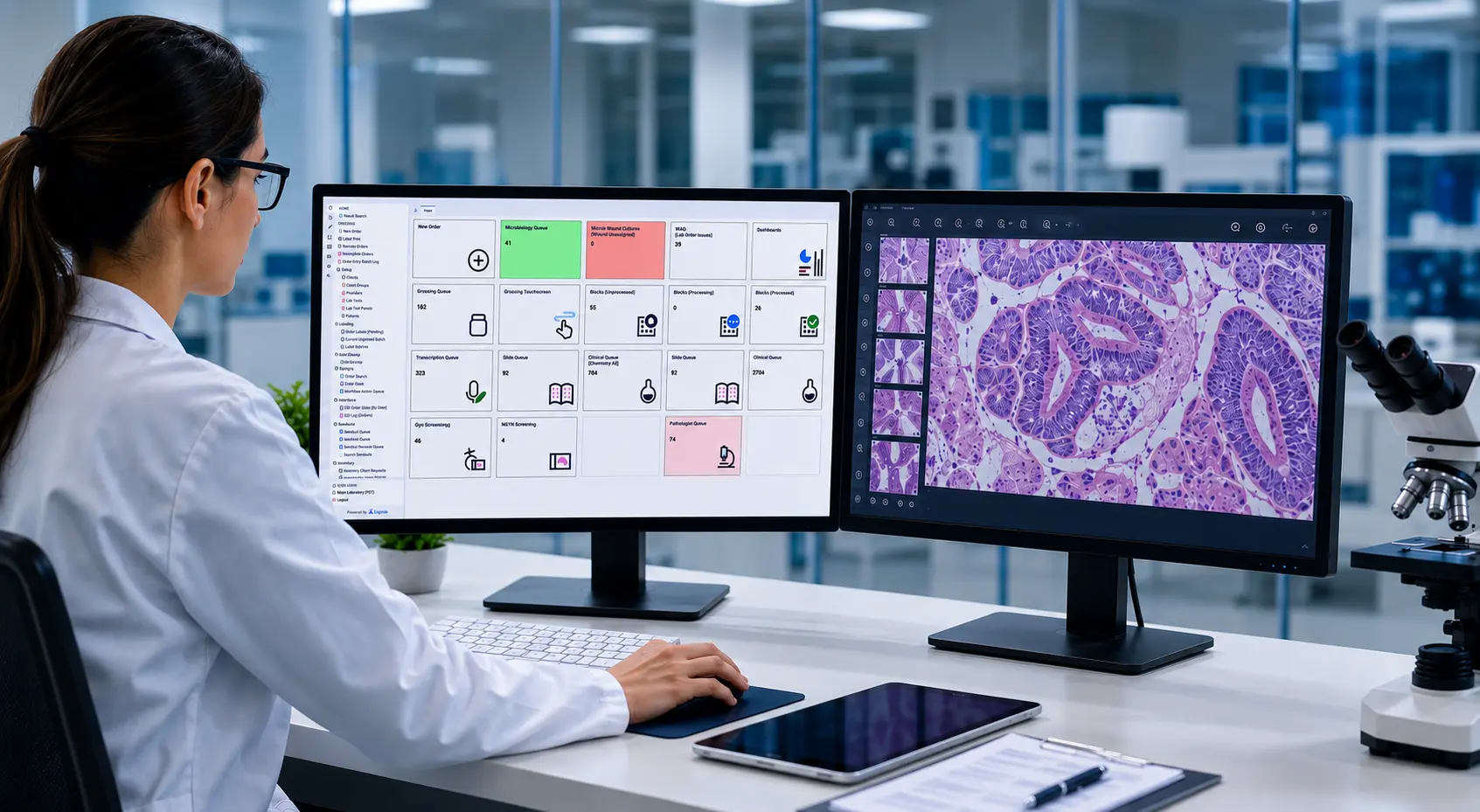
Digital pathology is rapidly transforming lab medicine. Whole-slide imaging, remote case review, artificial intelligence, workflow automation, and integrated diagnostic lab software platforms are changing how pathologists work, collaborate, and scale their operations.
Yet despite the excitement surrounding innovative digital pathology solutions, many groups underestimate a critical reality: digital pathology success depends heavily on the flexibility of the laboratory information system (LIS) that supports it.
A pathology practice can invest in scanners, image management systems, AI tools, and high-speed lab organization software infrastructure, but if its lab information system cannot adapt to evolving workflows, integrate seamlessly with digital pathology platforms, and support highly configurable operational processes, the practice will inevitably encounter bottlenecks that limit adoption and slow growth.
This is why flexibility has become one of the most important considerations when evaluating laboratory information systems for pathology.
The most successful pathology organizations are not simply implementing digital pathology technology. They are building flexible informatics ecosystems that can evolve and align with their businesses.
Industry Insights: How Modern LIS Systems Empower Labs Through Configurable Reporting, Seamless Integration, and True Partnership
Digital Pathology Changes Everything
Traditional pathology workflows were largely designed around physical slides, paper-based processes, and localized review.
Digital pathology fundamentally changes those assumptions.
Pathologists may review cases remotely. Images may originate from multiple scanner vendors. AI algorithms may assist with diagnosis, quality assurance, workload balancing, or coding. Cases may require collaboration among specialists across multiple locations.
As these changes occur, the modern laboratory information system must function as the operational command center connecting every component of the pathology workflow.
Unfortunately, many legacy laboratory information systems were not designed for this level of adaptability.
Instead, they often rely on rigid workflows, limited integration capabilities, excessive customization costs, and fragmented user experiences that create friction as organizations attempt to modernize.
The result is a growing disconnect between what digital pathology technology can accomplish and what the laboratory information system can effectively support.
Industry Insights: Best LIS Systems - Top Laboratory Information Systems Compared for Clinical, Pathology, and Outreach Labs
Why Flexibility Matters More Than Features
Many pathology practices initially focus on feature comparisons when evaluating laboratory information systems.
While functionality is certainly important, flexibility often proves more valuable over time.
A flexible LIS system enables organizations to:
- Adapt workflows without extensive development
- Integrate new digital pathology solutions
- Support multiple subspecialties
- Accommodate growth and acquisitions
- Configure routing rules and case assignment logic
- Introduce AI tools as they emerge
- Scale operations without rebuilding infrastructure
Healthcare is constantly changing. Reimbursement requirements evolve. Staffing models shift. New technologies emerge.
The laboratory information system must be able to evolve and adapt to those changes.
Organizations that prioritize flexibility position themselves to continuously improve rather than repeatedly replace technology.
The importance of flexibility extends beyond operational convenience. It is increasingly recognized as a foundational requirement for successful digital pathology adoption.
In an article published by Pathology News discussing recommendations from the European Society of Pathology, Catarina Eloy, MD, PhD, highlighted the critical role the LIS plays in digital transformation efforts.
“The most important element for a pathology institution to start the digital transformation is to have a dedicated and very plastic laboratory information system with an incorporated tracking system. This resource is lacking in many laboratories and is the basic condition to start.”
Her use of the term "plastic" refers to adaptability and flexibility, the ability of the laboratory information system to evolve alongside changing workflows, technologies, and organizational needs. The observation reinforces what many pathology groups discover during implementation: scanners and image viewers alone do not create a successful digital pathology environment. The laboratory information system serves as the operational foundation that supports every stage of the workflow.
Read the Pathology News Article: Digital Pathology Transformation - Expert Insights on Navigating the Future of Diagnostic Practice
Eliminating Bottlenecks Across Histology Workflows
One of the most overlooked aspects of digital pathology success is the need to optimize upstream workflows.
Digital pathology cannot deliver its full value if bottlenecks continue to exist in grossing, histology, slide production, or case routing.
This is where flexible laboratory information systems become especially valuable.
LigoLab provides dedicated workflow queues for every major histology step, including grossing, block processing, embedding, slide assignment, and slide completion. Each workflow stage can capture timestamps, user information, facility data, and instrument details while maintaining full barcode-driven traceability. Pathologist queues only receive completed cases once all required workflow steps have been finalized, helping eliminate delays and manual handoffs.
Because these workflows are highly configurable, pathology practices can tailor processes to their operational needs rather than forcing staff to adapt to rigid LIS software limitations.
This flexibility becomes increasingly important as organizations grow and testing volumes increase.
Discover More: Essential Anatomic Pathology LIS Software Features to Optimize Laboratory Workflow

Supporting Multiple Digital Pathology Platforms
The digital pathology marketplace continues to evolve rapidly.
Today, pathology practices may utilize solutions from multiple scanner manufacturers, image management platforms, and AI vendors.
A laboratory information system that only supports a limited set of integrations creates future constraints.
Flexible laboratory information system platforms should support broad interoperability and vendor neutrality.
LigoLab supports integrations with numerous digital pathology solutions, including Philips IntelliSite, Leica Aperio, Roche Navify, Hamamatsu, Proscia, Sectra, PathPresenter, Indica HALO AP, Ibex, Motic One Scan, PathAI, and others. Single sign-on functionality enables users to launch directly from the LIS system into the corresponding digital pathology case, creating a streamlined and intuitive workflow.
By preserving a cohesive workflow experience, this flexibility enables pathology groups to select the technologies that best support their operational goals.
Case Study: From Launch to Lift-Off - Highlighting Goldfinch Laboratory’s Formula for Rapid Growth
Creating a Better Pathologist Experience
Digital pathology adoption ultimately succeeds or fails based on acceptance.
If LIS software creates additional clicks, unnecessary navigation, or fragmented workflows, productivity suffers.
The most effective laboratory information systems focus on minimizing workflow friction.
LigoLab's pathology workflow design emphasizes single-screen case review and sign-out. Pathologists can access slides, reports, clinical history, prior diagnoses, gross descriptions, microscopic findings, and final diagnoses from a centralized workspace. Cases can automatically advance following sign-out, reducing manual navigation and minimizing administrative workload.
Combined with voice dictation, macros, hotkeys, structured reporting tools, and customizable templates, this streamlined environment helps pathologists maintain productivity even as digital workflows become increasingly sophisticated.
Discover More: How Advanced LIS Software Helps Pathologists Sign Out Anatomic Pathology Cases Faster
Flexibility Supports Growth
Many pathology practices underestimate how quickly operational requirements can change.
A practice that currently employs five pathologists may grow to 10.
A local pathology group may expand into multiple states.
New subspecialties may be added.
Additional clients may require unique reporting formats or workflow preferences.
The laboratory information system must be capable of supporting this growth without extensive redevelopment.
LigoLab's automated case assignment functionality illustrates how scalability can be embedded directly into the platform's architecture.
Cases can be automatically distributed based on:
- Pathologist subspecialty
- State licensure
- Case complexity
- Workload balancing
- Client preferences
- Geographic location
- Real-time availability
As operational complexity increases, the LIS system can adapt without requiring organizations to redesign their workflows.
Discover More: The Role of Anatomic Pathology LIS Software in Optimizing Laboratory Workflow Management
Enabling AI Adoption
Artificial intelligence is expected to play an increasingly important role in digital pathology.
Organizations are already evaluating AI applications for:
- Diagnostic support
- Image analysis
- Quality assurance
- Workflow prioritization
- Coding assistance
- Operational analytics
However, AI tools provide value only when they can integrate effectively with existing workflows.
A rigid laboratory information system creates barriers to adoption.
A flexible platform enables innovation.
Through its flexible integration infrastructure, LigoLab enables AI connectivity while continuing to develop capabilities such as AI-assisted ICD coding and conversational interaction with laboratory information.
As AI technologies continue to evolve, flexible laboratory information systems will enable pathology practices to incorporate new capabilities without disruptive system replacements.
Industry Insights: Healthcare AI Has Crossed the Line From Experiment to Infrastructure
Flexible Reporting Drives Better Client Service
Pathology groups frequently serve a diverse client base.
Different physicians, hospitals, surgery centers, and health systems often require different report formats, data elements, and delivery methods.
Rigid reporting systems create operational headaches.
Flexible reporting capabilities improve client satisfaction.
LigoLab allows pathology organizations to leverage configurable templates, macros, structured data fields, voice dictation, rich text formatting, and customized report layouts. Pathologists can generate highly detailed reports while maintaining consistency and efficiency.
This flexibility helps organizations meet client expectations while supporting scalable growth.
Discover More: Six Factors That Should Be Considered Before Upgrading Your Lab's Pathology Reporting Software
Future-Proofing Digital Pathology Investments
Perhaps the most important benefit of flexibility is long-term adaptability.
The digital pathology ecosystem will continue to evolve rapidly in the years ahead. New imaging technologies and scanner vendors will enter the market. AI-powered diagnostic tools will become increasingly advanced. Regulatory frameworks will continue to mature. And laboratory workflows will adapt to changing clinical, operational, and business demands.
Organizations that invest in flexible, future-ready laboratory information systems today will be far better equipped to embrace these changes without costly disruptions or platform limitations.
This philosophy aligns with guidance from the European Society of Pathology, which emphasizes that digital transformation is not a one-time technology initiative. Instead, it is an ongoing journey that requires continuous workflow optimization, infrastructure modernization, and the ability to integrate emerging technologies as they become available.
The experts also noted that although digital technologies typically require more frequent refresh cycles than traditional analog systems, the cost of those updates is often significantly lower than the initial investment. Their conclusion is straightforward: sustainable digital pathology programs rely on infrastructure built to adapt and grow over time.
For pathology organizations focused on maximizing long-term value, success requires establishing a modern informatics foundation that can evolve with advances in diagnostic technology, automation, and digital workflows for years to come.
Industry Insights: ECPC’s Strategic Leap into Digital Pathology - A Connected Vision for the Future
Why LigoLab Stands Apart
Many laboratory information systems claim to support digital pathology.
Far fewer are designed specifically to remove operational bottlenecks while providing the flexibility necessary to support long-term growth.
LigoLab's approach reflects a deep understanding of how pathology practices actually operate.
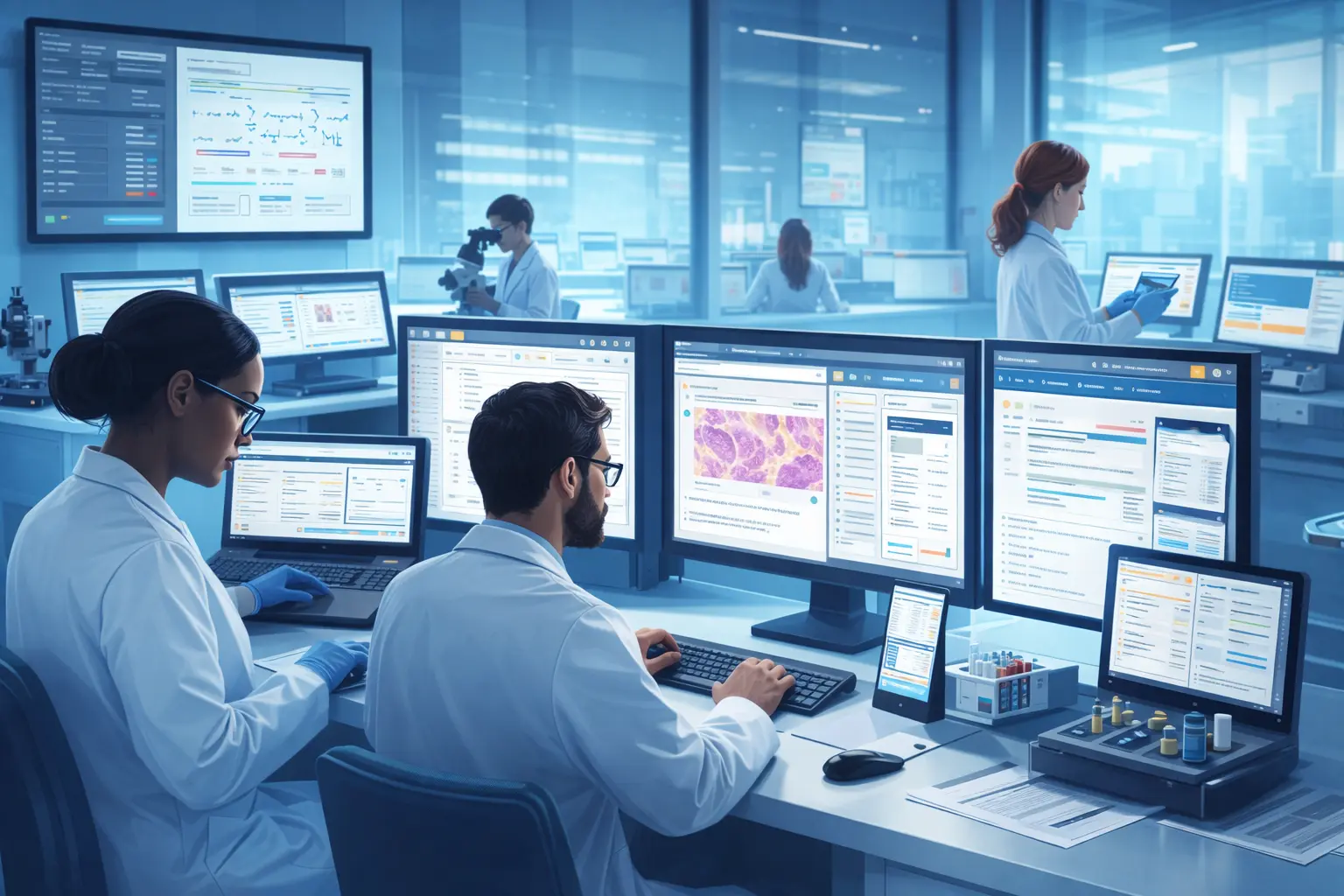
From configurable histology workflows and barcode-driven specimen tracking to digital pathology integrations, automated case assignment, voice-enabled sign-out, customizable reporting, and future AI capabilities, the platform is designed to support the realities of modern pathology.
Most importantly, LigoLab provides the flexibility required to adapt workflows as practices evolve.
This flexibility enables pathology organizations to:
- Accelerate digital pathology adoption
- Improve pathologist productivity
- Reduce operational bottlenecks
- Enhance quality and traceability
- Support remote sign-out workflows
- Integrate emerging technologies
- Scale efficiently as volumes grow
White Paper: Vendor to Partner - How Aligning with Your LIS Provider Can Transform Your Lab
The Bottom Line
Digital pathology represents one of the most significant advancements in anatomic pathology in decades.
But successful transformation requires more than scanners and image viewers.
It requires a laboratory information system capable of supporting evolving workflows, integrating new technologies, removing bottlenecks, and scaling with the organization.
As Dr. Eloy's comments make clear, the LIS is not merely another software application within the pathology department. It is the foundational infrastructure upon which successful digital transformation is built.
For pathology practices pursuing the latest digital pathology solutions, flexibility should be a primary selection criterion.
The organizations that achieve the greatest return on their digital pathology investments will be those supported by highly adaptable laboratory information systems that enable continuous improvement, operational efficiency, and long-term growth.
As pathology continues its digital transformation journey, flexible platforms like LigoLab are helping practices build the foundation necessary to thrive in an increasingly connected, automated, and technology-driven future.
Ready to Future-Proof Your Pathology Operations?
Discover how the LigoLab Informatics Platform helps pathology organizations scale with confidence. Contact a LigoLab product specialist today to schedule a personalized demonstration and see how a flexible, future-ready LIS can accelerate your digital transformation strategy.
Act Now: Contact a LigoLab Product Specialist Today!
Frequently Asked Questions About Digital Pathology and Flexible Laboratory Information System Software
What role does a laboratory information system (LIS) play in digital pathology?
A laboratory information system serves as the operational backbone of a digital pathology program. It connects scanners, image management systems, AI tools, reporting workflows, specimen tracking, and case management processes into a unified environment that supports efficient and scalable operations.
Why is flexibility important when selecting a pathology LIS?
Flexibility allows pathology organizations to adapt workflows, integrate new technologies, support changing operational requirements, and scale without costly system replacements. A flexible LIS helps ensure the platform can evolve alongside advances in digital pathology, AI, and regulatory requirements.
How does a flexible LIS support digital pathology adoption?
A flexible LIS removes workflow bottlenecks, supports interoperability with digital pathology platforms, streamlines case management, and enables organizations to tailor workflows to their specific operational needs. These capabilities help improve user adoption and maximize the value of digital pathology investments.
Can a laboratory use multiple digital pathology platforms with the same LIS?
Yes. Modern LIS platforms should support interoperability with multiple scanner manufacturers, image management systems, and AI vendors. This vendor-neutral approach allows pathology organizations to select the technologies that best fit their needs while maintaining a unified workflow experience.
How does an LIS improve pathology workflow efficiency?
Advanced LIS platforms automate and streamline key workflow processes, including specimen tracking, histology workflow management, case routing, pathologist assignment, reporting, and sign-out. Automation reduces manual tasks, minimizes delays, and improves overall productivity.
What is automated case assignment in pathology?
Automated case assignment uses configurable rules to distribute cases based on factors such as pathologist subspecialty, licensure, workload, availability, client preferences, and geographic location. This helps balance workloads and improve turnaround times as organizations grow.
How does an LIS support artificial intelligence in pathology?
A modern LIS provides the integration infrastructure necessary to connect AI-powered diagnostic tools, image analysis platforms, coding assistance applications, quality assurance systems, and operational analytics solutions. Flexible LIS platforms make it easier to adopt new AI technologies as they emerge.
Why is interoperability important in digital pathology?
Interoperability allows laboratories to connect scanners, image management systems, electronic health records, billing systems, and AI applications without creating data silos. This helps maintain efficient workflows while providing flexibility to adopt new technologies.
How can an LIS improve the pathologist’s experience?
Modern pathology LIS platforms reduce workflow friction by providing centralized case review workspaces, single sign-on access to digital pathology cases, voice dictation, customizable templates, structured reporting tools, and automated workflow progression. These features help pathologists work more efficiently and focus on diagnostic decision-making.
What should pathology organizations look for when evaluating LIS vendors?
Organizations should evaluate flexibility, scalability, interoperability, workflow automation, digital pathology integration capabilities, reporting customization, AI readiness, implementation support, and the vendor's ability to serve as a long-term strategic partner rather than simply a software provider.
How does LIS flexibility support long-term growth?
As pathology groups expand into new markets, add subspecialties, increase testing volumes, or adopt emerging technologies, a flexible LIS can adapt without requiring extensive redevelopment or replacement. This helps protect technology investments while supporting sustainable growth.
What is the biggest mistake organizations make when implementing digital pathology?
Many organizations focus primarily on scanners and image viewers while underestimating the importance of the laboratory information system. Successful digital pathology programs require a flexible LIS that can support evolving workflows, integrate new technologies, and provide a foundation for long-term innovation.