Blog
Pathologists See Digital Pathology as a Workforce Solution, but Reimbursement Remains a Barrier
September 9, 2026
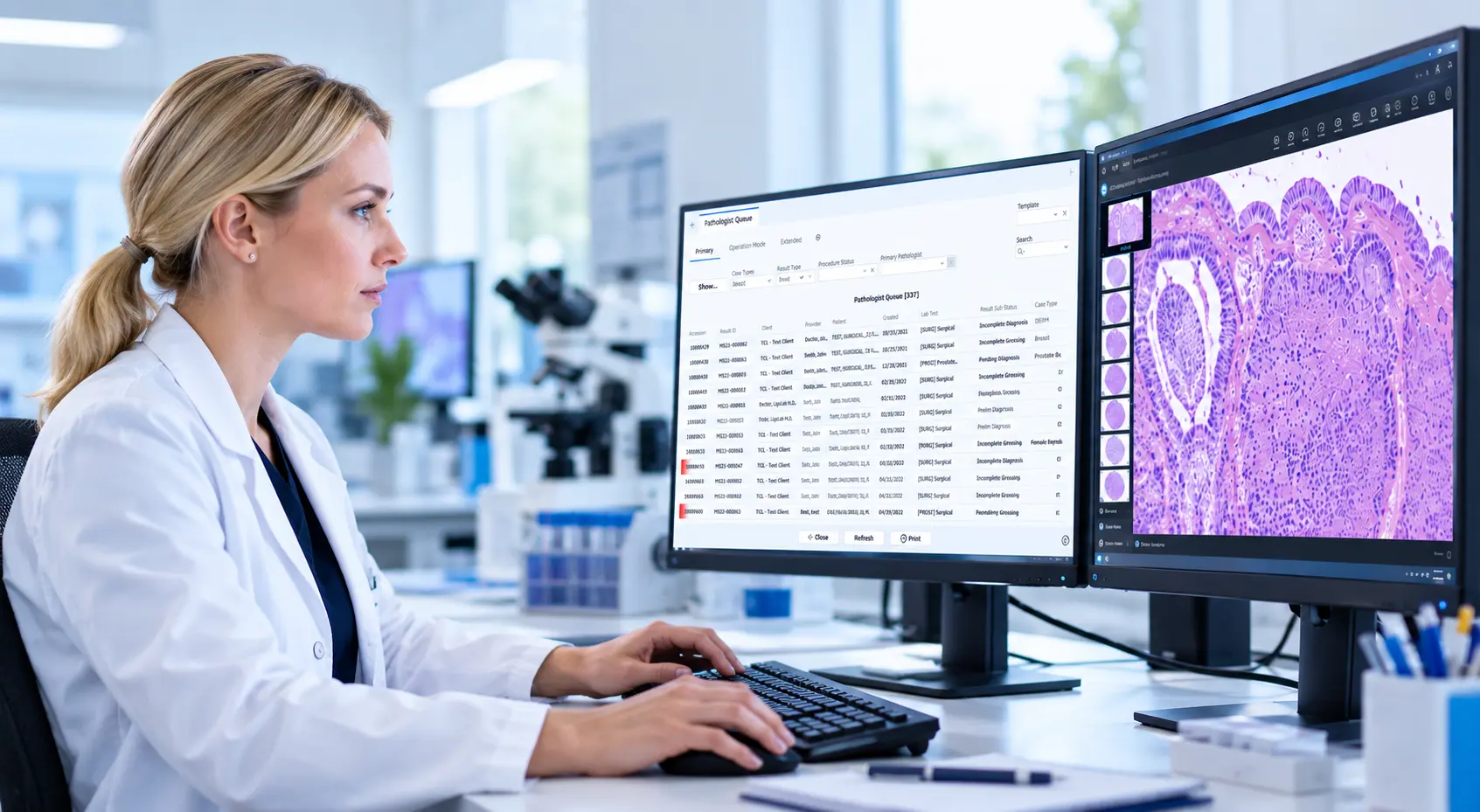
The pathology industry is being squeezed by two converging pressures: increasing diagnostic demand and a limited supply of qualified professionals.
A recent Labcorp survey suggests that pathologists increasingly see digital pathology and remote slide reading as important parts of the solution. At the same time, reimbursement uncertainty and the cost of emerging technologies continue to complicate investment decisions.
Labcorp’s 2026 Pulse of the Pathologist report surveyed 148 practicing U.S. pathologists from community hospitals, group practices, and academic medical centers. The findings, recently highlighted by Today’s Clinical Lab and Clinical Lab Products, point toward an industry preparing for greater diagnostic volume while searching for technology that can help limited pathology teams work more efficiently.
For pathology groups, however, adopting the latest digital pathology solutions is only part of the answer. Supporting these technologies at scale also requires a modern laboratory information system (LIS) software capable of connecting digital pathology, artificial intelligence (AI), laboratory workflow management automation, and diagnostic data within a unified operational environment.
Industry Insights: Best LIS Systems - Top Laboratory Information Systems Compared for Clinical, Pathology, and Outreach Labs
Pathologists Expect Diagnostic Demand to Continue Rising
According to Labcorp, more than 90 percent of surveyed pathologists believe cancer rates are rising. Newer diagnostic approaches may add to the workload. Multicancer early detection, molecular residual disease testing, liquid biopsy, and other technologies will potentially move patients into diagnostic pathways earlier, creating additional demand for testing, interpretation, and consultation.
At the same time, laboratories continue to contend with workforce shortages.
That combination makes simply adding more people as a long-term strategy increasingly difficult. Instead, pathology organizations need ways to increase the capacity and productivity of the professionals they already have.
The survey suggests pathologists recognize this reality.
Discover More: The Causes and Consequences of Pathologist Burnout
Digital Pathology and Remote Slide Reading Emerge as Workforce Solutions
Among survey respondents, 59 percent identified digital pathology as the most impactful solution for addressing workforce shortages, and 49 percent pointed to remote slide reading as an important way to expand diagnostic capacity.
The advantages are significant.
Whole-slide imaging converts traditional glass slides into high-resolution digital images that pathologists can securely access, review, share, and analyze. Remote slide reading further expands this flexibility, enabling organizations to distribute workloads and connect cases with subspecialty expertise regardless of location.
Digital workflows can also reduce dependence on physical slide transportation and enable faster collaboration and consultation. Labcorp itself describes remote reading, workload balancing, and improved access to subspecialized expertise as important benefits of digital pathology infrastructure.
For path labs facing limited staffing resources, that flexibility can fundamentally change the operating model.
Instead of requiring expertise and the specimen to be in the same place, digital pathology enables expertise to move electronically to where it is needed.
Case Study: OnePath - Transforming Pathology Lab Management Through Digital Innovation
AI Offers Additional Potential, but Adoption Remains Cautious
Digital pathology also provides an important foundation for AI-assisted pathology.
Labcorp’s survey found that pathologists are currently more comfortable using AI for lower-risk applications such as archiving, indexing, quantification, and scoring than for primary diagnosis or second opinions.
That measured approach is understandable.
The technology continues to evolve, and laboratories must carefully evaluate clinical validation, liability, workflow integration, cost, and return on investment.
Financial considerations remain a significant barrier to adoption. Sixty-six percent of respondents cited the cost of AI without corresponding reimbursement as a leading concern, while 57 percent pointed to capital expenses. Meanwhile, 44 percent anticipate PAMA-related reimbursement changes will negatively impact laboratory operations.
The result is an uncomfortable position for laboratory leaders: technology may help solve their capacity problems, yet financial uncertainty can make investing in that technology difficult.
That makes extracting maximum value from every technology investment especially important.
Discover More: Cost of Inaction - The Dire Consequences of Neglecting Modernization in Laboratory Operations and Informatics
Digital Pathology Requires More Than a Scanner and Viewer
A laboratory can purchase whole-slide scanners, image management systems (IMS), digital viewers, and AI algorithms, but these investments will deliver limited operational benefit if they remain disconnected from the laboratory’s primary workflow.
That’s where the laboratory information system becomes critical.
The lab information system should serve as the operational foundation connecting patient information, cases, specimens, slides, images, pathologist assignments, diagnostic results, and reporting.
When the LIS system and digital pathology environment are tightly integrated, pathologists should not have to (repeatedly) search for cases, manually match slides with patient information, move between disconnected applications, or duplicate data entry.
Instead, information should flow automatically.
This is especially important because workforce shortages extend beyond pathologists. Every unnecessary click, manual handoff, duplicate entry, and administrative task consumes staff capacity that could be directed toward higher-value work.
Discover More: Healthcare Leaders Are Investing in Laboratories - Here's Why Your LIS Matters More Than Ever
Modern LIS Software Turns Digital Pathology Into an Automated Workflow
The strongest digital pathology strategy therefore combines advanced imaging technology with an advanced LIS system that can orchestrate the complete workflow.
A modern medical LIS software can automatically initiate downstream actions as a case progresses, maintain specimen and slide traceability, exchange information with digital pathology platforms, route work to appropriate users, and trigger rules based on changing case conditions.
AI can then become part of this workflow rather than another isolated application.
For example, AI-enabled tools may support image quantification, biomarker analysis, case prioritization, quality review, and other assistive functions. Structured results can flow back into the LIS, where they become part of the broader diagnostic record and can trigger additional workflow actions.
The goal isn’t simply to digitize an existing manual process.
It’s to remove the manual process whenever and wherever possible.
Discover More: Unlocking Smarter Lab Operations - LigoLab’s Optional Automation and Intelligence Features

LigoLab: Building the LIS System Foundation for Digital Pathology and AI
The all-in-one LigoLab Informatics Platform is designed for this connected, automation-first and AI-assisted LIS model.
Unlike rigid legacy laboratory information systems that create integration barriers, LigoLab features a flexible, vendor-agnostic lab organization software architecture that can support a broad range of digital pathology technologies.
The platform integrates with digital pathology solutions from leading providers, including PathPresenter, Proscia, PathAI, Philips, Leica, Roche, Hamamatsu, Sectra, Ibex, and Indica Labs. Single sign-on and contextual launch capabilities enable pathologists to move seamlessly from an LIS case to the corresponding digital pathology environment, eliminating the need to locate and match images.
LigoLab’s integration with PathAI’s AISight (see case study below), for example, supports automated order transmission, updates triggered by case or slide changes, image-to-case matching using barcode identifiers, and direct contextual access to digital cases from within the LIS.
This interoperability transforms the LIS from a passive system of record into an active system of action.
Case Study: Bridging LIS Systems and Digital Pathology - A Scalable Integration from LigoLab and PathAI
Automation Helps Laboratories Do More With Limited Resources
Digital pathology can expand where pathologists work. AI can assist with increasingly sophisticated tasks. But automation is what connects these capabilities and turns them into sustainable operational improvements.
Advanced laboratory information system automation can eliminate repetitive tasks, route work, enforce laboratory rules, monitor turnaround times, flag exceptions, maintain traceability, and provide real-time visibility.
This matters because the workforce shortage cannot be addressed by focusing solely on recruiting.
Laboratories also need to maximize the capacity of the skilled professionals they already employ.
When technology eliminates avoidable manual work, pathologists, histotechnologists, and other lab staff can spend more time applying the specialized expertise that technology cannot replace.
Industry Insights: Process Improvement and Advanced Technology to Help Relieve Laboratory Staffing Burden
Build a More Connected Future for Pathology
Labcorp’s survey highlights the growing potential of digital pathology, remote slide reading, and AI to help laboratories address rising workloads and persistent workforce shortages. But adding new technology to an already fragmented environment can create additional complexity if the underlying infrastructure isn’t built to support it.
Laboratories need a modern informatics foundation that connects digital pathology, AI, automation, diagnostic workflows, and laboratory data. With an advanced LIS system like LigoLab at the center, organizations can eliminate manual processes, maximize technology investments, and build a more intelligent, automated, and scalable diagnostic operation.
Ready to Build the Foundation for the Future of Pathology?
Act Now: Connect with a LigoLab Product Specialist!
Frequently Asked Questions About Digital Pathology, AI, Automation, and Advanced LIS Systems
How can digital pathology help address the pathologist workforce shortage?
Digital pathology converts glass slides into whole-slide images that can be securely reviewed electronically. This enables remote slide reading, workload distribution across locations, faster collaboration, and improved access to subspecialty expertise. In Labcorp’s 2026 survey, 59 percent of pathologists identified digital pathology as the most impactful solution for workforce shortages, while 49 percent cited remote slide reading as an important way to expand diagnostic capacity.
Why is remote slide reading important for pathology groups?
Remote slide reading reduces geographic limitations by allowing qualified pathologists to review digital cases without being physically located where the glass slides were produced. This can improve workload balancing, increase access to specialists, support distributed pathology networks, and provide flexibility for pathology teams.
What is preventing laboratories from adopting more AI technology?
Cost and reimbursement uncertainty remain significant barriers. Labcorp’s survey found that 66 percent of respondents cited the cost of AI without reimbursement as a leading adoption barrier, while 57 percent cited capital costs. Concerns involving data storage, equipment, and liability also influence adoption decisions.
Why is the LIS laboratory information system important for digital pathology?
The LIS serves as the central hub for case, patient, specimen, workflow, and reporting data associated with digital images. Integrating the LIS with scanners, image management systems, viewers, and AI tools enables information to flow seamlessly between technologies, eliminating duplicate data entry, manual case matching, unnecessary navigation, and other workflow inefficiencies.
How does LigoLab support digital pathology?
LigoLab provides a flexible, interoperable LIS platform that seamlessly integrates with a wide range of digital pathology technologies. Contextual launching and single sign-on give pathologists direct access to corresponding digital images from within the LIS case, and bidirectional integrations automate the exchange of case, slide, image, and diagnostic data.
Can a modern LIS system support AI in pathology?
Yes. A modern, interoperable laboratory information system provides the workflow and data infrastructure needed to integrate AI-assisted applications into routine pathology operations. Rather than functioning as standalone tools, AI solutions can connect directly with case data and digital images, with structured results flowing back into the LIS to support reporting, analytics, automation, and downstream workflows.
How can LIS system automation help laboratories cope with staffing shortages?
LIS system automation reduces dependence on manual workflows by automatically routing work, enforcing rules, tracking specimens, identifying exceptions, monitoring turnaround times, and triggering actions based on real-time data.