Case Study
OnePath: Transforming Pathology Lab Management Through Digital Innovation

June 1, 2026

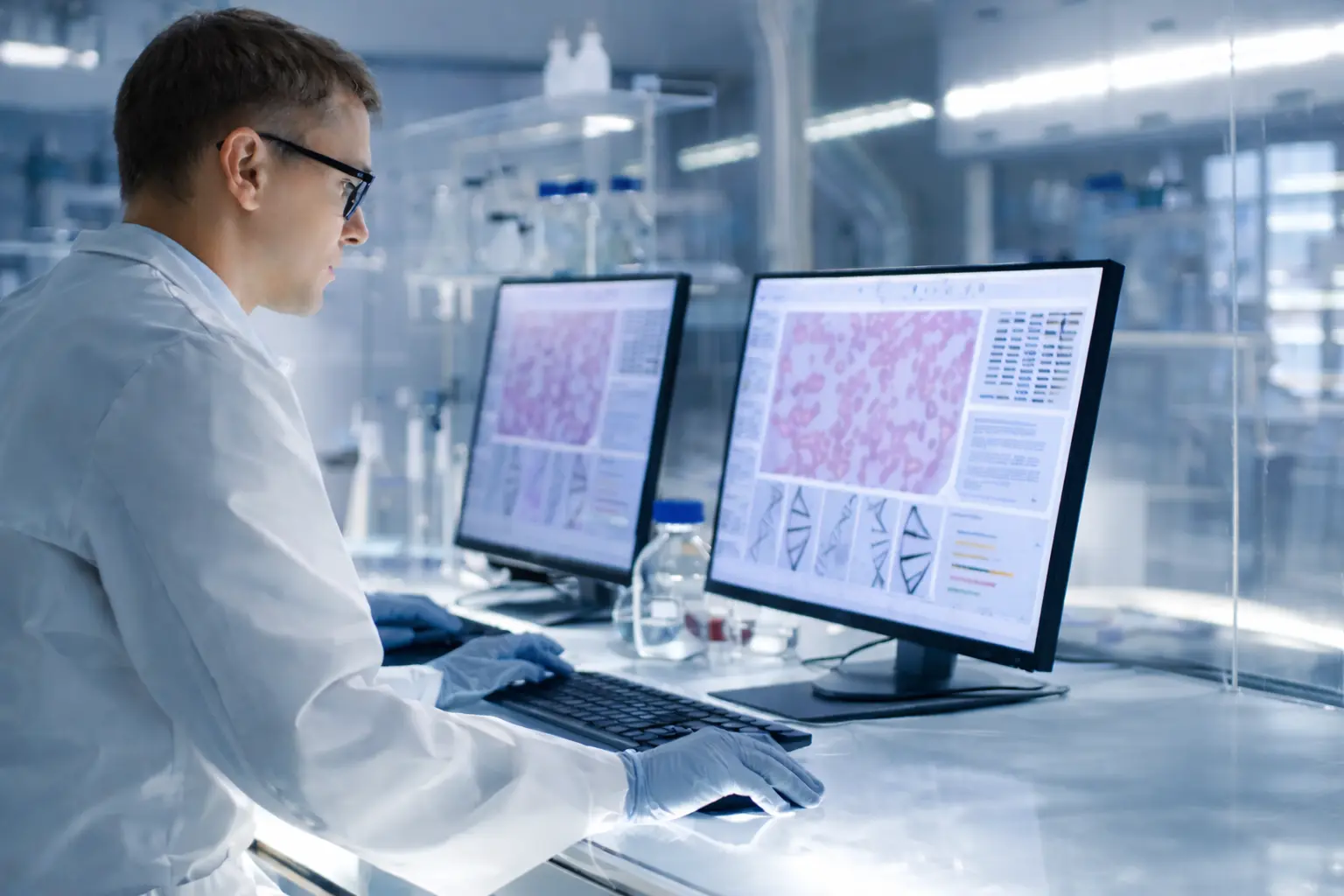
This case study features Suren Avunjian, CEO of LigoLab; Westley Bernhardt, Managing Partner of OnePath Diagnostics (OPDX); and Dr. Sheva Khalafbeigi, MD, Dermatopathologist. It highlights how modern laboratory information systems (LIS software) technology, integrated with the latest digital pathology solutions, revolutionizes pathology workflows by improving efficiency, reducing turnaround times, and enhancing diagnostic accuracy, ultimately leading to better patient outcomes.
Industry Insights: Best LIS Systems - Top Laboratory Information Systems Compared for Clinical, Pathology, and Outreach Labs

The Evolution of Digital Pathology Solutions
The adoption of digital pathology solutions has accelerated, with COVID-19 catalyzing broad acceptance. Avunjian noted that just a few years ago, only 1 in 20 labs engaging with LigoLab was interested in digital pathology. That number has surged.
"Today, 19 of 20 labs that come to us ask about digital pathology integration," said Avunjian. "Not only to ask, but also to learn more about best practices and recommendations tied to the hardware and laboratory software systems we work with."
LigoLab's Early Investment in Digital Pathology
LigoLab identified the great potential of digital pathology early on, pioneering the first laboratory information system and digital pathology integration with BioImagene almost two decades ago.
"We recognized digital pathology's potential early, even as the industry faced cost challenges and lacked standardized tools across platforms," said Avunjian. "Concerns included image quality and storage costs. Pathology practices were skeptical about reliability versus conventional microscopy, but much has changed since those early days."
Fast forward to today, and advancements in image management systems (IMS) technology, cloud storage, and AI-driven tools have drastically reduced costs while improving efficiency.
"We're now at a point where AI-assisted diagnostics coupled with modern LIS systems and digital pathology enables pathologists to analyze images with greater speed and accuracy, reinforcing digital pathology's role as an essential component of modern laboratory operations," added Avunjian.
Editor's Note: Roche acquired BioImagene in 2010 for approximately $100 million. After the acquisition, Roche integrated BioImagene's technologies into its Ventana Medical Systems division, which specializes in pathology solutions.
Industry Insights: Digital Pathology Redefined - Uniting AI, Viewers, and a Robust LIS System for a Seamless Workflow
The OnePath Diagnostics (OPDX) Digital Transformation
Challenges Driving the Need for Change
Facing challenges such as a national shortage of pathologists, inflationary pressures, and stagnant reimbursement rates, OPDX prioritized automation and efficiency to enhance service delivery. Their goals included addressing workforce shortages through the benefits of digital pathology, delivering faster and more reliable diagnoses, and ensuring cost-effective medical laboratory solutions without adding operational complexity.
Drawing on his experience with radiology's digital shift, Bernhardt saw digital pathology as the future and sought strategic partners to drive OPDX's transformation.
"We embraced digital pathology as a company because it allows us to deliver the best subspecialist pathologists to everyone who needs them. Now, treatment can happen quicker and better with more reliability," said Bernhardt.
"Once it was possible to scan at the right speed, get the storage cost down, and deliver something that could replace the microscope, we knew it would move forward quickly because of all the digitized slide benefits,” added Bernhardt. “We anticipated the paradigm shift. From there, we had to find the right partners."
Discover More: The Causes and Consequences of Pathologist Burnout

Strategic Partnership: LigoLab, Lumea, & OnePath
Building a Fully Integrated Digital Ecosystem
To realize their vision, OPDX partnered with LigoLab for its laboratory information system and Lumea for its digital pathology software, creating a fully integrated platform that enables pathologists to transition from traditional microscopy to digital workflows.
Key elements of this integration included:
Automation: Eliminating manual redundant tasks such as data entry and case distribution.
Interoperability: Ensuring the LIS system and digital pathology applications work cohesively.
AI-Driven Tools: Enhancing lab workflows with automated slide labeling, gross examination support, and decision-assist tools.
"This is a fully bidirectional integration, not just an HL7 feed," explained Avunjian. "As staff order slides in Lumea, they automatically enter LigoLab's LIS system software, ensuring seamless data transfer. The pathologist can review, diagnose, and sign out cases digitally, with reports automatically generated and distributed via the LIS system."
The Vision for True Pathologist Mobility
Bernhardt set a bold target: empower pathologists with total freedom, shattering the constraints of on-site workstations.
"With LigoLab and Lumea, we've built a solution that allows true mobility and accessibility, letting pathologists diagnose cases from anywhere," he said. "It's about working with visionary, flexible people who help us adapt and grow."
Bernhardt anticipates more changes on the horizon.
"Soon, there will be more LIS software vendors and digital pathology solutions, and they're going to get quicker. Storage is going to get cheaper. Everything is going to change, just like when cameras went to phones,” he said. “Industry colleagues must pay attention to the process to ensure they get what they need to be successful as this space continues to evolve."
Case Study: Pathology Lab Management Guide - The Future of Digital Pathology

Implementation & Lab Workflow Enhancements
Successfully connecting the LIS system with the digital pathology environment involved careful workflow design, system configuration, and cross-platform integration. The project delivered several important operational enhancements, including:
Automated Case Assignment: LigoLab's LIS system intelligently assigns cases based on specialty, availability, and insurance requirements.
Remote Sign-Outs: Pathologists can work from anywhere using the integrated solution.
AI-Assisted Grossing: AI-powered imaging aids in gross examination, reducing manual workload and turnaround times.
Optimized Digital Viewing: High-resolution digital slides improve accuracy and diagnostic efficiency.
Automated Coding and Lab Billing: LigoLab's LIS system also automates ICD-10 and CPT coding, streamlining and simplifying laboratory revenue cycle management (lab RCM).
White Paper: Comparing LigoLab Informatics Platform with Legacy Laboratory Information System Software
Impact on Pathologists & Healthcare
Improved Quality of Life for Pathologists
Digital pathology has improved both the quality of life for pathologists and patient care. Dr. Khalafbeigi noted greater flexibility, collaboration, faster turnaround, and the ability to settle in one location after years of moves.
"That's something I love because it helps make my job much easier," she said. "The growth of digital pathology was inevitable, and I'm glad that we, as a collaborative effort between these companies, are at the forefront of that."
Dr. Khalafbeigi also highlighted the platform's ease of use.
"It’s user-friendly, and the images are crisp. I’m not wasting time moving images. I deliver quality work for patients and clients efficiently," she said.
Expanding Subspecialist Access to Rural Communities
Digital pathology has been transformative for rural hospitals, letting OPDX provide subspecialist expertise remotely and ensuring diagnostic accuracy for facilities that previously relied on generalists.
Discover More: The Role of Anatomic Pathology LIS Software in Optimizing Laboratory Workflow Management
Future Innovations & Scalability
Looking ahead, OPDX remains committed to continuous innovation and prioritizes three key areas:
AI-Driven Automation: Expanding AI applications in histology and microtomy.
Enhanced Interoperability: Encouraging open-system integration with other laboratory information system vendors.
Scalability: Leveraging LIS lab and digital pathology relationships to expand diagnostic services nationwide.
"OnePath is national. We have no geographic limitations. Digital pathology means that, despite pathologist shortages, your patients and clinicians can access top subspecialist care," said Bernhardt.
Discover More: LigoLab’s Advanced Laboratory Workflow Management Solutions: Future-Proofing Growth for Modern Anatomic Pathology Practices
Conclusion
The OPDX case demonstrates how modern laboratory information systems and advanced digital pathology solutions can transform lab services. Thanks to strategic partnerships, AI-driven efficiencies, and workflow automation, OPDX modernized its services and overcame key challenges. As digital pathology evolves, OPDX and LigoLab will stay at the forefront, empowering pathologists to deliver faster, more precise, and accessible care.
Editor's Note: Avunjian, Bernhardt, and Dr. Khalafbeigi also hosted an informative webinar covering this same topic.
On-Demand Webinar Featuring OPDX: Utilizing Digital Pathology to Help Offset Today’s Laboratory Challenges
LigoLab: Innovative, Unified, and Scalable Laboratory Information System Software Solutions
At LigoLab, we didn't just set out to build a new laboratory information system (LIS) software solution; we embarked on a journey to redefine what a lab information system can do. Our mission is to provide a transformational, all-in-one LIS system and laboratory revenue cycle management (lab billing) platform that seamlessly integrates advanced tools, technologies, and workflows, empowering laboratories to constantly evolve technically and financially and stay ahead in a rapidly changing landscape.
We view digital pathology and AI-driven tools not as standalone products but as essential components deeply embedded within the lab's informatics ecosystem. A truly innovative LIS lab solution doesn't force users to toggle between disconnected systems or rely on manual workarounds. Instead, it unifies operations, automates processes, and eliminates barriers, ensuring that every laboratory can scale, innovate, and remain competitive.
Now approaching two decades of service, LigoLab proudly supports hundreds of medical laboratories nationwide across all diagnostic disciplines, including pathology, clinical, molecular, microbiology, toxicology, and genomics.
Industry Insights: Beyond Go Live: Maximizing Laboratory Information System (LIS) Performance and Laboratory ROI
About OnePath Diagnostics
OnePath is a healthcare technology company specializing in digital pathology, providing high-quality diagnostic expertise to physician groups, laboratories, hospital systems, and AI companies. By combining cutting-edge technology with subspecialty pathology expertise, OnePath enhances diagnostic accuracy, efficiency, and patient care while seamlessly integrating with existing healthcare workflows.
Comprehensive Diagnostic Services
OnePath offers diagnostic services across multiple medical specialties, including dermatology, urology, gastroenterology, women's health, and podiatry, as well as technical histology services such as tissue processing, special staining, immunohistochemistry (IHC), and slide digitization.
Empowering Physician-Owned Laboratories
OnePath empowers physician-owned laboratories through cost-effective solutions, including slide purchase programs, combined supply purchasing, laboratory automation, expert pathology staffing, compliance support, and revenue management services. Its state-of-the-art digital pathology solutions eliminate the need for large capital investments and integrate seamlessly with laboratory information systems, EHR systems, and digital slide viewers.
Ready to Explore LigoLab’s Digital Pathology Integration for Your Lab?
Don’t Wait: Speak with a LigoLab Specialist Today!
Frequently Asked Questions About Digital Pathology and Laboratory Information System Software Integration
What is digital pathology and how does it differ from traditional microscopy?
Digital pathology replaces traditional glass-slide microscopy with high-resolution whole-slide images that users can view, analyze, share, and archive electronically. It enables remote diagnostics, AI-assisted analysis, and faster collaboration, while eliminating the geographic limitations of conventional microscopy.
How has the adoption of digital pathology changed in recent years?
Adoption has accelerated dramatically, driven by advancements in image management systems technology, cloud storage, and AI, as well as by the COVID-19 pandemic. LigoLab CEO Suren Avunjian notes that today, 19 of 20 labs approaching LigoLab ask about digital pathology integration, compared to just 1 in 20 a few years ago.
What is the nature of LigoLab's integration with digital pathology platforms like Lumea?
Unlike basic HL7-based integrations, LigoLab’s connection with Lumea provides true bidirectional interoperability. Orders placed in Lumea are automatically transmitted into the LIS system, where pathologists can complete the diagnostic process and finalize reports. The integrated workflow removes redundant data entry, minimizes manual touchpoints, and supports a more efficient digital pathology environment.
What workflow improvements did OnePath Diagnostics achieve through this integration?
Key workflow improvements included intelligent case assignment driven by specialty and scheduling availability, remote sign-out functionality for distributed pathology teams, AI-assisted grossing workflows, high-resolution digital slide review, and automated ICD-10 and CPT coding. Together, these capabilities streamlined operations, reduced administrative burden, and strengthened both diagnostic and financial performance.
How has digital pathology improved the experience of pathologists at OPDX?
Dr. Khalafbeigi highlighted that the LIS system and digital pathology integration are user-friendly, produce crisp and clear images, and allow her to work efficiently without wasting time navigating between systems. The integration has also improved work-life balance and enabled pathologists to settle in one location rather than being required to travel or work on-site at specific facilities.
How does digital pathology benefit rural hospitals and underserved communities?
Digital pathology enables subspecialist pathologists to deliver remote diagnoses to rural hospitals and clinics that previously lacked access to such expertise. OPDX has leveraged this capability to extend high-quality diagnostic services nationwide, ensuring that patients in underserved areas receive the same quality of care as those in major medical centers.
What future innovations is OnePath Diagnostics planning?
OPDX's roadmap includes expanding AI applications in histology and microtomy, increasing open-system interoperability with other laboratory information system vendors, and scaling its diagnostic network to serve more facilities nationwide, all without geographic limitations.
How does LigoLab support labs considering digital pathology integration?
LigoLab treats digital pathology not as a standalone add-on but as an essential component deeply embedded within the lab's informatics ecosystem. The company has supported digital pathology integrations for more than 15 years. It works with labs to identify the right hardware and software partners, implement seamlessly, and continuously evolve capabilities as the technology advances.