Industry Insights
Digital Pathology Redefined: Uniting AI, Viewers, and a Robust LIS System for a Seamless Workflow

July 1, 2026

Digital pathology is the transition from glass slides and traditional microscopes to high-resolution digital images. It’s revolutionizing how pathologists work. Yet the central question is not whether labs can digitize slides, but how they can turn that capability into a seamless workflow.
After slides are digitized, labs can share and analyze tissue samples more efficiently, enabling innovations such as AI-driven diagnostics and remote collaboration. The key lies in integrating these components into a robust, end-to-end laboratory information system (LIS) that models every aspect of the case, from specimen origination to final report delivery.
This article examines why digital pathology is gaining ground, how AI and specialized image management system viewers enable faster and more accurate diagnoses, and why a fully integrated laboratory information system software is the foundation that unifies these innovations into a single, efficient lab workflow.
Discover More: Why “The Safe Move” to a New Version of Legacy LIS Software Is the Wrong Move for Medical Labs
From Glass Slides to Digital Pathology: A New Era
The Challenges of Microscope-Based Workflows
Traditionally, anatomic pathology diagnostics hinged on physical slides examined under a microscope. While microscope-based workflows still hold clinical validity, they come with several challenges:
Logistical Complexities: Shipping or physically transporting slides is laborious and may introduce risks, including breakage or delays.
Limited Collaboration: Experts sharing the same physical slides must coordinate on both time and location. This slows down critical consultations and second opinions.
Restricted Data Insights: Paper-based notes or standalone laboratory software systems only produce minimal data analytics, limiting the ability to derive robust clinical or operational insights.
What Digital Pathology Enables
Digital pathology addresses these challenges by converting glass slides into high-resolution whole-slide images that can be instantly stored, accessed, analyzed, and shared. As test volumes rise, turnaround times tighten, and a global pathologist shortage grows, the move to digital platforms is accelerating. Once scanned, digital images enable:
Faster Diagnosis and Remote Collaboration: Pathologists can review cases online from anywhere at any time, removing geographic barriers.
Optimized Workflow Efficiency: Digitization streamlines processes and enables flexible scheduling, enabling pathologists to sign out cases from a home office or consult with experts worldwide.
Foundational Data for AI: High-quality images feed artificial intelligence algorithms, which can uncover patterns or insights that might be too time-consuming or subtle for the human eye to detect.
The widespread adoption of digital pathology represents a paradigm shift in laboratory medicine, driving a more connected, collaborative, and data-rich workflow. That shift creates the need for specialized viewers and AI tools to work together effectively.
Discover More: How AI Can Propel Medical Laboratories into a New Era of Growth

The Synergy of Pathology Viewers and AI
Pathology Image Viewers
Digital pathology would be incomplete without specialized viewers, anatomic pathology software tools that let pathologists interact with massive digital slides. These viewers deliver ultra-high-resolution imaging for detailed tissue examination, smooth zooming, and panning. They also support slide annotations for future reference, collaboration, and education, while enabling side-by-side comparison of multiple slides to evaluate disease progression and tissue changes over time.
Modern viewers often feature measurement aids and region-of-interest tagging. Just as importantly, they integrate directly with patient case data and AI outputs, enabling pathologists to see all relevant information in one place. A fast, intuitive viewer can significantly boost efficiency, especially when remote consultations or telepathology are essential.
See LigoLab's Image Management System Support in Action
Experience how LigoLab's high-performance image management integration transforms digital pathology workflows.
AI and Advanced Analytics
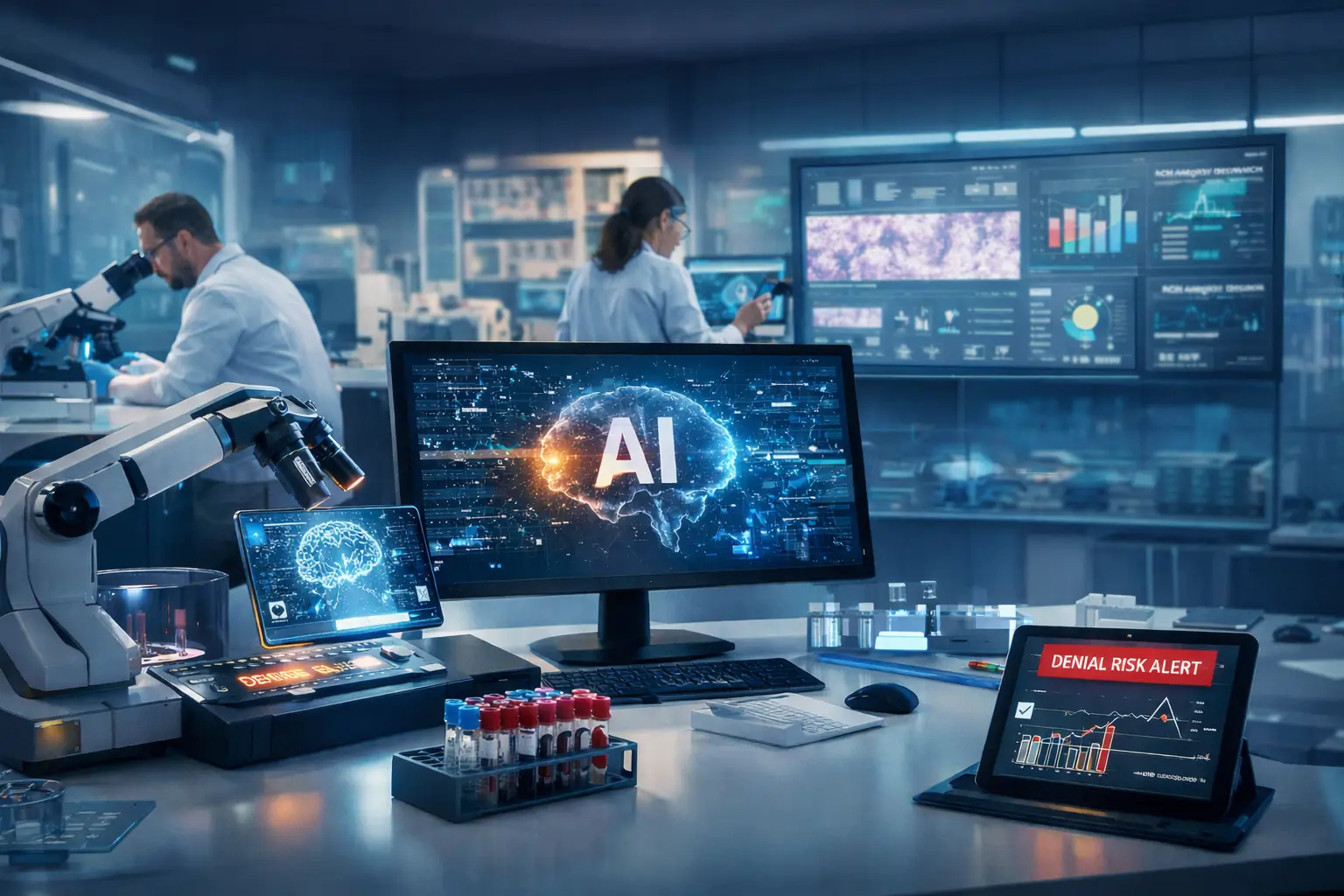
Artificial intelligence has emerged as a game-changer in LIS pathology workflows, thanks to the availability of high-resolution digital slides. Common AI applications include:
Tissue Classification: AI algorithms analyze tissue images to distinguish normal from abnormal findings, automatically highlighting suspicious regions for pathologist review.
Cell Counting and Grading: Automated analysis tools can rapidly quantify tumor and inflammatory cells, significantly reducing manual workload and turnaround time.
Predictive Insights: Advanced algorithms can detect subtle morphological patterns linked to disease aggressiveness, prognosis, or likely treatment response, supporting more precise and individualized patient care.
By automating repetitive, time-intensive tasks, AI enables pathologists to focus on complex cases requiring human expertise. When AI solutions are integrated into a digital viewer, pathologists can see AI-generated annotations or quantitative assessments overlaid on the slide, creating a powerful combination of human expertise and advanced technology. Studies and anecdotal reports demonstrate faster diagnostics, more standardized reporting, and reduced inter-observer variability when AI complements human interpretation.
Discover More: Best Practices for Preparing Medical Labs for AI Integration in Technical and Financial Operations
Why a Comprehensive Laboratory Information System Software Is Essential
Digital slides, viewers, and AI offer extraordinary capabilities. However, their benefits diminish if they operate in isolation, with data scattered across multiple standalone pathology lab management tools. The best LIS systems connect all the pieces and orchestrate the entire anatomic pathology LIS workflow.
Case Origination
As soon as a specimen is accessioned, the LIS system captures relevant metadata, patient demographics, test requests, and barcodes, and links them seamlessly to all future digital slides.
Slide Tracking
Once scanned, each digital image is automatically associated with the correct case in the medical LIS. Pathologists can instantly pull up a case record and open the related images without manual data re-entry.
Unified Laboratory Workflow Management
The LIS pathology solution enforces consistent, step-by-step processes, from grossing to final sign-out, eliminating the need to juggle multiple lab pathology software platforms.
AI Trigger Points
The LIS system can automatically trigger AI algorithms based on defined case parameters and store the results within the same patient record. This seamless orchestration ensures consistent AI utilization without additional clicks, manual steps, or risk of error.
Results Consolidation and Reporting
Pathologist notes, AI findings, and scanned images all converge into a single record. When the pathologist is ready to sign out the case, the LIS system generates a unified pathology report for immediate distribution to clinicians, electronic health records, or patient portals.
In essence, the modern lab information system serves as the lab's central nervous system, linking specimen data, digital slides, AI outputs, and final reporting. The key takeaway is this: digital pathology delivers its greatest value only when the medical LIS transforms it from a standalone technology into a fully integrated, efficient diagnostic workflow.
Case Study: OnePath - Transforming Pathology Lab Management Through Digital Innovation

Harnessing the Laboratory Information System for Data Management, Compliance, and Interoperability
Data Management
The LIS system maintains a single source of truth for every specimen, storing patient data, slide images or pointers to them, and AI insights in a single case record. It ensures accurate recordkeeping and easy retrieval for large volumes of slides.
Industry Insights: Laboratory Information Systems and Their Key Role in Lab Data Analytics
Regulatory Compliance
The LIS lab application logs every user action for audit trails, supporting CLIA, CAP, FDA, and other regulatory bodies. It also enforces security protocols such as user-specific permissions and data encryption to protect patient information.
Interoperability
The laboratory information system integrates seamlessly with hospital EHRs, image management systems, and laboratory instruments using industry-standard protocols such as DICOM for medical imaging and HL7/FHIR for healthcare data exchange. By eliminating data silos, it promotes cross-departmental collaboration, supporting multidisciplinary initiatives such as combined radiology and pathology tumor boards.
Discover More: LigoLab Delivers the LIS System Interoperability Needed to Transform Medical Laboratories into Thriving Businesses
Workflow Automation
The LIS system automates tasks such as label printing, quality assurance checks, AI job execution, and result release, reducing manual errors and turnaround times. Well-designed medical LIS systems can also scale to accommodate growing test volumes, new AI modules, and external collaborations.
Discover More: How to Turn Your Mid-Sized Medical Laboratory into a Thriving Large-Scale Operation
Benefits of a Fully Integrated Digital Pathology Ecosystem
When digital pathology, AI, and viewers unite under a single LIS lab platform, organizations see dramatic gains across five key areas. First, they gain enhanced diagnostic accuracy and speed.
Enhanced Diagnostic Accuracy and Speed
Automated measurements and pre-screening minimize the risk of missing critical features, while quick slide retrieval and AI insights shorten turnaround times.
Improved Collaboration and Consultation
Pathologists can share cases with specialists worldwide without having to ship glass slides. Real-time annotation and side-by-side review become effortless in a digital interface.
Operational Efficiency
By integrating data entry, slide retrieval, AI processing, and reporting into a single unified pathology lab management system, laboratories can eliminate redundant steps, reduce manual data re-entry, and minimize the risk of errors.
Higher Patient Satisfaction
Rapid, accurate diagnoses translate into quicker treatment decisions, leading to better outcomes and instilling confidence in the lab's quality of service.
Future-Proof Scalability
A unified informatics platform, such as LigoLab’s all-in-one medical LIS and lab billing informatics platform, can incorporate new imaging technologies, expanded AI toolkits, or telepathology features, ensuring the lab keeps pace with emerging innovations.
On-Demand Webinar: How To Build A Successful Multi-Specialty Pathology Practice from the Ground Up

Overcoming Common Challenges
Shifting to a fully digital workflow does not come without hurdles.
Upfront Costs: Investing in slide scanners, high-capacity storage, AI software, and a robust LIS system can be significant. However, long-term ROI often justifies these expenses through efficiency gains and enhanced diagnostic capacity.
Change Management: Moving from manual, microscope-based methods to digital workflows requires staff training and a cultural shift. Open communication, user-friendly software, and phased rollouts can mitigate resistance.
Regulatory Hurdles: Labs must ensure compliance with healthcare regulations, including CLIA, CAP, and FDA approvals, for the clinical use of AI. A well-structured LIS medical solution, with strict audit trails and data security, can help maintain these standards.
Looking Ahead: The Future of Digital Pathology
Digital pathology continues to evolve rapidly, with implications for clinical care, research, and the global shortage of specialists.
Deeper AI Adoption
AI tools will evolve beyond basic detection and cell-counting tasks, with growing potential to assess treatment response and predict patient outcomes. Labs will need advanced LIS software flexible enough to orchestrate multiple AI models per case, manage large datasets, and provide robust performance tracking.
Precision Medicine Integration
Digital pathology data integrated with genomic or molecular findings will enable personalized treatment paths. Next-gen LIS lab platforms may connect seamlessly with molecular labs, radiology picture archiving and communication systems (PACS), and broader informatics systems to give a 360-degree view of the patient.
Global Collaboration
Telepathology networks will allow pathologists to consult across borders, bridging talent gaps and improving care in underserved regions. Standardized data formats and robust cloud solutions will facilitate cross-institutional studies and knowledge-sharing.
Next-Level User Experience
Future viewers may incorporate augmented reality (AR) or virtual reality (VR) interfaces for even more immersive exploration of tissue structures. AI-enabled laboratory information systems will increasingly automate report generation by intelligently pre-populating key elements, significantly reducing manual data entry.
Across all use cases, the LIS system remains the central hub, maintaining data integrity, interoperability, and compliance while ensuring pathologists and clinicians have a complete and accurate picture to support better decision-making.
Discover More: Digital Pathology - The Future is Here
Conclusion: Unlocking the Full Benefits of Digital Pathology Requires Unification
Digital pathology represents a transformative leap in lab medicine. However, its true power emerges when AI, digital viewers, and pathology lab management tools seamlessly mesh within a robust and unified laboratory information system. By modeling every stage of a case, from specimen arrival and scanning to AI-supported diagnosis and final sign-out, the best LIS orchestrates a streamlined, high-efficiency workflow that ultimately improves patient care.
Laboratories that adopt this integrated approach benefit from faster turnaround times, fewer manual errors, greater diagnostic confidence, and the flexibility needed to adapt and grow as demands evolve.
As digital pathology advances, driven by AI innovations, telepathology networks, and new imaging technologies, laboratories powered by a future-ready laboratory information system will lead the way. The result is a new era defined by speed, precision, and innovation, transforming the delivery of pathology diagnostics.
Discover More: How LIS Software Helps Pathologists Sign Out Anatomic Pathology Cases Faster
Why Lab Leaders Should Consider LigoLab's Unified LIS System that Supports the Latest Digital Pathology Solutions
In today's rapidly evolving laboratory landscape, efficiency, precision, and seamless workflow integration are essential. LigoLab's Professional Tier delivers all of this and more, providing LIS and digital pathology integration at a truly unmatched level.
Why Choose LigoLab's Professional Tier and Digital Pathology Integration?
- Unified LIS software with seamless digital pathology integration
- Agnostic slide imaging compatibility
- Single sign-on digital viewer access
- Automatic data capture and streamlined reporting
- Optimized efficiency, accuracy, and patient care
For lab leaders seeking to future-proof their operations, LigoLab's Professional Tier delivers cutting-edge digital pathology integration and advanced anatomic pathology software features, enabling complex workflows, seamless interoperability, and enhanced operational intelligence.
Ready to Integrate Modern Digital Pathology Solutions Into Your Lab's Workflow?
Contact a product specialist today to discover how LigoLab can seamlessly integrate digital pathology into your lab's technical operations.
Act Now: Speak with a LigoLab Specialist!
Frequently Asked Questions About Modern Digital Pathology Solutions, AI, and LIS System Integration
Why isn't adopting a slide scanner or a standalone AI tool enough to benefit from digital pathology?
Slide scanners and AI tools deliver value only when their data flows into a connected system that links specimen information, images, and results together. Without integration with a robust laboratory information system, these tools operate in isolation, leading to scattered data, manual re-entry, and missed opportunities for automation.
How does AI improve diagnostic accuracy in digital pathology?
AI applications such as tissue classification, automated cell counting and grading, and predictive morphological analysis empower pathologists to focus their expertise on complex cases rather than repetitive, time-intensive tasks. When AI outputs are overlaid directly on digital slides within an integrated viewer, pathologists benefit from faster diagnostics, more standardized reporting, and reduced inter-observer variability.
What role does the lab information system play in a digital pathology workflow?
The LIS system functions as the central nervous system of the digital pathology ecosystem, capturing case metadata at accessioning, automatically linking scanned slides to the correct case, enforcing consistent step-by-step workflows, triggering AI algorithms based on defined parameters, and consolidating pathologist notes, AI findings, and images into a single record for final report generation and distribution.
How does a unified LIS medical solution support regulatory compliance in digital pathology?
A robust medical LIS records every user action, creating comprehensive audit trails that support CLIA, CAP, and FDA compliance requirements. It also enforces strong security measures, including role-based user permissions and data encryption, to protect patient information as digital pathology and AI become increasingly integrated into clinical diagnostic workflows.
What interoperability standards matter most for digital pathology integration?
DICOM is the standard protocol for exchanging digital pathology images, while HL7 and FHIR are the standards used for broader health data exchange, including patient demographics, orders, and results. A laboratory information system with robust support for these protocols can integrate seamlessly with hospital EHRs, imaging management systems, and diagnostic instruments, eliminating data silos and enabling cross-departmental collaboration.
What are the biggest challenges labs face when transitioning to digital pathology?
The most significant challenges are the upfront costs of slide scanners, high-capacity storage, AI, and a robust LIS software platform; the change management required to shift staff from microscope-based workflows to digital processes; and the regulatory hurdles associated with CLIA, CAP, and FDA compliance for clinical AI use. A well-structured LIS system with strong audit trails and a phased implementation approach can help labs manage all three challenges effectively.
What future trends will shape the next generation of digital pathology and LIS system integration?
Key trends include deeper AI adoption capable of assessing treatment response and predicting outcomes, integration of digital pathology data with genomic and molecular findings for precision medicine, expanding telepathology networks that enable global collaboration across institutions, and next-generation viewers incorporating augmented or virtual reality for more immersive tissue analysis, all coordinated through an increasingly intelligent and flexible laboratory information system platform.