Blog
95% Right Simply Isn’t Good Enough - Now’s the Time to Integrate Diagnostics with Advanced AI Solutions
June 3, 2026
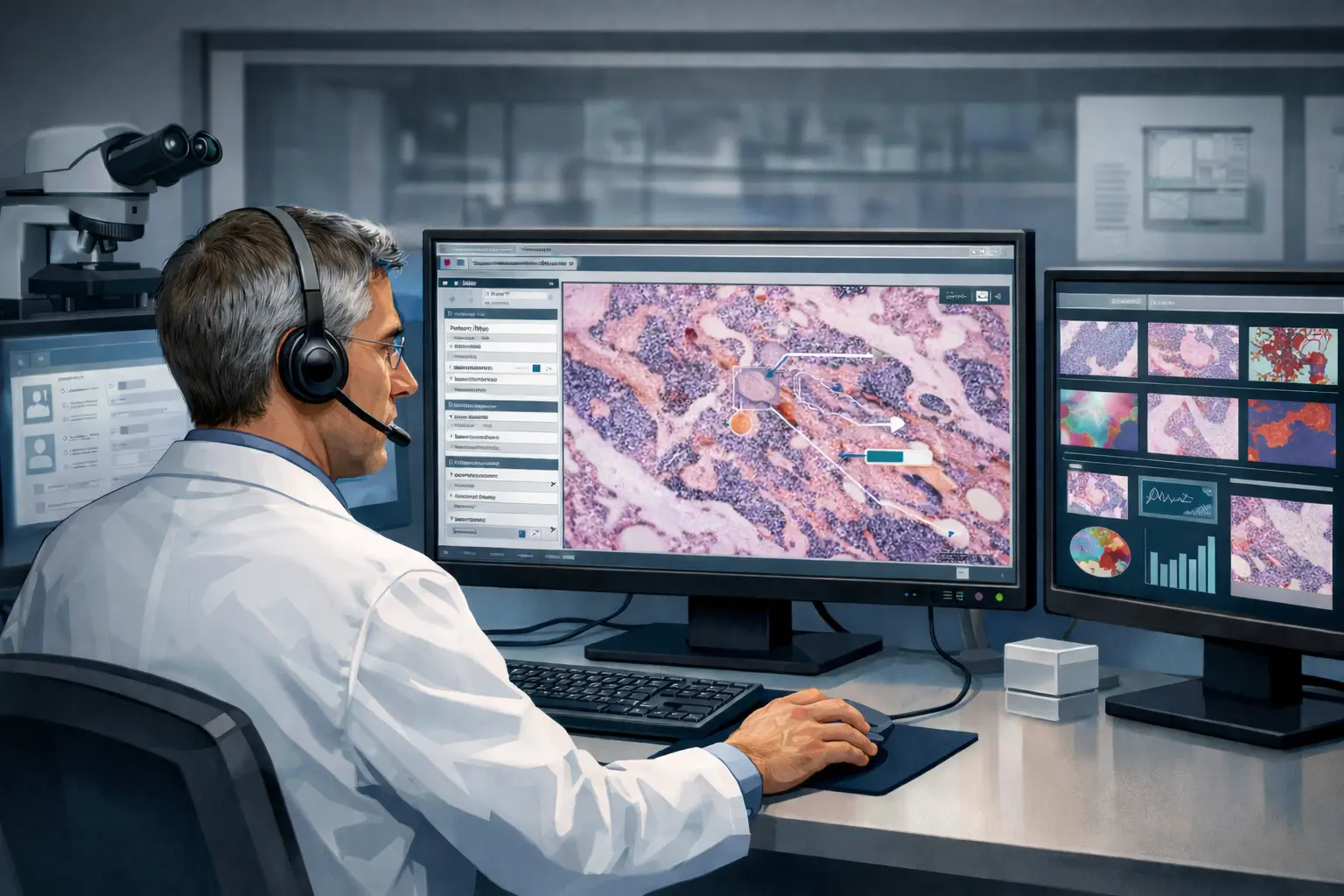
In today’s high-stakes healthcare environment, clinical laboratories and pathology groups are under increasing pressure to deliver faster results, higher accuracy, and stronger financial performance. At the same time, artificial intelligence (AI) is rapidly transforming what’s possible across diagnostics and laboratory operations.
That’s why the margin for error is shrinking, and why good is no longer good enough.
The New Standard: Why 95% Accuracy Falls Short
In laboratory medicine, “almost right” is no longer acceptable. Whether in diagnostics, turnaround time, or laboratory billing accuracy, even small gaps can lead to delayed care, denied claims, and operational inefficiencies. As healthcare becomes more data-driven and value-based, laboratories must strive for near-perfect performance across clinical and financial workflows.
This is where advanced AI solutions are redefining expectations. From digital pathology to predictive lab billing analytics, AI is enabling laboratories to move beyond reactive processes and toward proactive, intelligent operations. But there’s a critical catch: AI is only as effective as the systems it runs on.
Without a modern laboratory information system (LIS), even the most advanced AI tools cannot deliver meaningful impact.
Industry Insights: Best LIS Systems - Top Laboratory Information Systems Compared for Clinical, Pathology, and Outreach Labs
The Problem with Legacy Laboratory Information Systems
Many laboratories today still rely on outdated LIS software that was built for a different era, one focused primarily on data storage rather than workflow orchestration. These legacy LIS systems were never designed to support real-time analytics, AI-driven automation, or seamless interoperability with modern digital pathology solutions and image management systems (IMS).
As a result, organizations using legacy laboratory information systems face fragmented workflows, manual processes, limited visibility, and increased risks to lab billing, which puts them at a competitive disadvantage.
Discover More: Image Management Systems and the Medical LIS - Why Seamless Integration is Essential for Digital Pathology

AI in the Lab: More Than a Buzzword
Artificial intelligence is now actively transforming laboratory operations, from digital pathology and intelligent case routing to predictive laboratory billing and lab revenue cycle management (lab RCM) optimization.
However, these capabilities require robust, flexible laboratory information system functions. AI must be embedded directly into workflows, not bolted on as an afterthought.
A modern medical LIS software acts as the central nervous system of the lab, orchestrating data, workflows, and decision-making in real time.
Discover More: AI Agents - Digital Labor Powering the Future of Laboratory Operations
From LIS Systems of Record to AI-Enabled LIS Platforms
Traditional laboratory information systems were designed to store data. Today’s laboratories require LIS systems that actively drive workflows, automate decisions, and surface insights in real time.
This transformation is essential for supporting AI and unlocking its full value.
Get Insight: Why the Future Laboratory Information Systems Must Be Active, Intelligent, and Integrated
Real-World Proof: How ECPC Transformed Operations with an Integrated Laboratory Information System and Digital Pathology
Eastern Connecticut Pathology Consultants (ECPC) offers a compelling real-world example of what’s possible when laboratories embrace a modern, integrated approach.
As a growing regional practice with 25 pathologists across multiple hospitals and laboratories, ECPC faced mounting logistical challenges, particularly the inefficiency and cost of transporting glass slides between locations.
To overcome these barriers, ECPC implemented a fully integrated digital pathology ecosystem combining the LigoLab Informatics Platform with Proscia’s Concentriq image management system. This unified, cloud-based infrastructure replaced fragmented workflows with a seamless, end-to-end digital environment.
The impact was immediate and measurable:
- Real-time synchronization between case data and digital images
- One-click access to slides directly within the LIS software
- Faster turnaround times and improved collaboration
- Peer consultations reduced from days to minutes
- Estimated savings of more than $200,000 annually in courier costs
Just as importantly, ECPC’s integrated architecture created a foundation for AI. With structured, centralized data flowing seamlessly across laboratory software systems, the organization is now positioned to deploy AI tools for image analysis, automated triage, and advanced diagnostics directly within the workflow.
Their experience reinforces a critical takeaway: digital pathology alone is not enough. True transformation occurs when it is fully integrated with an advanced laboratory information system software that supports automation, analytics, and AI at scale.
Case Study: ECPC’s Strategic Leap into Digital Pathology - A Connected Vision for the Future
Why Modern LIS Software Is the Foundation for AI
Advanced laboratory information system vendors are now building platforms specifically designed to support AI integration. These LIS systems are characterized by:
- Unified architecture connecting LIS, laboratory billing, and analytics
- Rules-based automation engines that trigger AI-driven actions
- Open interoperability with digital pathology solutions and image management systems
- Scalable infrastructure capable of handling high data volumes
- Real-time data access for continuous optimization
This is the foundation required to support next-generation diagnostics and operational efficiency.
White Paper: Vendor to Partner - How Aligning with Your LIS System Provider Can Transform Your Lab

LigoLab: Purpose-Built for AI-Driven Laboratory Operations
The LigoLab Informatics Platform exemplifies what a modern lab information system should be. Designed as an all-in-one informatics solution that combines advanced LIS software with next-generation laboratory billing and laboratory revenue cycle management, LigoLab eliminates the silos that limit legacy LIS systems.
Real-World AI Applications in LigoLab
LigoLab’s roadmap for LIS-AI integration is already delivering tangible results across laboratories:
1. AI-Powered Accessioning and OCR - Automated requisition scanning uses AI and machine learning to extract patient, provider, and lab billing data, reducing manual entry and accelerating intake.
2. Predictive Laboratory Billing and Denial Prevention - AI-driven analytics identify potential claim issues before submission, improving clean claim rates and reducing denials.
3. Intelligent Workflow Automation - Rules-based engines act as digital labor, routing cases, flagging exceptions, and triggering next steps without manual intervention.
4. Digital Pathology Integration - Seamless connectivity with image management systems enables AI-assisted diagnostics directly within the LIS pathology workflow.
5. Advanced Analytics and Decision Support - Natural language querying and real-time dashboards allow labs to “talk to their data” and make faster, more informed decisions.
Industry Insights: Healthcare AI Has Crossed the Line From Experiment to Infrastructure
The Competitive Risk of Standing Still
Laboratories that continue relying on legacy LIS systems face a growing risk: irrelevance.
As AI adoption accelerates, leading laboratories are achieving:
- Faster turnaround times
- Higher diagnostic accuracy
- Improved financial performance
- Greater scalability without additional staffing
Meanwhile, labs using outdated laboratory information systems struggle to keep pace. They remain burdened by manual processes, disconnected setups, and limited insights.
The gap is widening, and it will only continue to grow.
Discover More: Don’t Upgrade the Past - Invest in the Future with LigoLab’s Proven Strategies for Zero Downtime and Maximum ROI
The Future of Laboratory Medicine Is Integrated and Intelligent
The convergence of AI, digital pathology, and advanced LIS software is reshaping laboratory medicine. Success will depend on a lab’s ability to integrate these technologies into a unified, intelligent ecosystem.
A modern medical LIS software is the foundation for:
- Scalable digital pathology solutions
- Efficient pathology lab management
- Optimized laboratory billing and lab revenue cycle management
- Continuous performance improvement through data and automation
LigoLab represents this future, providing laboratories with the tools they need to thrive in an increasingly complex and competitive environment.
White Paper: Comparing LigoLab Informatics Platform with Legacy Laboratory Information System Software
Why Now Is the Time to Act
95% accuracy might have been acceptable in the past, but in today’s healthcare landscape, laboratories must operate with precision, speed, and intelligence.
Achieving this level of performance requires more than incremental upgrades. It demands a complete transformation, starting with a modern, AI-ready laboratory information system.
For labs looking to stay competitive, scale efficiently, and deliver better outcomes, the message is clear:
Now is the time to move beyond legacy LIS systems and embrace a platform built for the future.
Act Now: Speak with a LigoLab Product Specialist
FAQs Related to Integrated Diagnostic Lab Software and Advanced AI Solutions
What is a laboratory information system (LIS)?
A laboratory information system (LIS) is diagnostic lab software that manages laboratory workflows, including order entry, specimen tracking, result reporting, and laboratory billing.
Why is AI important for LIS software?
AI enhances LIS software by utilizing predictive analytics to support automated workflows, improve diagnostic accuracy, and optimize laboratory revenue cycle management.
Can legacy LIS systems support AI tools?
Most legacy laboratory information systems lack the architecture and interoperability to integrate and effectively scale modern AI solutions.
How does AI improve laboratory billing?
AI can identify errors, verify insurance eligibility, and predict claim denials before submission, improving reimbursement rates and reducing revenue leakage.
What is the role of LIS software in digital pathology?
LIS software integrates with digital pathology solutions and image management systems to provide a unified workflow for viewing, analyzing, and reporting pathology cases.
Why should labs upgrade their LIS system?
Upgrading to a modern LIS system enables laboratories to adopt AI, improve efficiency, reduce errors, and remain competitive in an evolving healthcare landscape.