Industry Insights
Why the Future of the Laboratory Information System Must Be Active, Intelligent, and Integrated

July 28, 2026
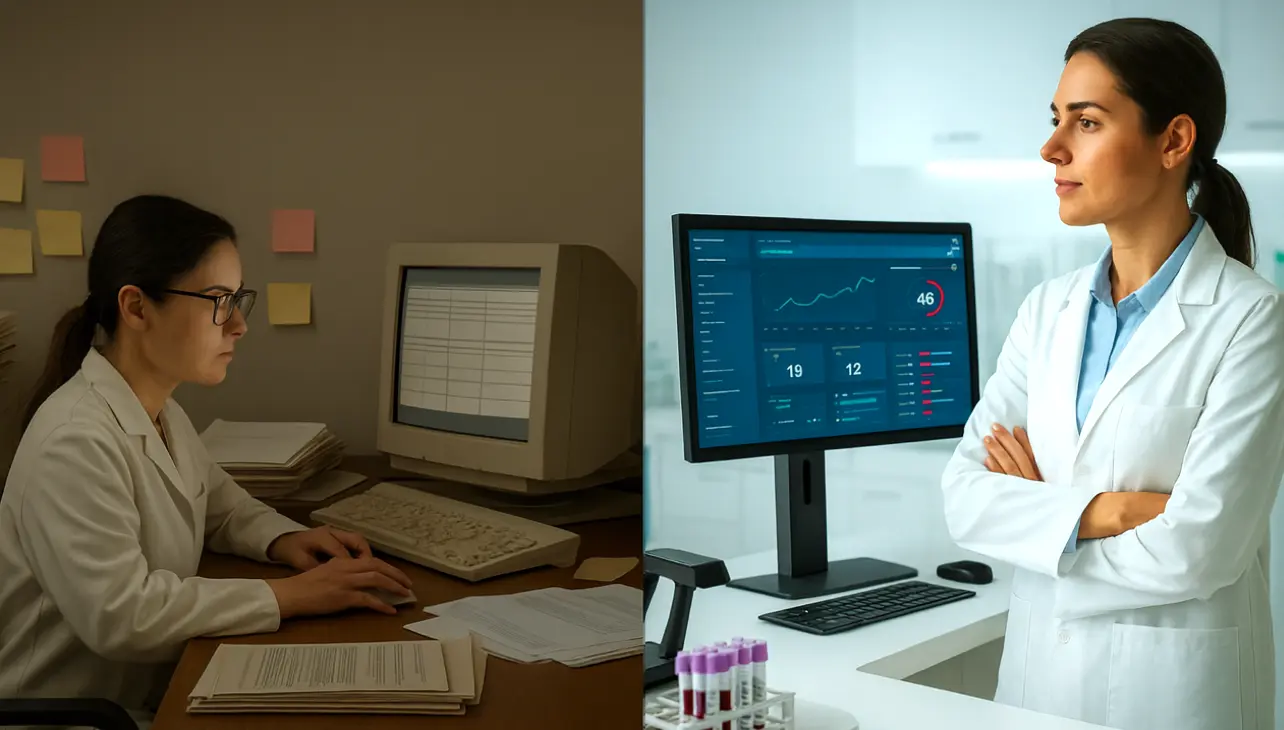
Clinical laboratories and pathology groups are under intense pressure. Case complexity is rising, reimbursement rates are shrinking, and compliance requirements are multiplying. Staffing shortages compound these challenges, forcing labs to do more with fewer people.
Despite the high-stakes environment, many medical labs continue to rely on traditional laboratory information system (LIS) software) that primarily serve as passive systems of record, storing vast amounts of data but providing minimal real-time operational support.
That LIS lab model is no longer sustainable. The future belongs to laboratory information systems of action, LIS software platforms that not only store data but also interpret it, respond to it, and drive decisions across the organization.
Industry leaders Suren Avunjian (CEO, LigoLab), Jenny Bull (Success Director, LigoLab), and Dr. Ryan Fortna (President, Avero Diagnostics) all share why this shift is critical and what it will take to get there.
White Paper: Vendor to Partner - How Aligning with Your LIS System Provider Can Transform Your Lab
Why the Lab Information System of Record Isn't Enough Anymore
"Many labs today have data flowing into their laboratory information systems, but it's not helping them at the moment," said Avunjian. "Departments work in silos, information gets buried, and leadership often learns about problems only after they've already caused delays or rework. In today's environment, that's simply too late."
The lab information system of record stores patient demographics, accession logs, laboratory billing codes, and audit trails, but doesn't proactively assist staff when quick action is needed. This reactive posture slows down operations, reduces efficiency, and increases the risk of errors.
"A modern LIS system must be able to sense, interpret, and respond in real time," Avunjian emphasized. "This is about transforming the LIS lab solution from a silent observer into an active participant in the organization's success."
Discover More: It’s Time for Medical Labs to Embrace the Potential of Laboratory Informatics
What the Laboratory Information System of Action Looks Like
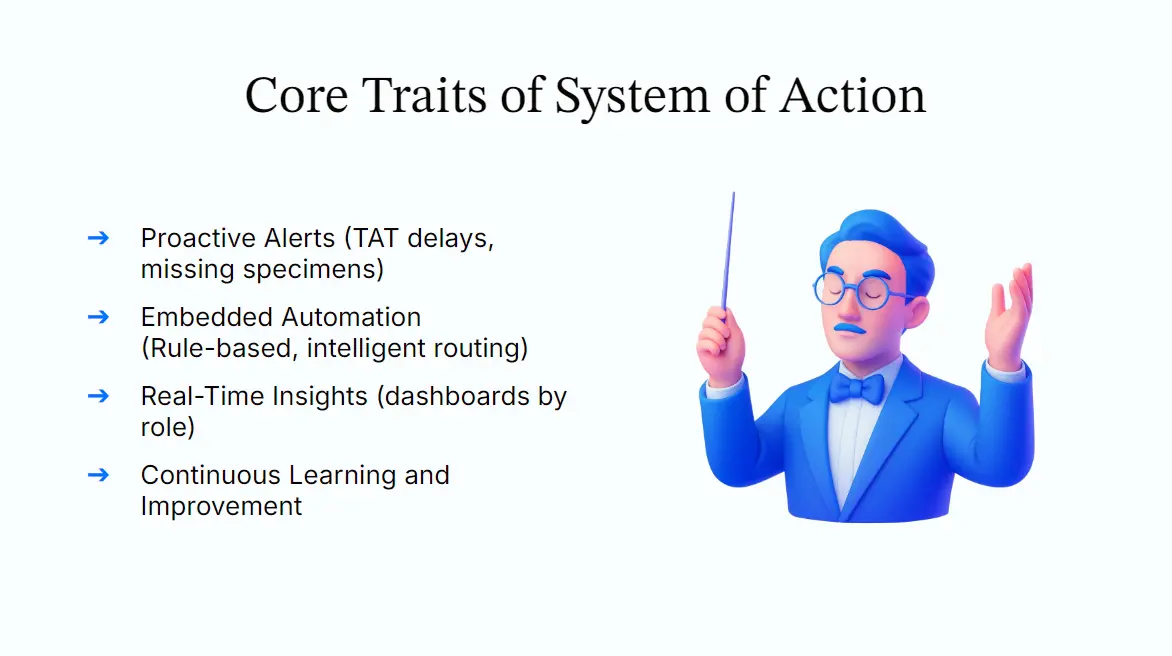
The laboratory information system of action goes far beyond data storage, becoming a dynamic, intelligent engine for all organizational operations. Key characteristics include:
Proactive Alerts: Detecting delays, backlogs, or missing specimens and notifying staff immediately, before problems escalate.
Rules-Based Automation: Executing lab workflows automatically, whether routing cases, verifying accessions, or flagging errors, without manual intervention.
Role-Specific Dashboards: Delivering the right data to the right people at the right time, tailored to each user's responsibilities and priorities.
Continuous Improvement: Learning from every event to refine processes and reduce future errors across the organization.
"This is more than a laboratory information system software technology upgrade," said Avunjian. "It's an operational transformation."
Case Study: Summit Pathology - Achieving Laboratory Profitability Amidst Operational Pressures
The Urgency for Change: Four Trends Driving the Shift
Several industry trends make this evolution of the laboratory information system urgent.
Rising Test Complexity: Molecular, genetic, and outreach testing demand faster turnaround and tighter coordination across departments and sites.
Staffing Shortages: Every department is stretched thin, requiring the medical LIS to support more routine work so skilled staff can focus on higher-value tasks.
Compliance Demands: CAP, CLIA, HIPAA, and SOC 2 all require traceability and rapid response, which only a proactive lab information system can consistently deliver.
Economic Pressure: Shrinking reimbursements and higher costs mean inefficiency is no longer survivable in a competitive laboratory landscape.
"Labs aren't just behind-the-scenes anymore," Avunjian noted. "They're mission-critical partners in patient care, and expectations are higher than ever."
Industry Insights: The Future of Laboratory Diagnostics - Emerging Technologies and Patient-Centric Care
Operational Gains: Dashboards and Automation in the Modern LIS Model
Real-Time Visibility That Changes Monday Mornings
For Bull, the transformation becomes tangible when labs start using real-time dashboards and automation tools.
"Imagine walking in Monday morning and immediately seeing where your bottlenecks are, specimens stalled in transit, data entry delays, or equipment downtime," she said. "You can address them right away, before they escalate."
Dashboards supported by an advanced LIS system enable performance comparisons across sites and shifts, instant access to audit trails during inspections, and real-time productivity tracking for laboratory leadership.
Automation That Saves Hours Every Day
Automation also extends to case assignment.
"In many labs, assigning cases can take hours daily," Bull noted. "With a rules-based automation engine, it's done in minutes, factoring in specialty, workload, and staff availability."
Quality control benefits as well. Advanced positivity tracking flags anomalies before they impact results, while forecasting tools help labs adjust staffing and supplies for seasonal surges.
"The data isn't just stored, it's put to work every day," explained Bull.
Discover More: Unleashing Laboratory Excellence - Here’s How LigoLab’s Automation Engine Supercharges Lab Performance
Financial Protection: Modern Laboratory Revenue Cycle Management Integration
Why Passive Laboratory Billing Is a Revenue Risk
From Fortna's perspective, the LIS system of action is just as critical for revenue protection and the laboratory billing process as it is for clinical lab workflow efficiency.
"In today's reimbursement climate, you can't afford to be passive about revenue," Fortna warned. "Payers sometimes change rates or deny claims without clear notice. If you're not actively monitoring payments against contracts, you can lose significant revenue without realizing it."
What an Integrated Medical LIS and Lab Billing Platform Enables
An integrated medical LIS and laboratory billing (lab RCM) platform enables continuous monitoring for underpayments or denied claims, profitability analysis by region, client, and test type, and automated eligibility checks, insurance discovery, and denial prevention.
"These capabilities allow us to focus staff time on complex cases while automating routine lab billing tasks," Fortna explained. "We've cut our billing staff by half without reducing output."
AI as a Force Multiplier for the Laboratory Information System of Action
Artificial intelligence is already playing a pivotal role in turning passive systems of record into advanced LIS systems of action. According to Avunjian, several AI-powered tools are already in production and will soon be supported by the best laboratory information system software platforms.
Integrated Speech-to-Text Dictation: Enables faster, more accurate reporting with reduced manual transcription.
AI-Powered Requisition Scanning: Extracts order data from paper forms, reducing the need for manual entry and accelerating accessioning.
Natural Language Queries: Enables lab staff to access data conversationally (without navigating complex interfaces).
Automated ICD and CPT Coding: Auto-coding cases based on data to improve lab billing accuracy and reduce coding errors.
Internal AI Management System: Empowers labs to easily deploy approved AI models for quality assurance, workflow optimization, and other advanced use cases.
"AI shouldn't be a black box," said Avunjian. "It should be transparent, user-driven, and integrated into the daily workflow to help people work smarter."
Industry Insights: The AI Revolution in Laboratory Billing - A Game Changer for Today and Beyond
Building Your Laboratory Information System of Action: A Practical Framework
Transitioning to a modern laboratory information system involves more than installing new diagnostic lab software. It requires a deliberate framework.
Integrate Platforms: Eliminate silos and ensure all laboratory software systems share a live data foundation, with no synchronization required between separate systems.
Automate and Align With SOPs: Map rules to workflows and route tasks automatically, ensuring standard operating procedures are embedded in the system rather than dependent on individual staff adherence.
Close the Feedback Loop: Leverage every action to generate data that feeds back into process improvement, creating a self-refining operational environment.
Role-Based Intelligence: Assign priorities and tailor workflows so each user sees only what is relevant to their role, reducing cognitive overload and accelerating decision-making.
"The goal," Avunjian explained, "is a living lab information system that evolves with your organization, improving speed, reducing rework, and increasing both morale and margins."
On-Demand Webinar: How Standardization and Enhanced Reporting Capabilities Improve Lab Workflow and Overall Business Operations
The Bigger Picture: What the LIS System of Action Means for Every Stakeholder
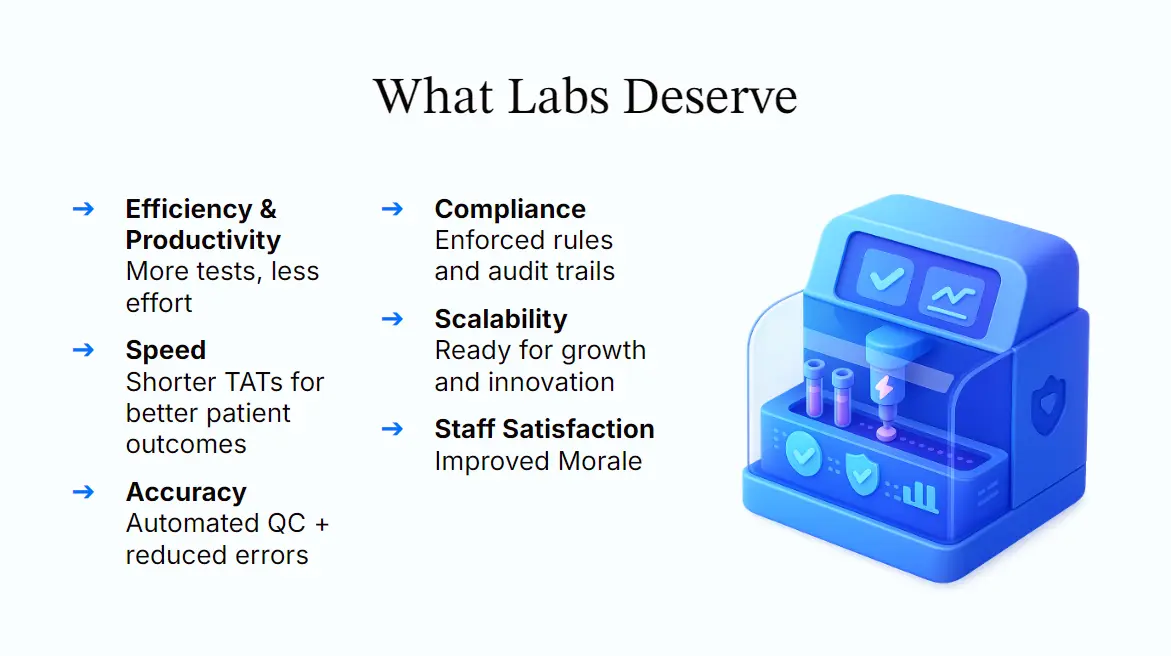
The shift from systems of record to laboratory information systems of action is far more than a passing trend; it is a fundamental change in how laboratories operate.
For Operations: Faster turnaround, fewer errors, and better resource allocation across all departments.
For Finance: Stronger revenue integrity, smarter client management, and proactive denial prevention.
For Staff: Less repetitive work and more time for high-value diagnostic and analytical tasks.
For Patients: Quicker, more reliable results and better overall care.
"Every lab will face this choice," said Fortna. "Evolve or be left behind."
Industry Insights: Best LIS Systems - Top Laboratory Information Systems Compared for Clinical, Pathology, and Outreach Labs
Final Words From the Experts
"Data is only as valuable as the action it inspires," Avunjian concluded. "If your LIS system isn't helping you work smarter in real time, it's time to rethink your approach."
"The beauty of the LIS system of action is that it creates a culture of continuous improvement," Bull added. "Every day, for every role in the lab."
Fortna summed it up simply: "Efficiency isn't a luxury anymore. It's survival."
The future of the laboratory information system is dynamic, intelligent, and seamlessly woven into every aspect of operations. Laboratories that embrace this evolution will define the new benchmarks for speed, quality, and profitability in modern diagnostics.
Experience the Power of a Future-Ready Laboratory Information System
Transform your lab with LigoLab's advanced, fully integrated laboratory information system solution. Automate workflows, eliminate inefficiencies, and gain real-time operational intelligence, all from a single lab organization software platform built to scale with your business.
Act Now: Speak with a LigoLab Product Specialist!
Frequently Asked Questions About the LIS System of Record and the Future of Laboratory Information Systems
What is the difference between a lab information system of record and an LIS system of action?
A lab information system of record is a passive data repository that stores patient demographics, accession logs, billing codes, and audit trails without actively supporting real-time decision-making. An LIS system of action does more than store data. It continuously monitors laboratory operations, detects issues in real time, automates workflows through configurable rules, delivers actionable insights to every user, and drives ongoing process improvement.
Why are traditional LIS systems no longer sufficient for modern clinical laboratories and pathology practices?
Traditional laboratory information systems were designed for a less complex laboratory environment. Today's labs face rising test complexity, persistent staffing shortages, increasing compliance demands, and shrinking reimbursements that require active, intelligent operational support rather than passive data storage. When labs learn about problems only after they have caused delays and rework, the costs in turnaround time, staff morale, compliance risk, and revenue loss are significant and compounding.
What are the most important capabilities of a modern lab information system?
The most important capabilities are proactive alerts that notify staff of delays or missing specimens before they escalate, rules-based automation that routes cases, verifies accessions, and flags errors without manual intervention, role-specific dashboards that surface the right data for each user, real-time productivity and performance tracking across sites and shifts, integrated lab billing with continuous payment monitoring and automated denial prevention, and AI-powered tools for coding, dictation, requisition scanning, and workflow optimization.
How does an integrated laboratory billing module turn the LIS into a financial system of action?
When lab billing is integrated natively within the LIS system, revenue monitoring becomes continuous rather than reactive. Payments are automatically compared against expected contract rates, with real-time alerts flagging underpayments or denied claims. Eligibility verification, insurance discovery, and automated claim scrubbing occur as the order is created. According to Dr. Ryan Fortna of Avero Diagnostics, this integrated approach enabled his practice to cut its lab billing staff by half without reducing output.
What role does AI play in the evolution toward LIS systems of action?
AI accelerates the LIS system of action by adding capabilities that go beyond rules-based automation, including natural language data queries, automated ICD and CPT coding based on clinical case data, AI-powered requisition scanning that eliminates manual order entry from paper forms, integrated speech-to-text dictation for faster reporting, and an internal AI management system that allows labs to deploy approved AI models for QA, coding, and workflow optimization. LigoLab CEO Suren Avunjian believes AI should be transparent, user-directed, and seamlessly integrated into everyday laboratory workflows rather than functioning as an opaque black box.
What does the practical framework for building a LIS system of action look like?
The framework involves four core steps: integrating all laboratory software systems onto a shared live data foundation to eliminate silos; automating workflows and aligning them with standard operating procedures so processes are embedded in the system rather than dependent on individual staff compliance; closing the feedback loop so every operational event generates data that feeds back into continuous process improvement; and implementing role-based intelligence so each user sees only the data and priorities relevant to their specific responsibilities.
What are the outcomes labs can expect after transitioning to a LIS system of action?
Labs that transition to a LIS system of action consistently report faster test turnaround times, fewer errors and rework events, better resource allocation across departments, stronger revenue integrity through proactive lab billing monitoring, a reduction in staff time spent on routine manual tasks, improved compliance readiness through comprehensive audit trails and automated verification, and higher overall staff morale as repetitive work is automated. Team members focus on higher-value diagnostic activities.