Industry Insights
Bridging the Gap in Modern Laboratories: Why a Comprehensive Digital Platform Outperforms a Basic Lab Information System

July 8, 2026

In today's fast-paced laboratory environment, efficiency, accuracy, and quick turnaround times are more essential than ever. While traditional laboratory information systems (LIS systems) have long been fundamental for sample tracking and results reporting, they no longer fully meet the growing operational demands of modern labs or the daily pressures faced by lab teams.
Laboratories now require a comprehensive and flexible informatics platform that unifies departments, optimizes laboratory workflow management, enhances visibility, and leverages LIS software automation to introduce digital labor, addressing workforce shortages and streamlining operations for staff working across the lab.
Let's explore why such a digital platform is essential and how it can deliver the highest return on investment.
Industry Insights: Best LIS Systems - Top Laboratory Information Systems Compared for Clinical, Pathology, and Outreach Labs
Beyond Traditional Laboratory Information System Software: Unifying All Departments
A typical LIS laboratory information system focuses predominantly on the medical testing process, from sample logging to the generation of a final report. While this remains vital, labs today juggle tasks across multiple departments, including sample collection, logistics, reagent and instrument management, processing, result reporting, laboratory billing (lab revenue cycle management), quality control, and compliance.
What a Comprehensive Digital Platform Delivers
Integrated End-to-End Processes: Consolidating data from procurement, inventory, technical operations, and lab billing into a single lab organization software ensures every department has up-to-date, consistent information, with no lag and no reconciliation required.
Elimination of Data Silos: Real-time communication channels between departments minimize duplication of work, prevent miscommunication, and reduce the need for manual intervention across the lab ecosystem.
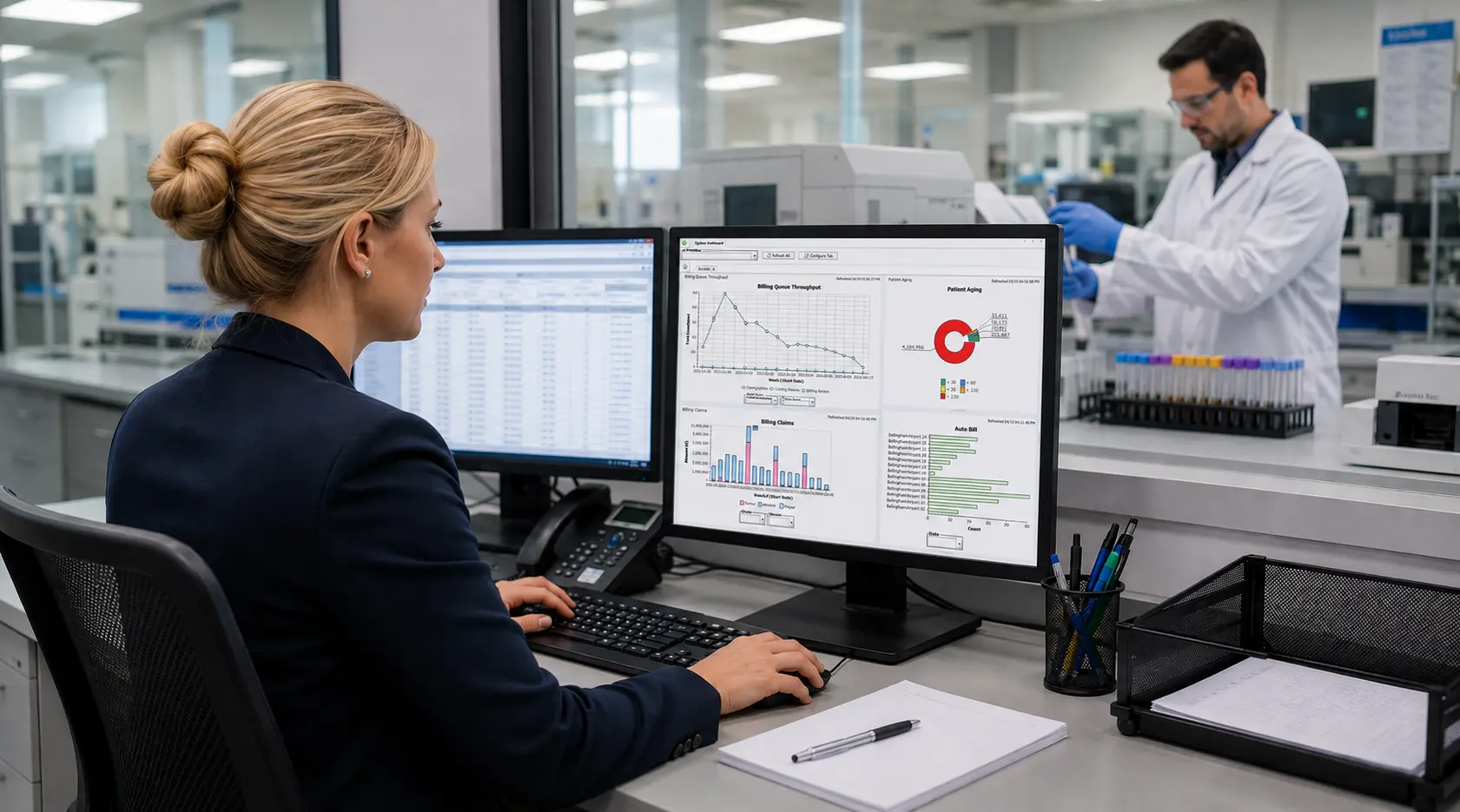
These advanced LIS lab solutions increase transparency and collaboration across an organization's entire operational ecosystem, offering a unified dashboard for all departments and functions.
Discover More: LigoLab Achieves Major Security Milestone with SOC 2, HIPAA, and HITECH Compliance

Streamlining Lab Workflow for Efficiency and Accuracy
A significant shortcoming of legacy LIS systems is the lack of native clinical and pathology lab management for peripheral processes such as outreach, data entry, and reporting across different lab sections.
How a Holistic LIS Software Platform Eliminates These Gaps
Automated Routing: As soon as a sample arrives, the lab information system can automatically prioritize and direct it to the appropriate testing area based on predefined rules, such as urgency, available instrumentation, or technician skill set.
Bottleneck Identification: Workflow visualization tools highlight where samples are stuck or where technicians must unleash additional resources or staffing, enabling proactive delay mitigation.
Real-Time Analytics: Labs can continuously optimize tasks and reduce turnaround time by collecting and analyzing throughput data across all departments in real time.
Through these optimizations, labs can process more samples in less time while lowering costs and maintaining or enhancing the quality of results.
White Paper: Comparing LigoLab Informatics Platform with Legacy Laboratory Information System Software
Visibility and Transparency Across the Lab
When departments operate independently, it is easy for critical information to get lost or delayed. Modern information systems and data management platforms address this challenge by offering single-source-of-truth visibility across all lab operations.
Three Pillars of Operational Visibility
Live Dashboards and Status Boards: Stakeholders, from lab managers to technicians, can see exactly where a sample is in the testing pipeline, enabling proactive management rather than reactive troubleshooting.
Audit Trails and Compliance: Every action is automatically logged, creating a traceable record that meets regulatory requirements and helps protect against errors, which is essential for CAP, CLIA, and HIPAA compliance.
Data-Driven Decision-Making: With analytics modules, labs can easily track turnaround time, error rates, and reagent consumption, using insights to guide strategic decisions and continuous improvement.
This level of visibility promotes accountability, reduces errors, and fosters measurable, ongoing improvement throughout the organization.
Discover More: Understanding the Importance of Real-Time Analytics in the Modern Clinical Laboratory
Automation and Digital Labor in the Face of Staffing Shortages
A major challenge confronting labs today is the shortage of skilled personnel. Automation is emerging as a critical tool to bridge this talent gap, enabling labs to maintain and grow throughput without proportional increases in headcount.
Three Ways Automation Supports Lab Operations
Robotic Process Automation: Repetitive manual tasks such as data entry, report generation, and alert notifications can be handled by specialized laboratory workflow management software, freeing technicians to focus on higher-value scientific work.
Advanced Instrument Integration: Modern laboratory platforms connect directly with analyzers and imaging systems, automatically capturing results while eliminating data entry and transcription errors.
Smart Scheduling: AI-driven systems can distribute tasks and monitor instrument availability, optimizing schedules for both staff and machines to maximize throughput and minimize downtime.
By replacing mundane tasks with automated processes, labs can preserve human capital for work that requires scientific insight, critical thinking, and problem-solving.
Discover More: How AI Can Propel Medical Laboratories into a New Era of Growth

Highest ROI Through Efficiency, Accuracy, and Strategic Growth
Shifting from a traditional laboratory information system to an integrated informatics platform is more than an IT upgrade; it’s a strategic investment. The return on investment stems from multiple compounding advantages.
Where the ROI Comes From
Reduced Labor Costs: Automation handles routine tasks, enabling labs to do more with fewer staff members while alleviating the burden of ongoing staffing shortages.
Faster Turnaround Times: Reduced manual intervention speeds up the testing cycle, helping labs serve more patients or external clients within the same operational footprint.
Minimal Errors and Rework: Streamlined digital workflows significantly decrease the chance of transcription errors, sample mix-ups, or data inconsistencies.
Opportunity for Expansion: With robust data analytics, labs can identify new service lines, manage vendor relationships more effectively, and capitalize on remote testing.
Ultimately, a unified digital platform enables labs to work more efficiently while remaining agile in a rapidly changing environment.
On-Demand Webinar: Beat Pathologist Burnout & Combat Staffing Shortages
Conclusion: The Outperforming Power of a Unified Informatics Platform
Investing in a unified digital informatics platform is crucial as medical laboratories navigate increasing test volumes, tight budgets, and workforce shortages. More than just an upgrade from a traditional laboratory information system, a holistic approach centralizes data, streamlines lab workflow, promotes transparency, and harnesses automation.
The result is a more innovative, agile, and profitable operation, well-equipped to support modern medicine, improve patient outcomes, and meet evolving market demands. Labs can achieve better outcomes for patients, partners, and the bottom line by looking beyond traditional laboratory information systems and embracing a flexible, scalable digital informatics platform.
Discover More: Four Game-Changing Business Strategies to Improve Laboratory Processes
Choosing the Best Laboratory Information System Software: Key Considerations for Labs
Selecting the best laboratory information system software requires careful evaluation to ensure it meets both immediate and future needs.
Key Questions to Ask Laboratory Information System Vendors
When speaking with leading laboratory information system vendors, decision-makers should confirm the following:
- Is the lab information system configurable and scalable to adapt as the lab grows?
- Can personnel make changes independently, or is external development required?
- Does the LIS lab vendor charge for post-implementation support?
- How frequently is the LIS system updated with new features and functionality?
- What training and support resources are offered both during implementation and after the LIS system goes live?
What Separates the Best LIS Software Platforms From the Rest
The best LIS software goes beyond the basics. It provides fully integrated, scalable pathology and clinical laboratory management solutions that break down data silos, enabling seamless connectivity across departments. These advanced LIS systems offer configurable modules that empower lab users to make changes independently, reducing reliance on costly external support.
Additionally, top laboratory information system companies also deliver hands-on training, best practices, and 24/7 customer support, ensuring labs can operate efficiently without disruptions. Rather than settling for a rigid, one-size-fits-all LIS software, labs should seek a strategic partner that provides flexible, innovative medical LIS solutions designed to evolve with their business.
Discover More: LigoLab Informatics Platform - Uniquely Designed to Deliver Maximum Value
Ready to Break Free From Rigid LIS Software?
Don't just invest in a laboratory information system; invest in a laboratory informatics platform. LigoLab delivers a scalable, configurable solution that eliminates data silos, unifies laboratory operations, and empowers your team to adapt workflows without costly third-party customization.
Act Now: Speak with a LigoLab Product Specialist!
Frequently Asked Questions About Comprehensive Digital Lab Informatics Platforms vs. Traditional LIS Systems
Why is a traditional laboratory information system no longer sufficient for modern labs?
A traditional LIS system was designed to handle core clinical testing workflows, sample logging, result entry, and report generation. Modern labs, however, must manage procurement, inventory, instrument integration, outreach, lab billing, quality control, compliance, and analytics across multiple departments simultaneously. A legacy LIS system creates data silos between these functions, requiring manual reconciliation and workarounds that reduce efficiency, increase the risk of errors, and limit scalability.
What is digital labor, and how does it help labs address staffing shortages?
Digital labor refers to the use of automation, including robotic process automation, AI-driven scheduling, and advanced instrument integration, to perform repetitive, high-volume tasks that would otherwise require human staff. By automating data entry, report generation, alert notifications, and result capture, labs can maintain or grow throughput without proportional increases in headcount, preserving their skilled workforce for the scientific and analytical work that automation cannot replace.
What does single-source-of-truth visibility mean for laboratory operations?
Single-source-of-truth visibility means all departments, from sample collection and testing through laboratory billing and compliance, access the same real-time, consistent data from a single unified platform. This eliminates the information delays, discrepancies, and communication breakdowns that occur when departments use separate systems. Lab managers can see exactly where every specimen is in the pipeline, compliance teams have complete audit trails, and finance has real-time billing status, all from one dashboard.
How does a comprehensive digital platform generate a higher ROI than a basic LIS system?
A unified digital platform generates ROI through multiple compounding advantages: reduced labor costs from automation, faster turnaround times from streamlined lab workflow, fewer errors and rework from eliminated manual processes, and expanded revenue opportunities from data-driven identification of new service lines and testing capabilities. When the total cost of ownership is calculated, including the hidden costs of manual workarounds, lab billing errors, and compliance failures, the investment in a comprehensive platform consistently delivers superior financial returns.
What are the most important questions to ask LIS vendors before selecting a platform?
Labs should ask whether the lab information system is configurable by personnel without requiring external development, whether post-implementation support carries additional charges, how frequently the platform is updated, what training resources are provided at go-live and beyond, and whether the LIS company can demonstrate scalability across multi-facility or high-volume environments. The answers reveal whether the vendor operates as a true long-term partner or as a software provider that moves on after implementation.
How does lab workflow automation specifically reduce turnaround times?
Workflow automation eliminates the manual decision-making and data entry steps that slow specimen movement through the lab. Automated routing directs samples to the correct testing area based on predefined rules. Automated result capture eliminates the transcription of instrument readings. Real-time bottleneck identification enables managers to reallocate resources before delays start to compound. Together, these capabilities enable labs to process more specimens in less time with fewer staff.
How does a unified digital platform support regulatory compliance more effectively than a traditional laboratory information system?
A comprehensive digital platform automatically logs every action across all departments, creating a complete, searchable audit trail that meets CAP, CLIA, and HIPAA requirements without manual documentation. Built-in compliance checks at every stage of lab workflow catch errors before they become violations. Role-based access controls and data encryption protect patient information across all system touchpoints, capabilities that legacy LIS systems often lack or require expensive add-ons to achieve.