Blog
Why AI, Integrated LIS Platforms, and Rules-Based Workflow Automation Will Define the Next Generation of Medical Laboratories
August 5, 2026
In Part 1 of this series, we examined the current state of automation in laboratory medicine and why outdated, partially automated laboratory information system (LIS) software environments are becoming increasingly difficult to sustain amid staffing shortages, reimbursement pressure, and rising operational complexity.
Read Part 1 of the Series: Why Modern Labs Must Move Beyond Manual Workflows and Legacy LIS Systems
In Part 2, we highlighted where automation is delivering the greatest operational gains today, particularly across accessioning, specimen routing, result reporting, workflow orchestration, and laboratory revenue cycle management (lab RCM).
Read Part 2 of the Series: How Modern LIS Systems Are Transforming Clinical Workflow, Laboratory Billing, and Scalability
The industry’s direction is unmistakable.
Automation is no longer viewed as a secondary operational enhancement. It has become central to the future of laboratory medicine itself.
But while today’s automation capabilities are already transforming pathology and clinical lab workflow and operational efficiency, the next phase of laboratory automation is poised to reshape the industry even more dramatically.
Artificial intelligence, predictive workflow management, digital pathology integration, advanced analytics, and deeply unified laboratory information system software platforms are beginning to redefine what modern laboratories can achieve.
The laboratories that thrive in the coming decade will not simply automate isolated tasks.
They will build fully integrated, automation-first operational ecosystems capable of scaling intelligently, adapting dynamically, and supporting increasingly complex diagnostic workflows.
Industry Insights: Best LIS Systems - Top Laboratory Information Systems Compared for Clinical, Pathology, and Outreach Labs
The Industry Is Moving Toward Full Workflow Orchestration
Historically, laboratory automation focused primarily on individual tasks.
A process was automated here. An instrument interface was implemented there. A lab billing workflow was optimized separately.
The result was often fragmented operational improvement.
The future is different.
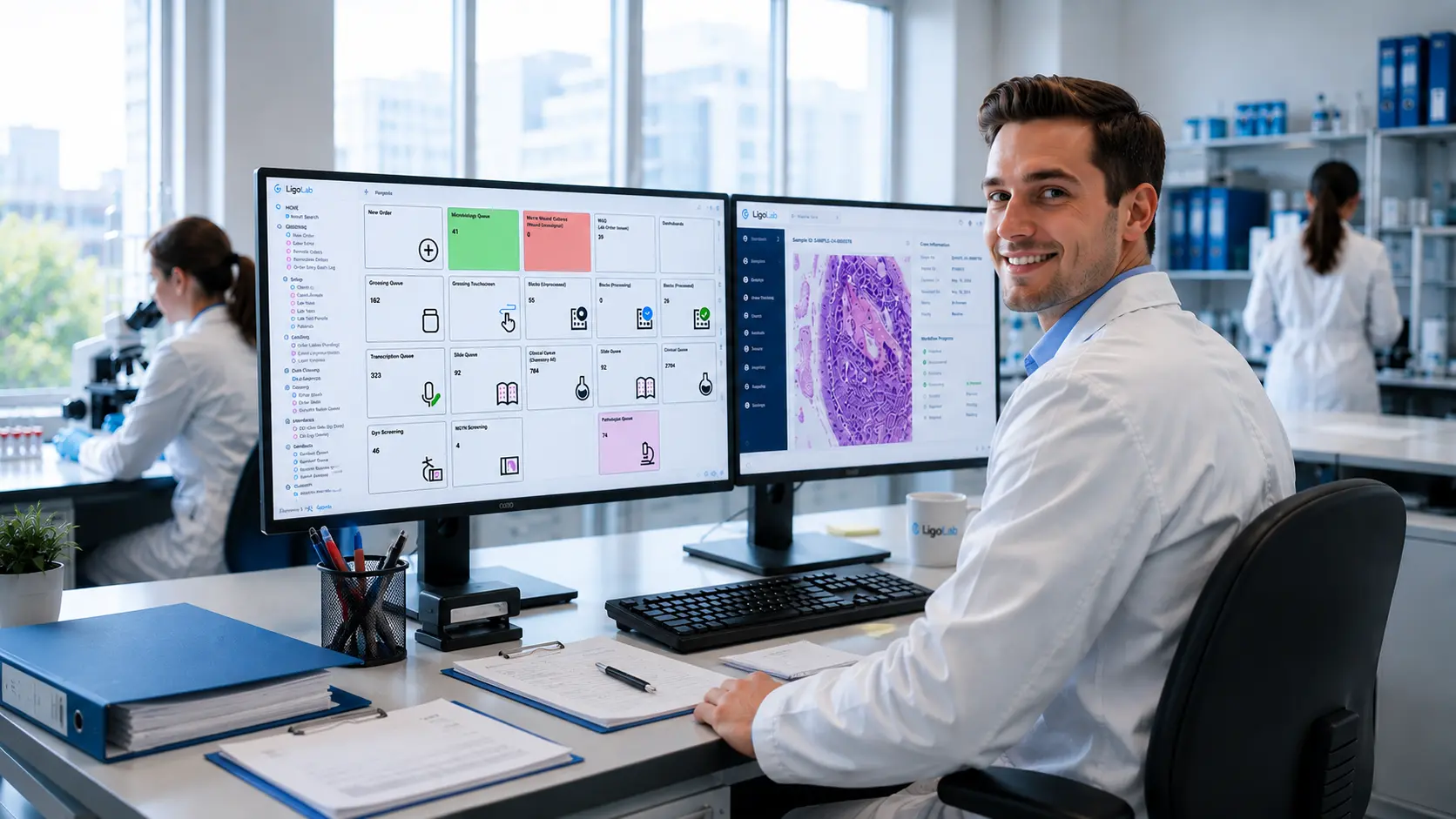
Modern laboratories are increasingly shifting toward full workflow orchestration powered by advanced laboratory information systems and integrated automation engines.
Instead of automating individual activities in isolation, laboratories are beginning to automate entire operational pathways across:
- Order entry
- Specimen routing
- Accessioning
- Instrument workflows
- Result review
- Report distribution
- Billing workflows
- Denial management
- Client communications
- Operational analytics
This transition represents one of the most important developments in laboratory medicine.
The laboratory information system is evolving from a passive system of record into an active operational engine that creates highly productive automated labs.
Industry Insights: Why the Future of the Laboratory Information System Must Be Active, Intelligent, and Integrated

AI-Assisted Workflow Optimization Is Becoming a Reality
One of the most significant trends shaping the future of laboratory informatics is AI-assisted workflow optimization.
Laboratories today generate enormous amounts of operational data.
Modern medical laboratory information system software platforms capture:
- Turnaround times
- Instrument utilization
- Queue volume
- Staffing patterns
- Exception rates
- Billing performance
- Client ordering behavior
- Denial trends
- Specimen routing patterns
Historically, much of this data was underutilized.
That is beginning to change.
The next generation of LIS laboratory information system platforms will increasingly use AI and advanced analytics to:
- Predict workflow bottlenecks
- Forecast volume spikes
- Optimize staffing allocation
- Recommend routing decisions
- Identify denial risks proactively
- Surface operational anomalies
- Improve resource utilization
This represents a major shift from reactive management to predictive operations.
With advanced analytics and automation, laboratories will be better equipped to foresee and resolve operational bottlenecks before they affect productivity, turnaround times, or service quality.
Discover More: Why Modern Labs Must Move Beyond Manual Workflows and Legacy LIS Systems
Digital Pathology Will Accelerate Automation Adoption
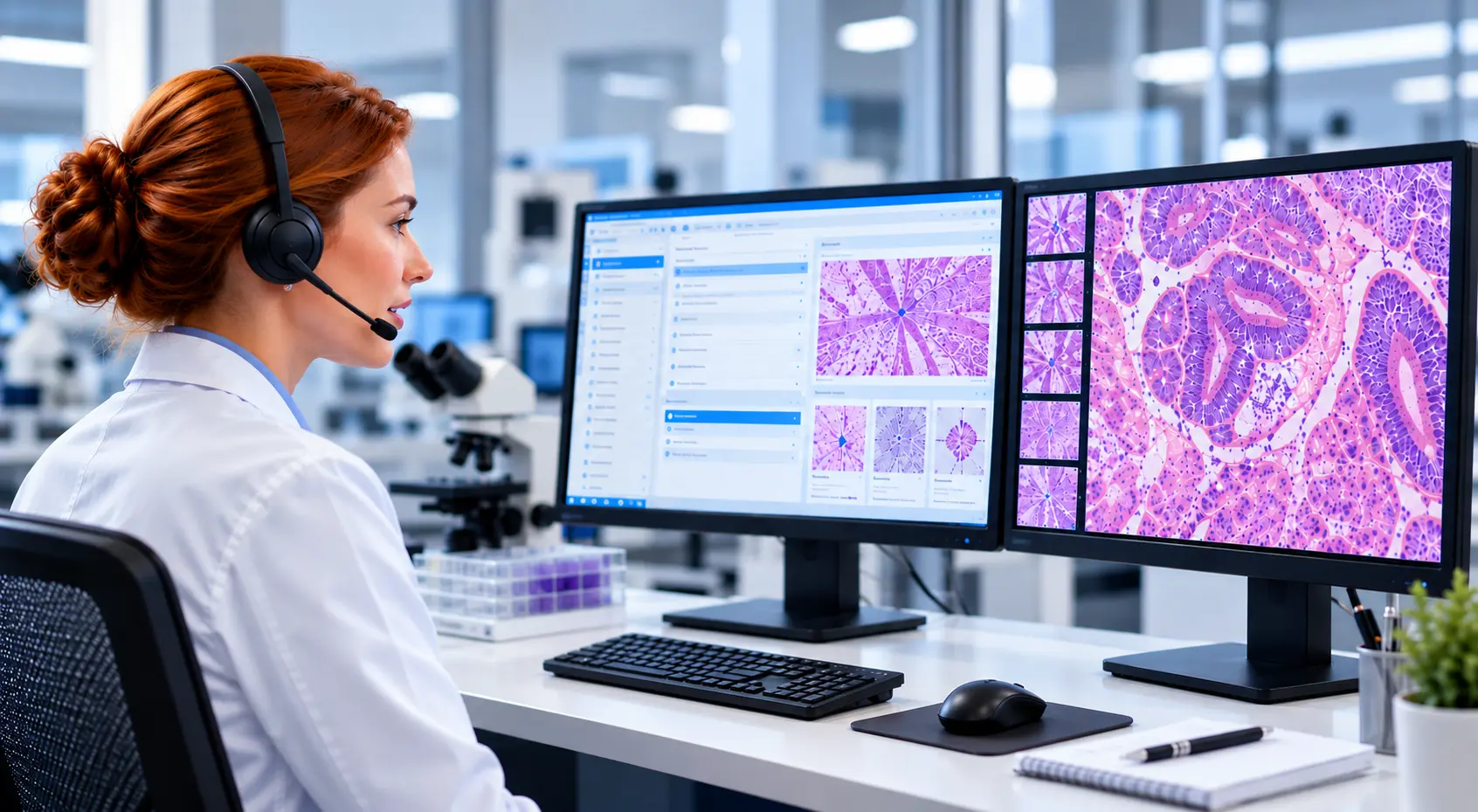
Another major force reshaping laboratory automation is digital pathology.
As pathology practices continue transitioning toward digital workflows, automation opportunities expand significantly.
Digital pathology environments increasingly support:
- AI-assisted case prioritization
- Image analysis
- Screening workflows
- Intelligent case routing
- Automated workload balancing
- Real-time collaboration
- Integrated diagnostic review
Importantly, these workflows require deep integration between the imaging management system (IMS) and the lab information system.
Disconnected laboratory software systems create friction that limits efficiency and scalability.
This is why modern laboratory information system companies are increasingly prioritizing seamless interoperability with the latest digital pathology workflow.
The future belongs to platforms capable of orchestrating operational workflows and diagnostic workflows simultaneously.
Discover More: Executive War College 2026 Recap - Advancing Laboratory Leadership Through Innovation, Collaboration, and Digital Transformation
Lab Revenue Cycle Management Automation Will Become Increasingly Sophisticated
One of the most transformative developments ahead is the continued evolution of laboratory revenue cycle management automation.
Laboratory billing complexity continues to grow rapidly due to:
- Expanding molecular testing
- Constant payer policy changes
- Prior authorization requirements
- Complex coding rules
- Increased audit scrutiny
- Personalized medicine workflows
Manual lab billing operations simply cannot scale effectively in this environment.
Future-focused laboratories are increasingly moving toward fully integrated LIS and lab billing platforms that automate revenue cycle management from the moment an order enters the system.
This is an area where LigoLab has positioned itself aggressively.
The all-in-one LigoLab Informatics Platform combines operational and financial workflows and the latest RCM tools within a unified lab database software architecture specifically designed for rules-based automation and end-to-end visibility.
This empowers laboratories to automate:
- Eligibility verification
- Insurance discovery
- CPT/ICD coding
- Claim scrubbing
- Denial prevention
- Appeals workflows
- Revenue tracking
- Financial analytics
Future automation capabilities will likely extend even further into:
- Predictive denial management
- AI-assisted coding optimization
- Automated payer rule adaptation
- Intelligent reimbursement forecasting
Labs still operating separate LIS systems and lab billing applications will face increasing operational disadvantages as automation capabilities become more sophisticated.
The Best LIS System Vendors Will Prioritize Unified Architecture
One of the most important lessons emerging in laboratory medicine is that fragmented software environments significantly constrain an organization's ability to automate effectively.
Every disconnected system introduces:
- Data silos
- Manual reconciliation
- Delayed workflows
- Compliance risks
- Operational inefficiency
This is why the industry is increasingly moving toward unified, all-in-one LIS lab platforms.
The best laboratory information system software platforms are no longer simply repositories for patient results.
They are becoming enterprise workflow orchestration systems.
Leading LIS software vendors are differentiating themselves through:
- Embedded automation engines
- Integrated billing
- Open interoperability
- Real-time analytics
- Configurable workflows
- Advanced queue management
- Cloud scalability
- AI-readiness
Labs evaluating LIS system vendors are increasingly prioritizing these capabilities because the effectiveness of automation depends heavily on architectural flexibility.
Trying to automate on top of rigid legacy LIS systems creates enormous limitations.
Discover More: LigoLab Expands Enterprise Tier with Pathologist Scheduling and Scheduled Reports
Exception Management Will Remain Critical
Even as automation advances, lab operators will continue playing an essential role in exception management.
Automation works best when handling routine, repeatable processes.
But laboratories will always encounter situations requiring human expertise:
- Complex microbiology interpretation
- Cytology review
- QC investigation
- Delta check evaluation
- Critical value assessment
- Compliance oversight
- Client relationship management
- Regulatory decision-making
The future laboratory is not fully autonomous.
It is intelligently augmented.
Automation handles routine operational work while skilled professionals focus on complex clinical and strategic responsibilities.
This distinction is critically important.
The goal of automation is not to replace human expertise, but to maximize its value.
Industry Insights: Beyond Go Live - Maximizing Laboratory Information System (LIS) Performance and Laboratory ROI
Staffing Challenges Will Continue Driving Automation Investment
Workforce shortages remain one of the strongest long-term drivers of laboratory automation.
Laboratories nationwide continue struggling with:
- Recruitment difficulty
- Aging workforce demographics
- Burnout
- Vacancy rates
- Training limitations
These pressures are unlikely to disappear anytime soon.
Automation provides one of the few scalable ways to absorb growing testing demand without continuously expanding headcount.
Importantly, automation also helps improve retention.
When laboratory personnel spend less time performing repetitive administrative work and more time engaging in meaningful analytical responsibilities, job satisfaction often improves significantly.
Laboratories that invest in modern, efficient, and highly automated environments will be best positioned to attract and retain top talent.
Operational Visibility Will Become a Competitive Advantage
As automation expands, operational visibility will become increasingly valuable.
Laboratories with advanced analytics capabilities will gain significant advantages in:
- Resource planning
- Capacity forecasting
- Workflow optimization
- Financial performance management
- Client service
- Strategic growth planning
The future laboratory will operate more like a highly data-driven logistics organization than a traditional, siloed diagnostic environment.
This evolution requires advanced lab database software capable of supporting real-time operational intelligence.
White Paper: Summit Pathology - Achieving Laboratory Profitability Amidst Operational Pressures
The Future Belongs to Automation-First Laboratories
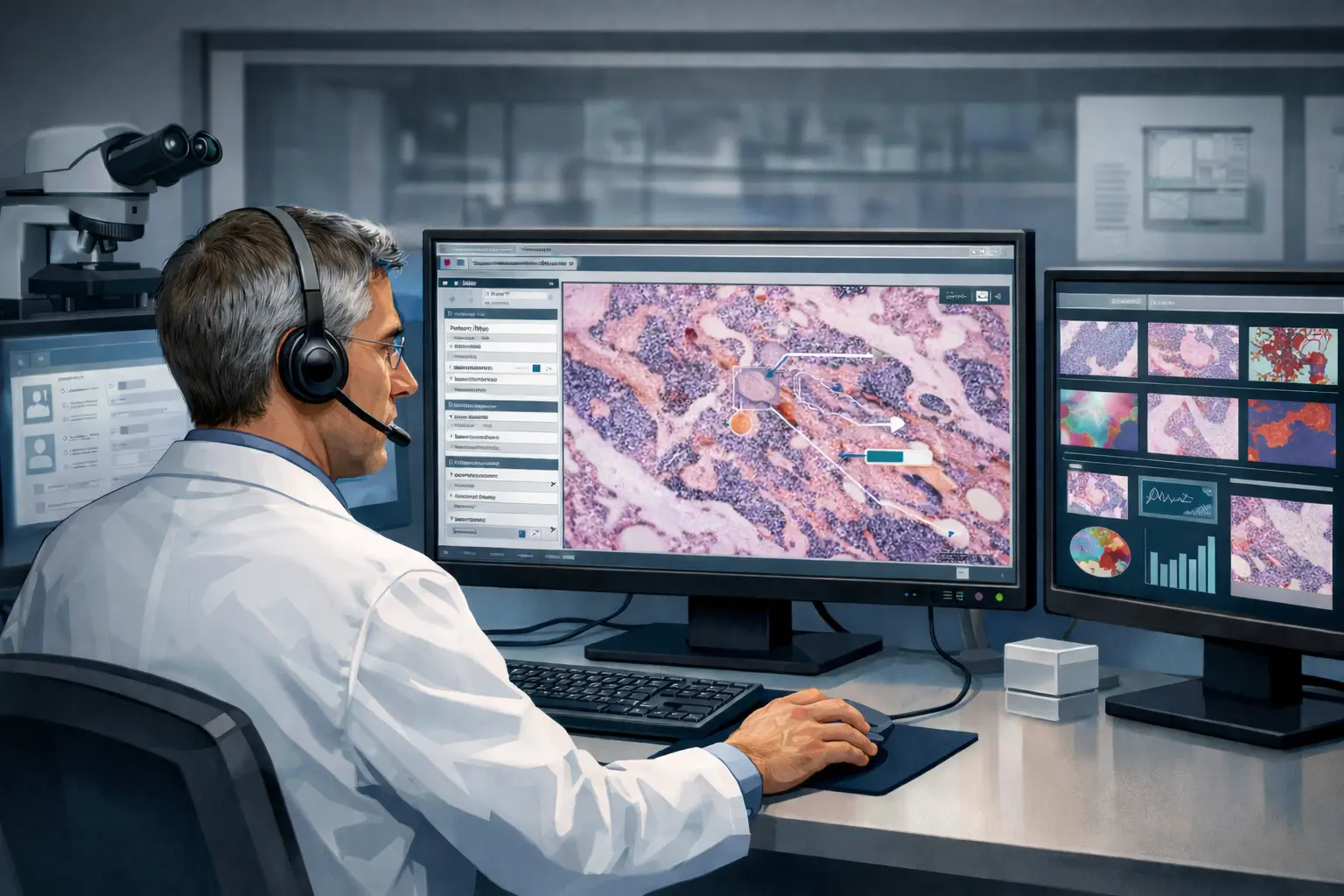
The laboratory industry is entering a period of profound transformation.
Organizations that continue relying on disconnected systems, manual workflows, spreadsheet-based reconciliation, and aging LIS software platforms will struggle under mounting operational pressure.
By contrast, laboratories implementing modern automation-first informatics platforms will gain:
- Greater scalability
- Faster turnaround times
- Improved reimbursement
- Reduced staffing burden
- Better compliance
- Enhanced operational visibility
- Stronger client satisfaction
- Greater long-term competitiveness
Most importantly, they will position themselves to adapt continuously as healthcare, diagnostics, reimbursement, and technology continue evolving.
This is ultimately why automation matters so deeply.
Not because automation itself is the goal, but because the laboratories best positioned for the future will be those capable of operating intelligently, efficiently, and strategically in an increasingly complex healthcare environment.
Turn Automation into a Long-Term Competitive Advantage
As laboratory medicine continues to evolve, the right technology foundation matters more than ever. Explore how LigoLab can help your organization thrive in the automation-first era.
Act Now: Speak with a LigoLab Product Specialist!
Frequently Asked Questions About AI, Integrated LIS Platforms, and Rules-based Workflow Automation
What is the future of laboratory automation?
The future of laboratory automation involves fully integrated, automation-first ecosystems that connect laboratory operations, billing, analytics, digital pathology, and workflow management. Modern laboratories are increasingly using AI, predictive analytics, and advanced LIS software platforms to automate end-to-end workflows and improve operational efficiency.
How will artificial intelligence impact laboratory operations?
AI will help laboratories analyze operational data to predict bottlenecks, forecast testing volumes, optimize staffing, identify denial risks, improve specimen routing, and proactively address workflow issues before they affect performance.
What role will digital pathology play in laboratory automation?
Digital pathology is expanding automation opportunities through AI-assisted image analysis, intelligent case routing, automated workload balancing, real-time collaboration, and integrated diagnostic review. Successful implementation depends on seamless integration between digital pathology solutions and the laboratory information system.
Why are integrated LIS and lab billing systems becoming more important?
Integrated LIS and lab billing platforms eliminate data silos and enable automation to begin at order entry. They support functions such as eligibility verification, insurance discovery, coding, claim scrubbing, denial prevention, revenue tracking, and financial analytics within a single system.
What is workflow orchestration in a laboratory setting?
Workflow orchestration refers to automating and coordinating entire operational pathways rather than individual tasks. This includes order entry, accessioning, specimen routing, result review, laboratory billing, reporting, client communications, and operational analytics working together through a unified lab organization software platform.
Will automation replace laboratory professionals?
No. Automation is designed to handle repetitive, rules-based tasks while allowing laboratorians to focus on higher-value activities such as complex result interpretation, quality control investigations, compliance oversight, client support, and operational decision-making.
How does automation help address laboratory staffing shortages?
Automation reduces the manual workload associated with routine administrative and operational tasks, enabling laboratories to manage growing testing volumes without proportionally increasing staffing levels. It can also improve employee satisfaction by reducing repetitive work and allowing staff to focus on more meaningful responsibilities.
What features should laboratories look for in a future-ready LIS system?
Laboratories should prioritize platforms that offer unified architecture, embedded automation engines, integrated lab billing, real-time analytics, configurable workflows, open interoperability, advanced queue management, cloud scalability, and AI readiness.
Why is operational visibility becoming a competitive advantage for laboratories?
Advanced analytics and real-time visibility help laboratories optimize workflows, forecast capacity, improve resource allocation, monitor financial performance, enhance client service, and make more informed strategic decisions.
Why are legacy LIS systems limiting automation efforts?
Many legacy laboratory information systems were not designed for modern automation and often require manual reconciliation, spreadsheet-based processes, custom middleware, and disconnected workflows. These limitations create inefficiencies that hinder scalability and reduce the effectiveness of automation.