Industry Insights
Best Laboratory Billing Software Solutions: A Complete Comparison for Clinical, Pathology, and Outreach Labs

April 29, 2026

Laboratory billing has become one of the most complex and mission-critical components of modern diagnostic operations. As reimbursement models evolve and payer requirements intensify, laboratories must rely on advanced laboratory billing solutions, lab revenue cycle management (RCM) tools, and laboratory information system (LIS) software to remain financially viable.
This article compares leading billing software for labs, evaluates their strengths and limitations, and explains why integrated laboratory information system software with embedded lab billing modules is increasingly the preferred choice for enterprises seeking efficiency, visibility, and sustainable medical laboratory profit.
Discover More: Mastering Lab Operations - A Guide to Clinical Laboratory Management Solutions
Understanding Laboratory Billing and Lab RCM
The laboratory billing process is a multi-step workflow that includes:
- Order entry and patient registration
- Insurance verification and eligibility checks
- Coding (ICD/CPT) and claim creation
- Claim submission and payer communication
- Payment posting and reconciliation
- Denial management and appeals
This end-to-end RCM cycle requires precise coordination between clinical and financial systems. When disconnected, labs experience delays, errors, and lost revenue.
Modern lab RCM strategies rely on automation, real-time validation, and integration with diagnostic lab software to optimize both operational and financial outcomes.
Discover More: The AI Revolution in Laboratory Billing - A Game Changer for 2026 and Beyond
Key Features to Look for in Laboratory Billing Software
Before comparing lab vendors, it’s important to define what makes a strong laboratory billing system:
1. Automation and Laboratory Workflow Management
Automated claim scrubbing, coding, and eligibility checks reduce manual work and errors.
2. Integration with Laboratory Information System Software
A seamless connection with laboratory information system (LIS) software ensures that lab billing begins at the order entry stage.
3. Real-Time Visibility
Dashboards and reporting tools provide insight into KPIs like denial rates, collections, and reimbursement timelines.
4. Scalability
The laboratory billing system should expand as test volume, new specialties, and services are added.
5. Compliance and Auditability
Built-in audit trails and regulatory safeguards are essential for compliance with CLIA, CAP, and HIPAA.
On-Demand Webinar: Outsourced vs. In-House Laboratory Billing - How to Make the Right Choice for Your Lab

Leading Laboratory Billing Software Vendors
Choosing the right laboratory billing solution depends on a lab’s preferred operating model, whether that’s full integration, in-house control, or outsourced expertise. Below is an examination of several widely used options, highlighting both strengths and trade-offs.
1. LigoLab (All-in-One Medical LIS + Lab Billing Platform)
Overview:
LigoLab combines a laboratory information system with embedded lab revenue cycle management, which brings clinical and financial workflows into a single lab organization software platform.
Strengths:
- Tight integration between its LIS system and laboratory billing modules enables earlier lab revenue cycle management
- A unified data structure reduces the need for reconciliation between laboratory software systems
- Automation capabilities for coding, eligibility checks, and claim validation
- Deployment flexibility (cloud and on-premises environments)
- Real-time reporting and operational dashboards
- Scalable across different lab types (clinical, anatomic pathology, molecular)
Considerations:
- Implementation may require migrating from existing LIS and laboratory billing systems
- A broader feature set may exceed the immediate needs of smaller or less complex labs
- Organizational change management may be needed to utilize the integrated workflows
Best Fit:
Labs interested in consolidating systems and aligning clinical and financial operations within a single platform.
2. XIFIN
Overview:
XIFIN focuses on cloud-based and outsourced revenue cycle management services, with a strong emphasis on payer connectivity and analytics.
Strengths:
- Extensive payer network connectivity
- Mature analytics and reporting capabilities
- Scalable infrastructure designed for high transaction volumes
- Reduced internal staffing burden through outsourcing options
Considerations:
- A service-based model may limit direct control over lab billing operations
- Integration with existing medical LIS platforms can require additional configuration
- Long-term costs may be higher depending on service scope and volume
Best Fit:
Labs that prefer outsourcing billing operations and leveraging external RCM cycle expertise.
3. TELCOR
Overview:
TELCOR is a standalone laboratory billing system designed to support in-house revenue cycle management with a focus on workflow control and reporting.
Strengths:
- Built specifically for laboratory billing workflows
- Supports in-house billing teams with detailed claims and denial management tools
- Flexible reporting for financial tracking and performance monitoring
- Scales with growing test volumes and operational complexity
Considerations:
- Operates separately from LIS systems, requiring interfaces and integrations
- May involve additional effort to maintain alignment between clinical and financial data
- Multi-site or complex environments may require additional configuration
Best Fit:
Labs that want to retain control of billing operations using a dedicated RCM system alongside their LIS system software.
4. Quadax
Overview:
Quadax offers a combination of technology and services, often delivering RCM through a hybrid model that blends automation with outsourced support.
Strengths:
- Strong focus on automation, analytics, and denial management
- Flexible delivery model combining software and services
- Scalable for high-volume and complex laboratory billing environments
- Designed to improve reimbursement performance and operational efficiency
Considerations:
- A hybrid or service-based approach may reduce direct oversight of lab billing processes
- Not a natively integrated medical LIS + lab RCM platform
- Requires integration with external LIS systems for full workflow connectivity
Best Fit:
Mid-sized to large labs seeking a balance between automation and outsourced RCM support.
5. Advanced Data Systems
Overview:
Advanced Data Systems offers healthcare revenue cycle management and billing solutions, including laboratory billing software designed to support both independent labs and physician office labs.
Strengths:
- Flexible support for both in-house billing teams and outsourced RCM models
- Strong claims management tools, including tracking and denial management
- Integration capabilities with various laboratory information systems and EHR platforms
- Customizable workflows to accommodate different lab billing requirements
Considerations:
- May require interfaces with external LIS systems, which can introduce complexity
- Level of automation and real-time clinical-financial integration may vary depending on configuration
- Implementation timelines can differ based on integration needs and customization
Best Fit:
Laboratories and physician office labs that want a dedicated laboratory billing solution with flexible deployment options, particularly those comfortable maintaining separate LIS and billing systems.
Summary
Each solution listed reflects a different approach to laboratory billing. Integrated platforms emphasize workflow alignment and data consistency, standalone systems prioritize specialization, and service-based models focus on outsourcing complexity. The right choice depends on a lab’s operational priorities, internal resources, and long-term growth strategy.
Industry Insights: Roundtable Discussion - Laboratory Billing Solutions and the Lab RCM Process
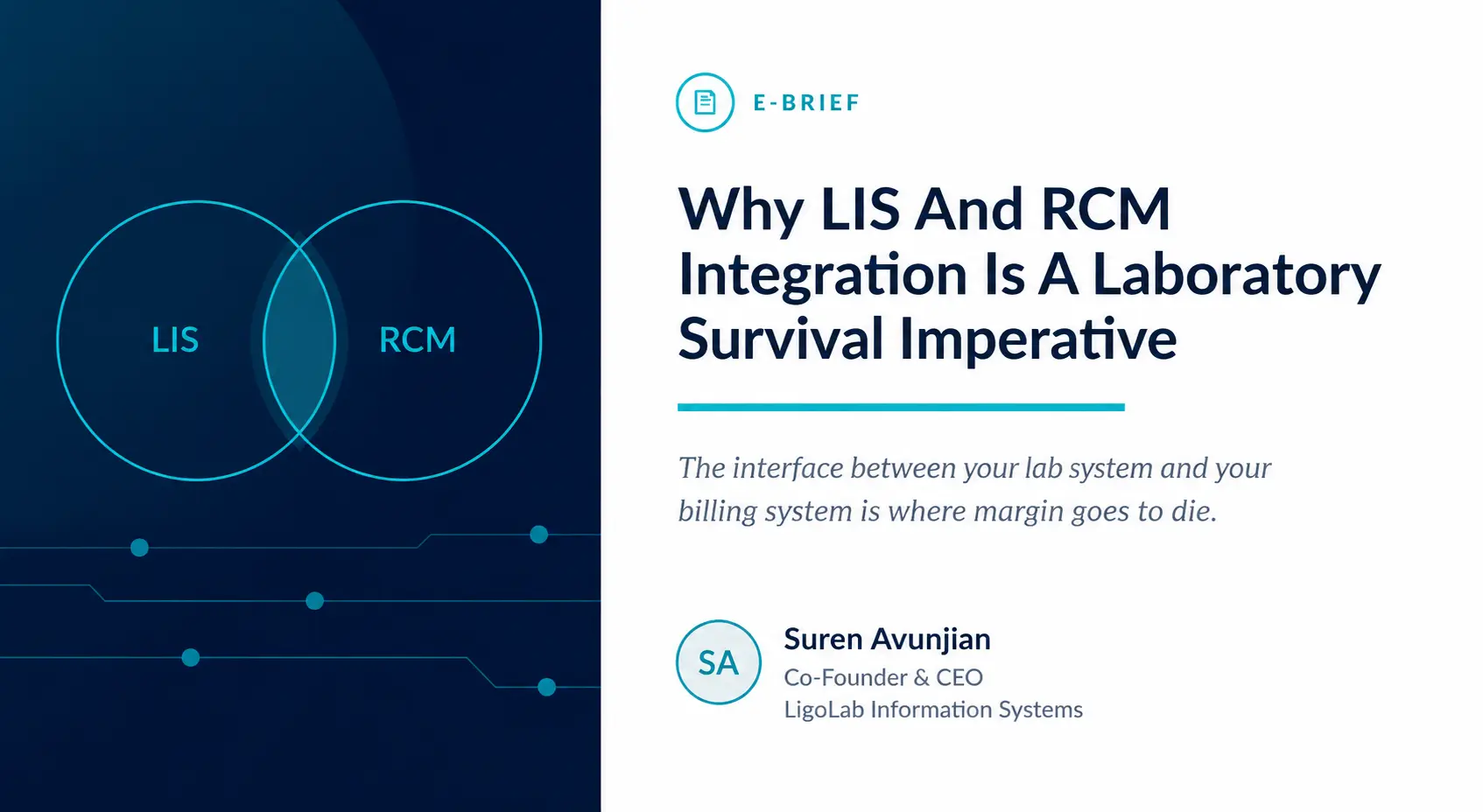
Integrated vs. Disconnected Laboratory Software Systems: A Critical Comparison
Disconnected Systems (Traditional Model)
- Separate software for lab billing and laboratory information system functions
- Manual data transfer between systems
- Increased risk of errors and delays
- Limited visibility into financial performance
Integrated LIS + RCM (Modern Model)
- Unified informatics platform for clinical and financial workflows
- Laboratory billing begins at order entry
- Real-time validation reduces denials
- Complete visibility across the RCM cycle
This shift represents a major evolution in information systems and data management for laboratories.
White Paper: Maximizing Medical Laboratory Profit - The Case for In-House Lab Billing
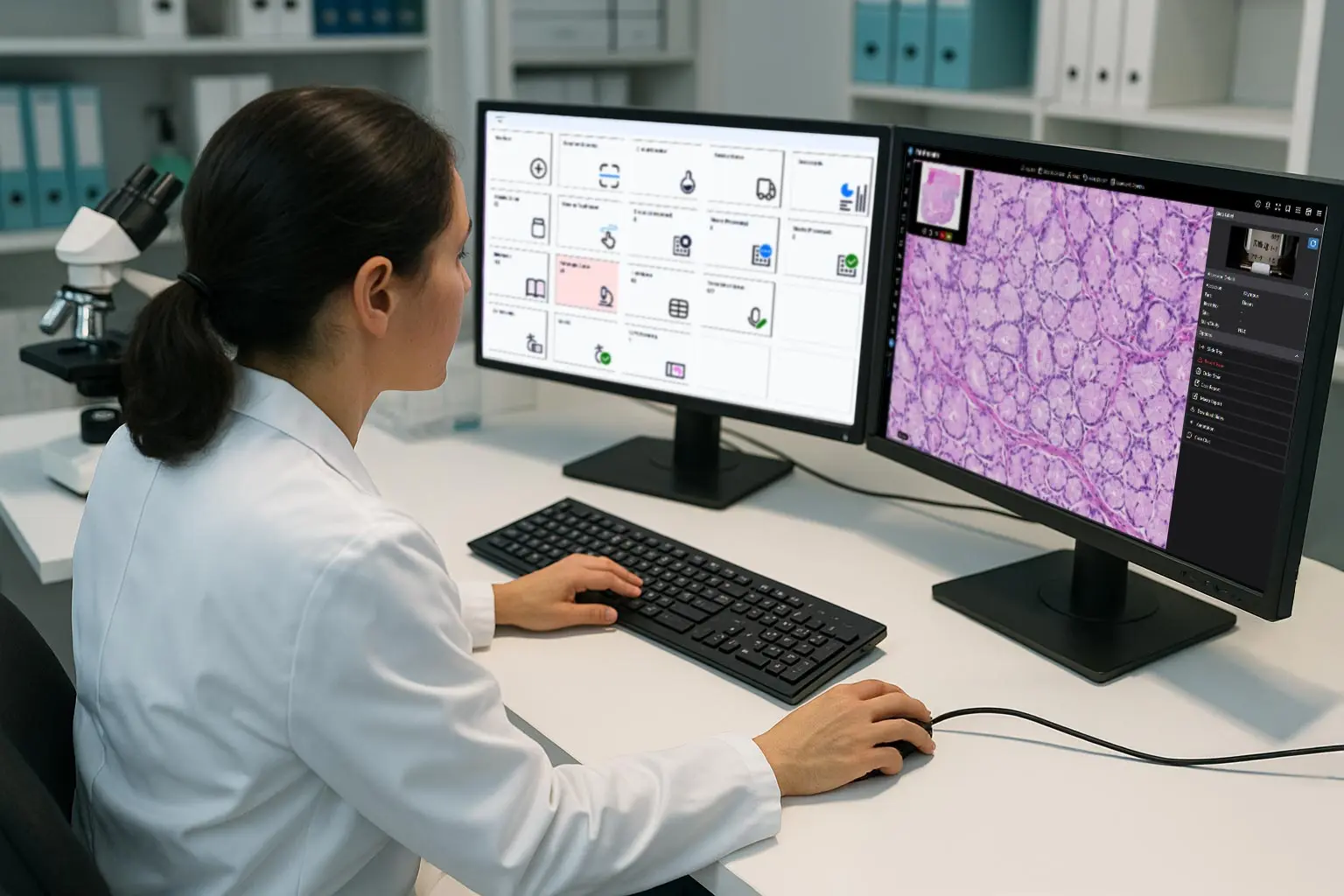
Why LigoLab Stands Out for In-House Laboratory Billing
While many lab vendors offer strong components of laboratory billing systems, LigoLab differentiates itself by delivering a truly unified informatics platform.
1. Start Lab Billing at Order Entry
Unlike traditional systems, the LigoLab platform initiates the laboratory billing process as soon as an order is created, capturing accurate data upfront and preventing errors downstream.
2. End-to-End Lab Workflow Automation
From coding to claim submission, LigoLab automates key steps in the RCM process, reducing reliance on manual intervention.
3. Single Source of Truth
By combining medical LIS and lab RCM functionality within a single system, LigoLab eliminates data silos and ensures consistency across clinical and financial operations.
4. Real-Time Financial Visibility
Custom dashboards provide actionable insights into collections, denials, and revenue trends, empowering better decision-making.
5. Improved Medical Laboratory Profit
With fewer denials, faster reimbursements, and reduced administrative overhead, labs can significantly improve profitability.
Case Study: Summit Pathology - Achieving Laboratory Profitability Amidst Operational Pressures
The Impact of Automation on Laboratory Billing
Automation is redefining clinical laboratory management by:
- Reducing manual data entry
- Accelerating claim processing
- Improving coding accuracy
- Enhancing compliance and audit readiness
Modern automated labs leverage AI-driven tools and rules-based engines to optimize every step of the RCM cycle.
Discover More: AI Agents - Digital Labor Powering the Future of Laboratory Operations
Choosing the Right Laboratory Billing Solution
When selecting a laboratory billing system, diagnostic testing organizations should consider:
- Integration with an existing lab information system or the need for replacement
- Volume and complexity of testing
- In-house vs. outsourced lab billing strategy
- Scalability and future growth plans
- Total cost of ownership
For labs aiming to modernize operations, an integrated medical LIS + lab RCM platform offers the most long-term value.
Discover More: Cost of Inaction - The Dire Consequences of Neglecting Modernization in Laboratory Operations and Informatics
The Future of Laboratory Revenue Cycle Management
Emerging trends shaping lab revenue cycle management include:
- AI-driven denial prediction
- Real-time insurance discovery
- Predictive analytics for revenue optimization
- Greater interoperability across healthcare systems
- Expansion of direct-to-consumer lab testing and billing models
These advancements will further emphasize the importance of unified medical laboratory solutions.
Discover More: Navigating the Future of Pathology - The LigoLab Advantage
Choose a Smarter Path Forward with Unified Medical LIS + Lab Billing
The choice of laboratory billing software has a direct impact on a lab’s financial health and operational efficiency. While many vendors offer capable RCM tools, the industry is moving toward unified platforms that combine laboratory information systems with lab revenue cycle management.
For laboratories seeking to eliminate inefficiencies, gain full visibility, and maximize medical laboratory profit, integrated solutions like LigoLab represent the future of laboratory billing systems.
Ready to eliminate inefficiencies and maximize revenue? Schedule a demo today to see how an all-in-one medical LIS and lab billing platform can transform your laboratory operations.
Act Now: Contact a LigoLab Product Specialist
FAQs: Laboratory Billing Software & Lab RCM
What is laboratory revenue cycle management (RCM)?
Laboratory RCM refers to the financial process of managing billing, claims, payments, and revenue generation from diagnostic testing services.
Why is integration with LIS software important?
Integration ensures lab billing begins at order entry, reducing errors, improving efficiency, and enhancing visibility across the entire workflow.
What are the benefits of automated laboratory billing?
Automation reduces manual work, minimizes errors, accelerates reimbursements, and improves compliance.
Should labs outsource billing or keep it in-house?
Outsourcing offers convenience but less control. In-house billing, especially with integrated systems like LigoLab, provides greater transparency and long-term cost savings.
How does LigoLab improve medical laboratory profit?
By unifying medical LIS and lab RCM capabilities within a single platform, LigoLab helps minimize denials, accelerate reimbursement, and improve operational efficiency, supporting stronger overall financial performance.
What should organizations look for in laboratory billing software?
Key features include automation, LIS system integration, real-time reporting, scalability, and compliance tools.