Blog
How Modern Laboratory Information Systems Use Rules and Automation to Drive Efficiency, Scalability, and Growth
June 18, 2026
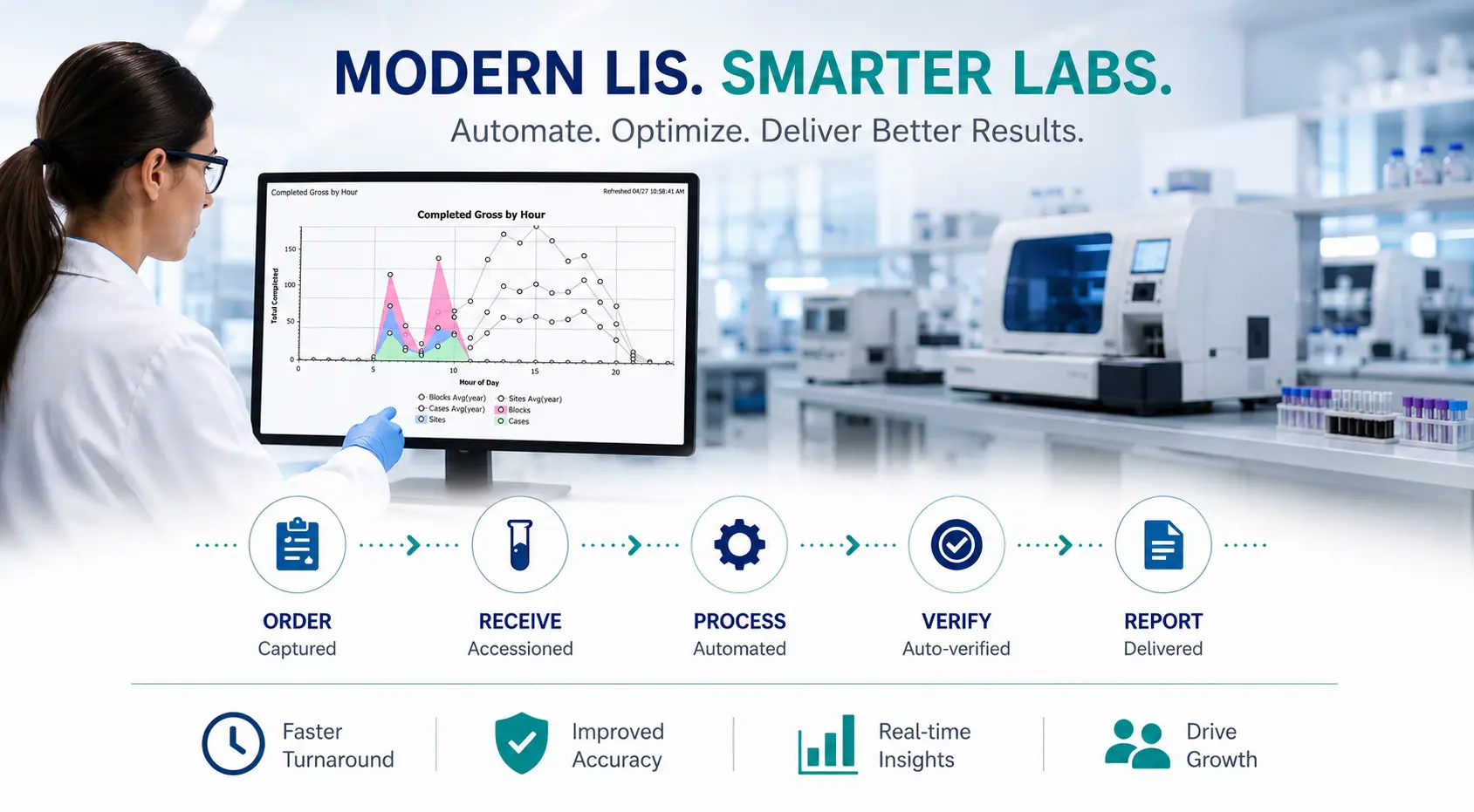
As we all know, today's laboratories face far more complex challenges than their predecessors. Staffing shortages, increasing test volumes, expanding regulatory requirements, shrinking reimbursement rates, and rising client expectations are placing unprecedented pressure on laboratory operations.
As a result, the most advanced laboratory information systems are evolving to meet these challenges by transforming into intelligent anatomic pathology and clinical laboratory management platforms that can leverage configurable rules engines, workflow automation, real-time analytics, and decision-support tools to actively guide operations, eliminate bottlenecks, and create new opportunities for business growth.
The challenges facing medical laboratories are not temporary, and neither are the consequences of ignoring them. As testing complexity rises and resources become increasingly constrained, organizations relying on outdated clinical and pathology LIS systems risk falling behind. In contrast, laboratories supported by modern, automation-driven LIS software can streamline operations, eliminate inefficiencies, improve performance, and create a foundation for sustainable growth.
Discover More: Best LIS Systems - Top Laboratory Information Systems Compared for Clinical, Pathology, and Outreach Labs
The Difference Between a Legacy LIS System and a Modern LIS Lab Platform
Traditional laboratory information systems were designed to document laboratory activity.
A legacy LIS system typically requires significant human intervention at nearly every stage of workflow:
- Manual result review
- Manual test routing
- Manual specimen tracking
- Manual report distribution
- Manual quality control monitoring
- Manual sendout management
- Manual compliance documentation
These traditional LIS systems can store data, but they rarely act upon it.
Modern laboratory information system software operates differently.
Instead of simply recording laboratory events, advanced informatics platforms continuously evaluate laboratory data against configurable business rules and automatically trigger actions when predefined conditions are met.
The result is a lab information system that actively supports operational decision-making while reducing administrative burden.
This shift transforms the medical LIS from a record-keeping tool into a powerful operational engine.
Discover More: Comparing the LigoLab Informatics Platform with Legacy Laboratory Information System Software
Why Rules Engines Matter
At the heart of every advanced laboratory information system is a sophisticated rules engine.
A rules engine enables laboratories to define specific conditions, actions, and outcomes that automate routine decision-making throughout the testing lifecycle.
These rules can be triggered at virtually any point in the laboratory workflow, including:
- Order entry
- Specimen receipt
- Accessioning
- Instrument result entry
- Quality control review
- Report generation
- Result release
- Laboratory billing workflows
- Sendout management
When a condition is met, the LIS software automatically executes a predetermined action.
Examples include:
- Adding reflex tests
- Applying workflow flags
- Routing specimens
- Generating labels
- Triggering notifications
- Suppressing incomplete results
- Requiring approvals
- Auto-verifying results
- Initiating sendout workflows
Unlike simple automation tools, modern rules engines empower laboratories to chain multiple rules together into sophisticated decision-support trees that mirror real-world operational processes.
Discover More: Why Modern Labs Must Move Beyond Manual Workflows and Legacy LIS Systems

Eliminating Manual Result Review Through Auto-Verification
One of the most significant workflow bottlenecks in many laboratories is the review of the results.
In a traditional environment, technologists may spend hours reviewing normal instrument-generated results before releasing them.
While necessary, this process often consumes valuable staff time without adding meaningful clinical value.
Modern medical LIS software addresses this challenge through automated result verification.
Rules can evaluate results based on:
- Critical value thresholds
- Delta checks
- Biological variance parameters
- Instrument quality control status
- Inconsistency detection logic
- Test-specific validation criteria
If all requirements are met, the laboratory information system automatically verifies the result and releases it in conjunction with laboratory policy.
Instead of reviewing thousands of routine results, staff can focus their attention on exceptions requiring clinical judgment.
This approach accelerates turnaround times, reduces labor costs, and improves productivity while maintaining complete auditability.
Discover More: The New Era of Laboratory Informatics - From Manual Tasks to Sustained Success
Reflex Testing Without Human Intervention
Reflex testing represents another area where automation can dramatically improve efficiency.
Consider a microbiology laboratory where identification of a specific organism automatically requires susceptibility testing.
In a manual workflow:
- A technologist reviews the result.
- The technologist determines whether reflex testing is required.
- The technologist places the additional order.
- The specimen is rerouted for additional testing.
Each step introduces delays and opportunities for error.
An advanced laboratory information system eliminates these manual tasks.
When predefined criteria are met, the rules engine automatically:
- Orders the reflex test
- Routes the specimen
- Updates workflow status
- Notifies appropriate personnel
- Documents the action within the audit trail
The entire process occurs without staff intervention.
Industry Insights: Why Laboratory Leaders Are Re‑Thinking Their LIS System Strategy in 2026 - and Where LigoLab Fits
Smarter Laboratory Workflow Management Through Automated Action Queues
Many laboratory bottlenecks occur because tasks become trapped in email inboxes, spreadsheets, sticky notes, or informal communication channels.
Modern LIS medical solutions solve this problem through workflow action queues.
When a rule identifies an exception or required activity, the advanced LIS system automatically places the case into a dedicated work queue.
Examples include:
- Quality assurance review
- Peer review
- Result correction
- Sendout approval
- Retest requests
- Missing information follow-up
- Required pathologist sign-off
Each action is timestamped, assigned to the proper role, and tracked through completion.
This structured approach improves accountability while ensuring critical tasks never fall through the cracks.
On-Demand Webinar: From Manual to Magical - Automation Strategies for Multi-Facility AP & Clinical Labs
Preventing Reporting Delays
Result reporting serves as a highly visible touchpoint between the laboratory and its customers. However, in many organizations, the distribution process still depends heavily on manual effort.
Staff members often determine where reports should be sent, how they should be delivered, and whether special handling requirements exist.
Modern laboratory information system software automates these decisions.
Client-specific rules can determine:
- Distribution method
- Report format
- Release timing
- Preliminary versus final reporting
- Provider-specific requirements
- Suppression criteria
Reports can be automatically delivered through:
- HL7 interfaces
- Electronic medical records
- Physician portals
- Fax
- Remote printing
- SMS notifications
This automation minimizes administrative workload while ensuring reports reach the appropriate recipients quickly and accurately.
Discover More: Streamline Laboratory Workflow Management With Customized Lab Reports & Unmatched Client Support
Streamlining Sendout Testing
Sendout management often represents a hidden source of inefficiency.
Manual sendout workflows frequently require:
- Creating requisitions
- Tracking specimens
- Monitoring expected turnaround times
- Managing reference laboratory communications
- Recording returned materials
Without automation, these activities consume a significant amount of staff resources.
Advanced LIS software automates the entire sendout lifecycle.
Rules can automatically generate sendout orders, create reference laboratory documentation, track specimen status, monitor turnaround times, and manage result integration upon completion.
Laboratories gain greater visibility while reducing administrative effort.
Industry Insights: How to Turn Your Mid-Sized Medical Laboratory into a Thriving Large-Scale Operation
Using Analytics to Drive Continuous Improvement
Automation becomes even more valuable when combined with analytics.
Modern laboratory information systems continuously generate operational intelligence that laboratory leaders can use to improve performance.
Built-in dashboards provide visibility into:
- Turnaround times
- Productivity
- Specimen status
- Quality metrics
- Compliance indicators
- Lab billing performance
- Workload distribution
Instead of reacting to problems after they occur, laboratories can identify trends early and make proactive adjustments.
For example, a dashboard may reveal:
- Increasing sendout delays
- Growing accessioning backlogs
- Rising amendment rates
- Productivity imbalances between departments
These insights enable data-driven operational decisions that improve efficiency and support growth.
Industry Insights: Laboratory Information Systems and Their Key Role in Lab Data Analytics
Automation Creates Scalability
One of the greatest benefits of a modern laboratory information system is scalability.
Laboratories often struggle to grow because manual workflows require additional personnel as testing volumes increase.
This creates a direct relationship between revenue growth and labor costs.
Automation breaks that relationship.
When routine activities, such as result verification, reflex testing, report distribution, specimen routing, and laboratory workflow management, are automated, organizations can process significantly higher testing volumes without increasing staff.
This operational leverage creates a powerful growth advantage.
As new clients are onboarded and testing volumes expand, automation absorbs much of the additional workload.
The result is a laboratory that can scale efficiently while protecting margins.
Case Study: From Launch to Lift-Off - Highlighting Goldfinch Laboratory’s Formula for Rapid Growth
Strengthening Compliance Through Automation
Compliance requirements continue to grow across clinical laboratories and pathology groups.
Manual compliance management often involves extensive documentation, tracking, and reporting activities.
Advanced laboratory information systems embed compliance directly into workflow.
Rules can automatically:
- Monitor quality control performance
- Enforce required approvals
- Prevent premature result release
- Flag non-conformances
- Generate audit-ready documentation
- Maintain comprehensive audit trails
This proactive approach helps automated labs remain inspection-ready while reducing the administrative burden associated with CAP, CLIA, and other regulatory requirements.
Discover More: How LigoLab Safeguards Data Privacy, Security, and Compliance in Today’s Digital Lab Environment
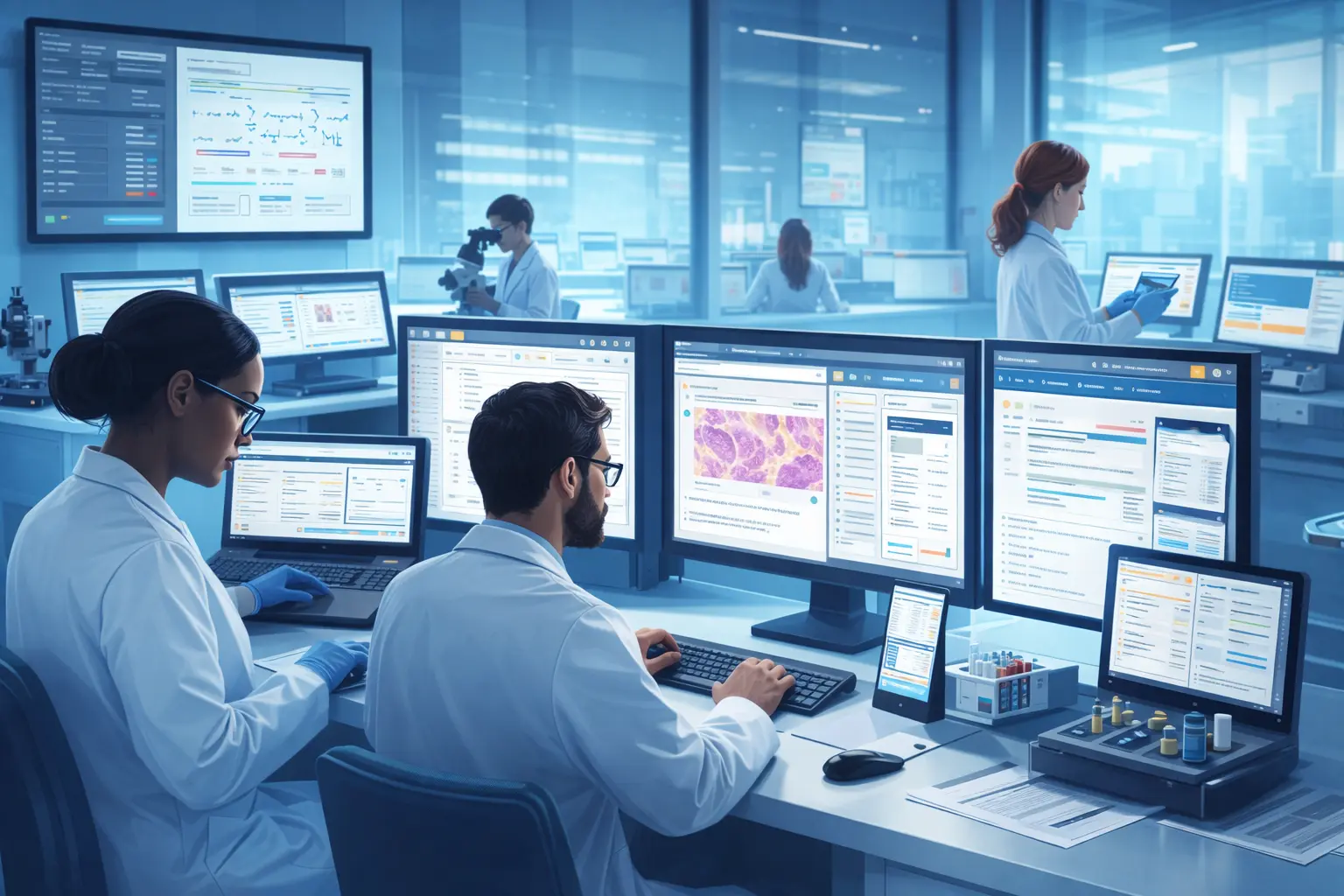
Why LigoLab Stands Apart
Not all laboratory information systems offer the same level of automation.
LigoLab distinguishes itself through the industry's most comprehensive rules and automation engines.
Unlike many LIS software platforms that provide only basic workflow automation, LigoLab enables laboratories to build sophisticated decision-support frameworks using configurable conditions, actions, and outcomes.
Laboratories can automate virtually every stage of operation, including:
- Order entry
- Specimen receipt
- Accessioning
- Testing workflows
- Auto-verification
- Reflex testing
- Report distribution
- Sendout management
- Quality assurance
- Compliance monitoring
- Business analytics
Rules can be chained together into complex decision trees that mirror each laboratory's unique operational requirements.
Combined with workflow action queues, customizable dashboards, advanced reporting tools, data warehouse capabilities, and extensive interoperability support, LigoLab provides laboratories with a flexible informatics platform that adapts to evolving business needs.
Rather than forcing laboratories to change their workflows to fit the diagnostic lab software, LigoLab allows the software to support the laboratory's preferred workflows.
Industry Insights: Beyond Go Live - Maximizing Laboratory Information System (LIS) Performance and Laboratory ROI
The Future of Laboratory Information Systems
The future of laboratory medicine belongs to organizations that can do more with less.
Legacy LIS systems were designed to document activity.
Modern LIS software is designed to drive activity.
For laboratories seeking long-term success, the question is no longer whether automation should be part of their laboratory information system strategy.
The question is how much opportunity is being left on the table by continuing to rely on manual processes that modern LIS software can perform automatically.
Industry Insights: Process Improvement and Advanced Technology to Help Relieve Laboratory Staffing Burden
Turn Automation Into Your Laboratory's Competitive Advantage
Connect with a LigoLab product specialist today to schedule a personalized demonstration and discover how powerful rules and automation can help your laboratory do more with less.
Act Now: Talk to a Product Specialist!
Frequently Asked Questions (FAQs) About Modern Laboratory Information Systems, Rules, and Automation
What is a rules engine in a laboratory information system?
A rules engine is a configurable component within an advanced laboratory information system that automatically executes predefined actions when specific conditions are met. Rules can automate tasks such as reflex testing, specimen routing, result verification, report distribution, quality control monitoring, and compliance enforcement.
How does automation improve laboratory efficiency?
Automation reduces manual intervention in routine laboratory processes by allowing the LIS software to perform repetitive tasks automatically. This helps laboratories accelerate turnaround times, reduce administrative workload, minimize errors, and enable staff to focus on higher-value activities requiring clinical expertise.
What is the difference between a legacy LIS system and a modern LIS lab platform?
A legacy LIS system primarily serves as a system of record, storing data and documenting laboratory activities. A modern LIS software platform operates as a system of action, leveraging rules-based automation, real-time analytics, and decision-support tools to guide laboratory workflows and automate routine tasks and decisions.
How does LIS software support auto-verification of laboratory results?
Advanced LIS software can automatically verify and release results when predefined criteria are met. These criteria may include quality control status, delta checks, biological variance thresholds, critical value rules, and test-specific validation requirements. This reduces manual review while maintaining a complete audit trail.
What is reflex testing automation?
Reflex testing automation allows the laboratory information system to automatically order additional tests when certain results or conditions are detected. The LIS software can add the test, route the specimen, update workflow status, and notify staff without manual intervention.
How does automation help laboratories scale without adding staff?
By automating routine tasks such as result verification, specimen routing, report distribution, sendout management, and workflow tracking, laboratories can process higher testing volumes without proportional increases in staffing. This operational leverage supports business growth while helping control labor costs.
How do modern laboratory information systems improve compliance?
Modern LIS software platforms embed compliance controls directly into laboratory workflows. They can automatically monitor quality control activities, enforce approval requirements, maintain audit trails, generate inspection-ready reports, and flag non-conformances in real time, helping laboratories remain prepared for CAP, CLIA, and other regulatory reviews.
What types of reporting can be automated within an LIS?
Modern laboratory information systems can automate report generation and distribution based on client-specific preferences. Reports can be delivered through EMRs, physician portals, HL7 interfaces, email, fax, remote printing, and other channels, ensuring timely and accurate communication of results.
How do analytics and dashboards contribute to laboratory performance?
Built-in dashboards and analytics tools provide real-time visibility into key performance indicators, such as turnaround time, productivity, specimen status, quality metrics, compliance measures, and billing performance. These insights enable laboratory leaders to identify trends, eliminate bottlenecks, and make data-driven operational decisions.
Why are LigoLab's rules and automation engines different?
LigoLab's laboratory information system features highly configurable rules and automation engines that allow laboratories to create complex decision-support workflows. Rules can be applied throughout the testing lifecycle and chained together into sophisticated automation trees that support workflow optimization, compliance, quality assurance, reporting, sendout management, and business growth initiatives.