Blog
The Benefits of a Modern Pathology Lab Management System
August 24, 2026

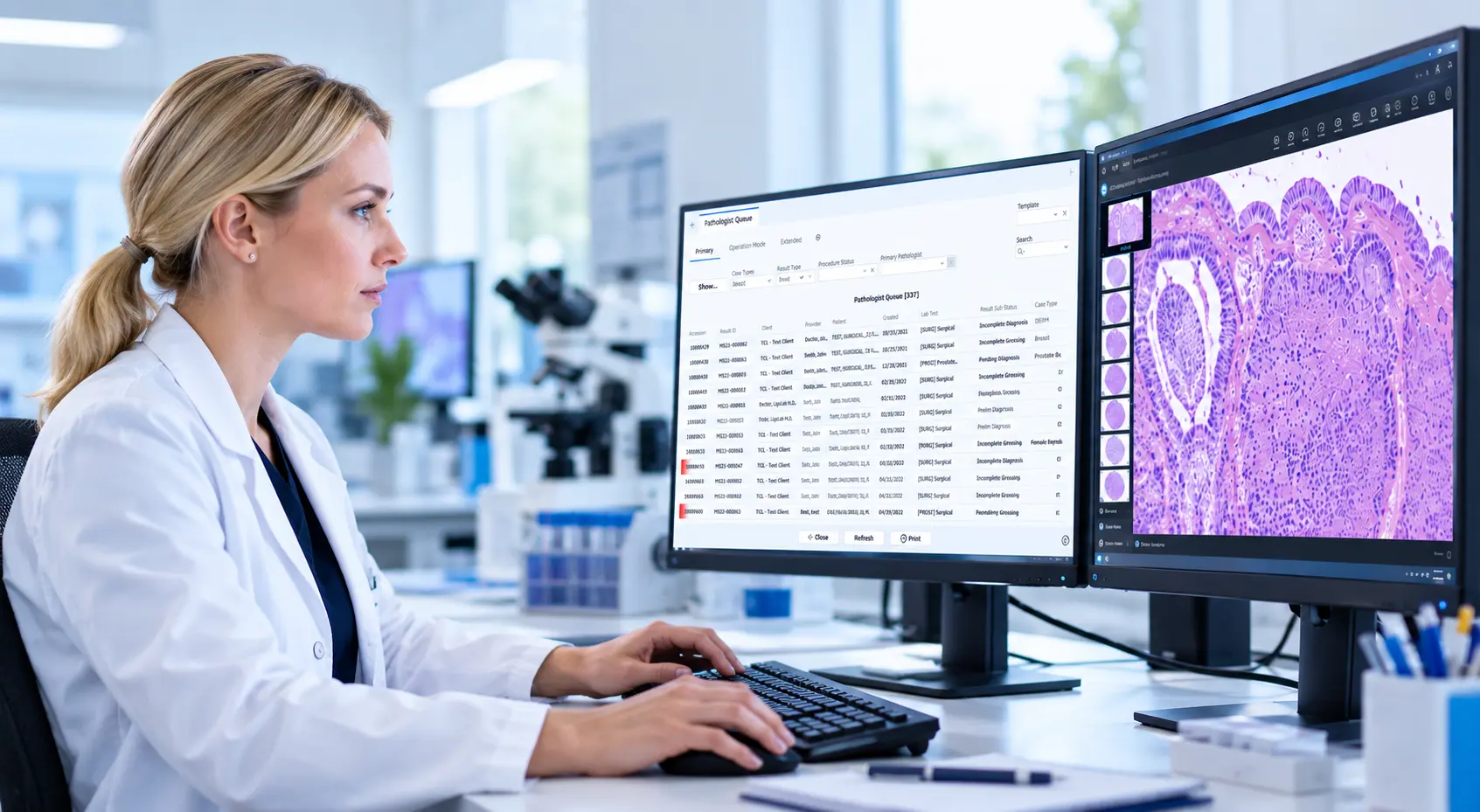
Pathology groups generate and manage massive volumes of data as they process a wide variety of patient samples. To handle this complexity, they use a specialized pathology lab management system, commonly known in medical laboratory settings as a laboratory information system (LIS), to capture, process, and store critical diagnostic data.
An efficient, reliable lab information system is essential for securely managing patient demographics, insurance details, testing history, and results, while also safeguarding against diagnostic errors. To meet the demands of today's pathology practices, the LIS system must fully support modern pathology lab management with accuracy, consistency, and scalability across all workflows.
Get Insight: Top 10 Medical Laboratory Mistakes and How to Prevent Them from Happening in Your Lab

The Need for Effective Pathology Lab Management Systems
Anatomic pathology requires effective pathology lab management systems to improve productivity, strengthen customer relationships, and support long-term profitability.
At the core of modern laboratory workflow management stands laboratory information system software, which enables these organizations to securely store large volumes of data while efficiently managing test orders, specimens, and results. This centralized approach ensures operational efficiency and data integrity throughout the testing lifecycle, from order intake and accessioning to final report delivery.
The best LIS software also optimizes critical record-keeping across departments and may include integrated inventory management capabilities. By automating manual tasks and streamlining complex workflows, modern LIS lab functionality accelerates turnaround times, enhances accuracy, and delivers faster, more reliable results, ultimately benefiting both clinicians and patients.
Discover More: LigoLab’s Advanced Tier - Innovative LIS Software Solutions for High-Volume Laboratories
How LIS Software Transforms Laboratory Operations
Laboratory information system (LIS) software, often confused with laboratory information management system (LIMS) software, plays a pivotal role in modern healthcare, helping lab professionals replace paper-based workflows with efficient, end-to-end digital processes.
Pathology LIS systems provide diagnostic lab software solutions that reduce and prevent errors, simplify complex operational workflows, and support laboratories as they scale to meet growing client demands and service expectations.
Get Insight: Can Your Laboratory Information System Support the Latest LIS System Technology?
Modern Anatomic Pathology LIS Systems Power the Next Generation of Lab Operations
Advancing technology has made anatomic pathology LIS systems more efficient and comprehensive than ever. As laboratory information system companies continue to evolve with real-world needs, the most advanced medical LIS software platforms now offer streamlined access to results and records, integrated laboratory billing and lab revenue cycle management, real-time claim status visibility, online payments, and more.
Discover More: Questions All Pathology Labs Should Ask When Evaluating LIS Software and Support
Expanding Access and Convenience with Patient and Client Portals
Modern LIS systems with advanced laboratory management capabilities can also support and deploy secure online patient and client portals, enabling laboratories to enhance business relationships and support direct-to-consumer lab testing models.
By replacing paper-based reports and manual processes, the patient portals enhance customer service by giving patients and providers convenient access to medical results anytime, anywhere. They also simplify laboratory billing by enabling faster online payment, elevating the overall experience while accelerating cash flow.
Get Insight: Highlighting the Versatility of the TestDirectly Direct-to-Consumer Lab Testing Portal

How Modern LIS Pathology Software Benefits All Departments
Whether you are a pathologist, lab tech, director, manager, or IT support, modern pathology lab reporting software in the form of laboratory information systems makes your life easier.
Pathologists
Pathologists benefit from a more streamlined, efficient LIS pathology workflow, with fewer clicks, faster case sign-out, and improved productivity, driving higher patient and customer satisfaction. A modern, feature-rich laboratory information system supports highly configurable patient report templates, multiple report delivery options, and advanced capabilities, such as macros and automated CPT and ICD-10 coding.
Get Insight: How LigoLab's Pathology Lab Software Supports Lab Report Customization and Client Preferences
Directors, Managers, and CEOs
Lab directors, managers, and CEOs benefit from modern pathology software that delivers maximum operational and financial efficiency, transparency, and interoperability, creating a meaningful competitive advantage in today's marketplace.
Modern laboratory information system software supports advanced features, modular design, automation, and configurable rules, and the best LIS software synchronizes and validates analytical instruments while standardizing medical data outputs, strengthening quality management, and ensuring consistent, reliable laboratory operations.
IT Directors
When built as an enterprise-level pathology lab management solution, an advanced medical LIS can eliminate the need for multiple laboratory software systems by providing a unified informatics foundation that supports the entire organization.
Modern LIS pathology solutions also give laboratories the flexibility and self-service configuration control to adapt workflows, make system changes, and respond to evolving needs independently. By consolidating functionality within a single platform, organizations can reduce the technical complexity, integration challenges, and operational headaches that often come with managing multiple systems and lab vendors.
Lab Techs
Modern medical LIS platforms deliver direct operational benefits by streamlining laboratory workflows. Real-time specimen tracking and barcode-driven processes improve visibility and traceability throughout the testing lifecycle, helping reduce manual errors and the risk of lost, misidentified, or mislabeled specimens.
Discover More: How Specimen Tracking Software Improves Efficiency and Reduces the Chance for Diagnostic Errors

Modern Laboratory Information System Software: How Does It Work?
Modern laboratory information system software supports several important lab functions, including order entry, front-end case validation, sample tracking, and interoperability.
Order Entry
Today’s laboratory information system software streamlines order entry through interfaces that automatically receive orders from multiple electronic health record (EHR) systems. This level of interoperability eliminates a common laboratory bottleneck by reducing the need for manual order entry, enabling orders to flow directly into the medical LIS and supporting faster, more accurate, and more efficient workflows.
Get Insight: LigoLab Delivers the LIS System Interoperability Needed to Transform Medical Laboratories into Thriving Businesses
Front-End Validation
For front-end validation that supports cleaner claims and faster reimbursement, modern pathology LIS systems have a distinct advantage when they incorporate insurance eligibility verification and coverage discovery at the start of the laboratory billing cycle. Advanced LIS software platforms can further strengthen revenue cycle performance with patient address lookup and USPS validation, helping ensure accurate billing information, reduce invoicing errors, and prevent avoidable payment delays.
Case Study: Leveraging LIS System & Lab RCM Integration to Improve the Laboratory Billing Process
Sample Tracking
Leading LIS vendors have designed modern pathology lab software to support robust, end-to-end sample tracking, with each sample assigned a unique identifier and monitored throughout the entire laboratory workflow, while preserving parent–child relationships across related specimens.
This comprehensive tracking spans the full LIS pathology workflow, from origin and accessioning through case assembly and final results, ensuring accuracy, traceability, and complete chain-of-custody visibility.
Reporting
Advanced laboratory information system software provides well-organized, powerful, and integrated reports that can be delivered to clients through multiple channels based on their preferences. Delivery options include provider portal, outreach software, EHR, fax, secure email, in-house printing, APIs, IVR, SMS, PDF drops, or remote print server.
Discover More: LigoLab’s Provider Portal Facilitates Faster Order Processing and Improved Turnaround Times

The Bottom Line on Modern Laboratory Information System Software
The best laboratory information system software solutions support both laboratory leadership and the lab's clients by delivering the functionality needed to operate efficiently today while enabling long-term growth. With many leading LIS vendors to choose from, laboratories should prioritize a technology partner that combines robust functionality, scalable architecture, and dependable support to meet both current operational needs and future demands.
A strong first step is to form a dedicated Laboratory Information System Selection Committee to guide evaluation, decision-making, and successful implementation.
Get Insight: How to Set Up a Committee to Select a Laboratory Information System
An Enterprise-Grade LIS System Platform Built for Modern Laboratory Growth
LigoLab’s advanced laboratory information system solution, the all-in-one LigoLab Medical LIS & Lab Billing Informatics Platform, exemplifies the type of enterprise-level pathology lab report software available to forward-thinking lab leaders who recognize that upgrading their informatics is essential to achieving operational excellence and financial performance goals.
Designed to support scalability, automation, and end-to-end lab workflow integration, the platform enables forward-thinking organizations to modernize technical and laboratory billing operations with confidence.
If you have questions about the platform’s features and capabilities, or want guidance on which of LigoLab’s four pricing tiers best aligns with your LIS system and laboratory billing workflows, schedule a brief consultation with one of our knowledgeable product specialists.
Act Now: Contact a LigoLab Product Specialist!
Frequently Asked Questions About Modern Pathology Lab Management Systems
What is the difference between an LIS and a LIMS?
An LIS (laboratory information system) supports patient-centric workflows in healthcare laboratories, while a LIMS (laboratory information management system) typically manages sample-centric workflows in non-clinical environments. Although the terms are sometimes used interchangeably, the two systems serve distinct laboratory settings and operational requirements.
How does a modern medical LIS improve order entry?
Modern medical LIS platforms interface directly with EHR systems to receive remote orders, eliminating the manual data-entry bottleneck that traditionally slowed order intake and increased errors.
What is front-end validation, and why does it matter for laboratory billing?
Front-end validation includes patient insurance eligibility checking, insurance discovery, and address validation performed at the start of the laboratory billing cycle, helping ensure clean claims and preventing payment delays before they happen.
How do modern LIS medical platforms support specimen tracking?
Each sample is assigned a unique identifier and tracked throughout the workflow, from accessioning through case assembly to final results, while preserving parent-child relationships among related specimens for full chain-of-custody visibility.
What reporting and delivery options does a modern lab information system support?
Modern LIS systems support customizable report templates and can deliver reports through multiple channels, including provider portals, EHRs, fax, secure email, in-house printing, APIs, IVR, SMS, PDF drops, or remote print servers.
How does a modern laboratory information system benefit different roles within a lab?
Pathologists benefit from faster case sign-out and configurable reporting, while lab directors and executives gain greater visibility into operational and financial performance. IT teams can manage a unified, self-configurable platform rather than coordinating multiple systems and vendors, and laboratory staff benefit from streamlined, real-time specimen tracking and barcode-driven workflows.
What role do patient and client portals play in a modern LIS?
Portals give patients and providers convenient, anytime access to results and enable faster online bill payment, supporting direct-to-consumer lab testing models while improving cash flow and customer experience.