Blog
How Does the Cost of Different Laboratory Information Systems Compare?

June 3, 2026

For clinical laboratories, pathology groups, and molecular diagnostics organizations, selecting the right laboratory information system (LIS) is one of the most consequential technology decisions they will ever make. A modern laboratory information system software platform touches every part of the diagnostic lifecycle, from accessioning and specimen tracking to reporting, laboratory billing, analytics, and compliance.
Yet when lab leaders begin comparing LIS software, they quickly discover a frustrating truth: pricing across the LIS system’s market is opaque, inconsistent, and often disconnected from real operational value. Two systems with similar sticker prices can produce dramatically different total costs of ownership, long-term scalability, and revenue performance.
So how should laboratories compare different laboratory information systems, and how does a next-generation medical LIS solution change that equation?
Discover More: Cost of Inaction - The Dire Consequences of Neglecting Modernization in Laboratory Operations and Informatics
Why Lab Information System Pricing Varies So Widely
Unlike commodity laboratory workflow management software, LIS systems are deeply embedded in clinical and business workflows. As a result, LIS lab pricing is shaped by multiple variables, including:
- Size and testing volume of the laboratory
- Number of modules and workflows required
- Level of automation and interoperability
- Hosting model (on-premise vs. cloud)
- Degree of configuration and customization
- Integration with laboratory billing/lab revenue cycle management systems
- Ongoing support, training, and upgrades
Many legacy laboratory information system companies still rely on rigid licensing models that bundle unnecessary features into expensive contracts or force labs to buy separate systems for clinical laboratory management, pathology lab management, and RCM cycle operations.
This fragmented LIS model often creates hidden costs that far exceed the initial license fee.
White Paper: What You Need to Know Before Contracting with a Laboratory Information System Company
The Hidden Costs of Traditional LIS Software
When comparing laboratory information system pricing, organizations must look beyond the surface.
1. Fragmented Systems and Interfaces
Many LIS system platforms require external laboratory billing software, middleware, or interface engines. Each additional system introduces new licensing fees, integration costs, maintenance overhead, and risk of downtime.
2. One-Size-Fits-All Pricing
Legacy LIS vendors frequently offer a single “enterprise” package regardless of lab size or maturity. Smaller labs pay for features they do not need, while growing labs outgrow their systems and face costly migrations later.
3. Upgrade and Expansion Penalties
Adding new testing disciplines, automation, digital pathology, or multi-site support often triggers expensive upgrade fees or full platform replacements.
4. Operational Inefficiency
Outdated LIS system architectures increase manual work, slow turnaround times, and raise staffing costs, all hidden expenses that compound year after year.
These realities explain why many laboratories underestimate the true cost of LIS ownership.
Industry Insights: The Rise and Fall of CoPath LIS - A Legacy Casualty of the Modern Lab Information System Era
A New Approach: LigoLab’s Tiered LIS Model for Pricing
LigoLab, widely recognized for its comprehensive and flexible laboratory information system featuring an integrated lab revenue cycle management (lab RCM) module, has introduced a tiered pricing model designed to address these industry shortcomings.
Unlike traditional LIS software vendors, LigoLab’s pricing aligns with a laboratory’s actual stage of development, workflow complexity, and growth trajectory.
According to LigoLab CEO Suren Avunjian, the tiered LIS pricing model addresses a long-standing void in the clinical and pathology software market.
“The lack of tailored laboratory information system software that can fit the unique needs of a specific organization is a common frustration in our industry,” said Avunjian. “This one-size-fits-all healthcare LIS mentality has been around for a long time, leaving laboratories with few diagnostic lab software choices. We’ve set out to change this by offering laboratory information system software that matches a lab’s workflow and growth plans for each stage of its business development.”
This structure enables laboratories to start with what they truly require and scale without disruption.
Case Study: From Launch to Lift-Off - Highlighting Goldfinch Laboratory’s Formula for Rapid Growth
How LigoLab’s LIS Tiers Compare
Each LigoLab tier delivers a defined level of capability while preserving a consistent platform architecture. Labs never need to switch LIS systems as they grow.
Essential Tier
Designed for small pathology, molecular, and reference laboratories that need reliable LIS system functionality without unnecessary complexity.
Includes:
- Ordering and labeling
- Grossing, histology, cytology
- Molecular, microbiology, and clinical workflows
- Result entry and audit trails
- Reporting and support
This tier provides a cost-effective entry point into a modern medical LIS without sacrificing core functionality.
Professional Tier
Built for growing labs seeking advanced laboratory management and analytics.
Adds:
- Grossing touchscreen
- Document management
- Specimen handling, tracking, and security
- Synoptic reporting
- Digital pathology support
- Quality control
- Statistical reports
- Provider portal
- Integrated cloud faxing
This tier rivals many “enterprise” lab information system products while remaining economically accessible.
Advanced Tier
Engineered for high-volume labs demanding automation, informatics, and operational intelligence.
Adds:
- Multi-facility support
- Send-out tracking
- Customer service management and case flagging
- Workflow and rule engines
- Dynamic reporting and dashboards
- Inventory and supplies
- Priority support
This tier supports serious scalability in both lab management and business operations.
Enterprise Tier
Designed for regional and national laboratories requiring enterprise-wide integration and governance.
Adds:
- Auto case assignment
- Data warehouse
- Automation and interface engines
- Patient reporting portal
- Eligibility checking and insurance discovery
- Auto coding
- Single sign-on (SSO)
- Dedicated account management
This tier delivers a true enterprise-grade LIS software ecosystem on a single unified platform.
White Paper: Comparing LigoLab Informatics Platform with Legacy Laboratory Information System Software
Why LigoLab Changes the LIS Cost Equation
Most laboratory information system vendors still force labs into expensive, rigid licensing structures. LigoLab flips that LIS model by offering benefits such as these.
1. One Platform, All Disciplines
LigoLab supports anatomic pathology, clinical, molecular, microbiology, and reference workflows on a single LIS system, eliminating duplicate diagnostic lab software costs.
2. Embedded Lab RCM
Unlike LIS system vendors that require third-party laboratory billing software, LigoLab’s complete informatics platform includes native lab revenue cycle management, thereby reducing denials and reimbursement delays caused by data silos and duplicate data entry.
3. Linear Scalability
Labs move between tiers without data migrations, downtime, or system replacements.
4. Predictable Growth Costs
Future capabilities are unlocked via tier upgrades, not disruptive re-implementations.
Discover More: Why Medical Labs Should Consider Deeper Alignment with Their LIS System Partner

Cost vs. Value: The Real Comparison
When comparing laboratory information system software, price alone rarely tells the full story.
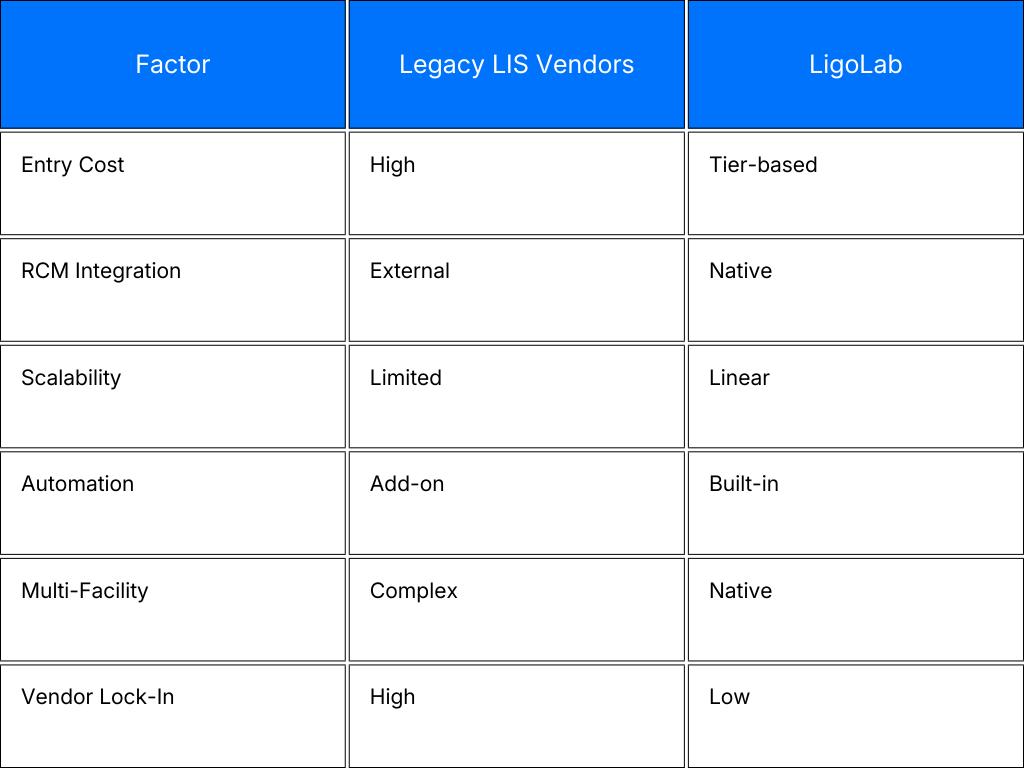
As Avunjian explains:
“Each platform tier addresses higher levels of complexity and functionality. This means our lab partners have access to the features and capabilities to match their current needs and are provided with a clear roadmap for future growth and development.”
On-Demand Webinar: From Systems of Record to LIS Systems of Action
Democratizing Enterprise-Grade LIS System Technology
Historically, LigoLab’s all-in-one platform was adopted primarily by mid- to large-scale laboratories. The new tiered pricing model changes that dynamic.
Smaller and emerging labs can now access the same medical LIS technology used by regional and national laboratories, at a lower entry point, and scale seamlessly.
“The LigoLab platform is the Swiss Army knife for your laboratory operations,” said Avunjian. “With one laboratory information system, your lab gains everything it needs.”
This approach eliminates the costly “starter LIS” trap that forces labs to replace systems.
Get Insight: How to Turn Your Mid-Sized Medical Laboratory into a Thriving Large-Scale Operation
Which LIS Tier Fits Best for Your Lab?
Each LigoLab tier is engineered to match increasing operational complexity.
- Essential: Small labs launching or modernizing
- Professional: Growing labs expanding services
- Advanced: High-volume labs optimizing automation
- Enterprise: Multi-site labs standardizing governance
This structure gives labs a rare combination: cost control today and freedom tomorrow.
Industry Insights: Best LIS Systems in 2026 - Top Laboratory Information Systems Compared for Clinical, Pathology, and Outreach Labs
Final Thoughts: What Do LIS Systems Really Cost?
The real cost of an LIS system is not its license fee, but its long-term impact on efficiency, revenue, staffing, scalability, and compliance.
While many of the best LIS vendors still sell rigid, fragmented platforms, LigoLab delivers a future-ready laboratory information system platform that evolves with your business.
For laboratories serious about long-term value, operational excellence, and growth without disruption, LigoLab represents a fundamentally different cost model.
Ready to Find the Right LIS Tier for Your Lab?
Talk to a LigoLab Product Specialist and discover how a tiered, all-in-one LIS and lab RCM platform can modernize your operations, without locking you into tomorrow’s limitations today.
Act Now: Speak with a LigoLab Product Specialist!