Blog
A Closer Look at LigoLab’s Commitment to Innovation

November 2, 2026

"Medical labs must modernize by adopting innovative technologies and best processes to improve productivity, strengthen customer relationships, streamline operations, and maximize value."
- Suren Avunjian, CEO, LigoLab
What Innovation Really Means in the Laboratory Information System (LIS) Industry
When people talk about LIS laboratory information system software, they often overuse the word innovation. For some lab vendors, it has become little more than a marketing slogan.
But for clinical laboratories and pathology groups navigating today’s environment, innovation isn’t optional; it’s operationally critical.
Today’s medical labs face mounting external pressures:
- Record-breaking test volumes
- Ongoing reimbursement cuts
- Complex payer rules and compliance requirements
- Increased competition
- Rising supply and operational costs
- Staffing shortages, especially skilled laboratory and IT personnel
To survive and grow, these laboratories now require modern, fully integrated laboratory information systems that improve automation, strengthen revenue integrity, enhance interoperability, and support long-term scalability.
At LigoLab, innovation is not a buzzword. It’s an LIS model for business.
Discover More: What You Need to Know Before Contracting with a Laboratory Information System (LIS) Company
How Does LigoLab's Innovation LIS Model Work at a Glance?
How Did Real-World Lab Experience and Customer Funding Shape LigoLab?
LigoLab was founded in 2006. Industry insiders who understood the limitations of traditional laboratory information systems and the need for a better approach created the company.
Before founding LigoLab, two of the company’s three co-founders spent seven years at a rapidly growing laboratory that became California’s largest privately held lab. During that time, they gained firsthand experience with the operational and technological challenges laboratories face, including:
- The operational complexity of scaling a laboratory
- The limitations of legacy LIS systems
- The financial impact of inefficient workflows
- The challenges of disconnected lab billing systems
These experiences shaped LigoLab's mission: to build a comprehensive, highly configurable, all-in-one medical LIS and laboratory revenue cycle management (RCM) platform designed specifically for independent laboratories.
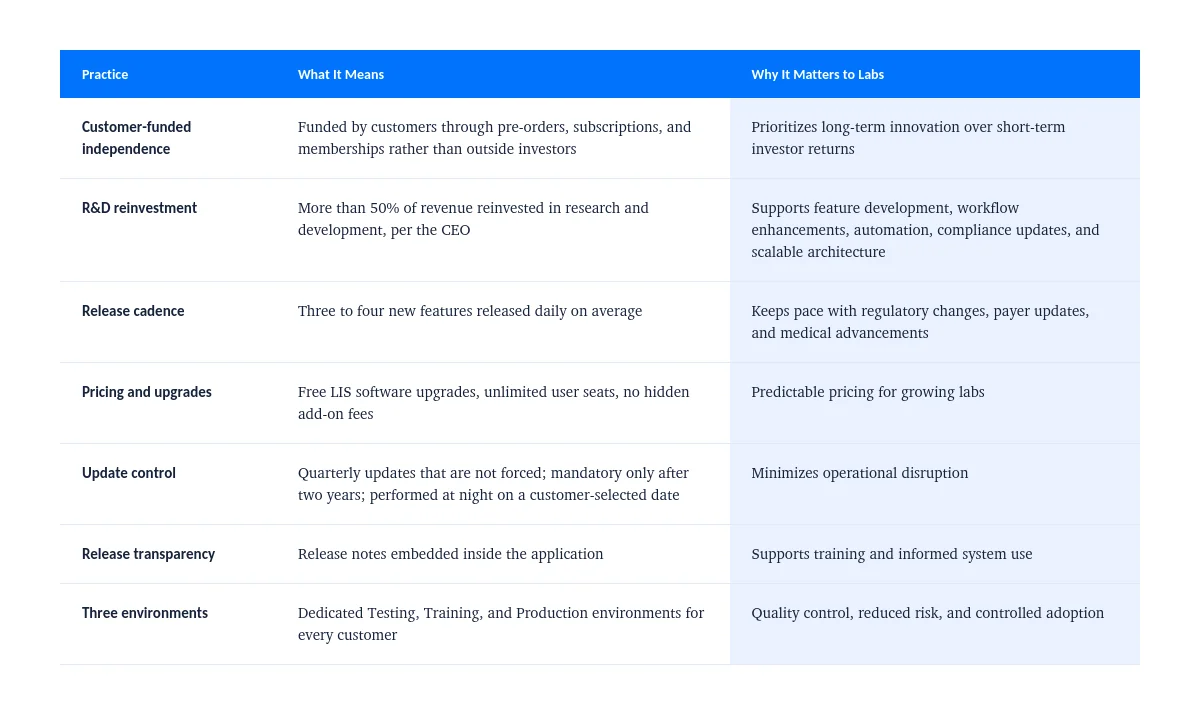
Unlike many laboratory information system vendors backed by private equity, LigoLab chose an unconventional path. Instead of outside investors, customers funded the LIS company through pre-orders, subscriptions, and memberships.
This customer-funded LIS model enabled LigoLab to prioritize long-term innovation over short-term investor returns.
Decades later, that strategy still defines the company's culture and its diagnostic lab software.
Get Insight: The Best LIS Systems are Comprehensive and Laboratory-Specific
How Much Does LigoLab Invest in LIS Software Innovation?
Innovation requires consistent reinvestment.
According to CEO Suren Avunjian, LigoLab reinvests more than 50% of its revenue into research and development. This level of commitment enables:
- Rapid feature development
- Ongoing lab workflow enhancements
- Expanded automation capabilities
- Continuous compliance updates
- Scalable LIS system architecture improvements
On average, LigoLab releases three to four new features daily across its robust informatics platform.
This pace reflects the reality of modern clinical and pathology lab management, which constantly evolves with regulatory changes, payer updates, and medical advancements.
Unlike rigid legacy laboratory information systems, which often require costly add-ons and lengthy development cycles, LigoLab's architecture is built for agility.
Industry Insights: Best LIS Systems - Top Laboratory Information Systems Compared for Clinical, Pathology, and Outreach Labs
Are LIS Software Updates Really Free, With No Hidden Fees?
One of the clearest examples of LigoLab's innovation philosophy is its pricing and update model.
From day one, LigoLab has provided:
- Free LIS software upgrades
- Unlimited user seats
- No hidden add-on fees
Many laboratory information system companies charge for upgrades, module expansions, or additional users. LigoLab rejects that approach.
For growing clinical laboratories and pathology practices, predictable pricing and unrestricted access to modern LIS system capabilities are essential for scalability.
How Do LIS Software Update Timelines Work?
LigoLab offers quarterly LIS software updates. However:
- Updates are not forced
- Labs choose their upgrade timeline
- Mandatory upgrades occur only after two years (older versions expire for support reasons)
- Updates are performed at night on a customer-selected date
This structured yet flexible LIS model minimizes operational disruption while maintaining platform security and compliance.
Additionally, LigoLab does not charge for LIS software modifications required to meet federal or state regulatory requirements, a significant advantage in today's compliance-driven environment.
Discover More: Reducing Risk in the Modern Laboratory - A Comprehensive LIS System Approach
How Does In-Application Release Tracking Improve Transparency?
To improve visibility, LigoLab embeds release notes directly inside its laboratory information system module.
With a single click, laboratory directors and LIS admins can:
- Review newly released features
- Access chronological update logs
- Read detailed feature explanations
This real-time transparency supports internal training, workflow adjustments, and informed utilization.

What Are LigoLab's Three Dedicated LIS System Environments, and Why Do They Matter?
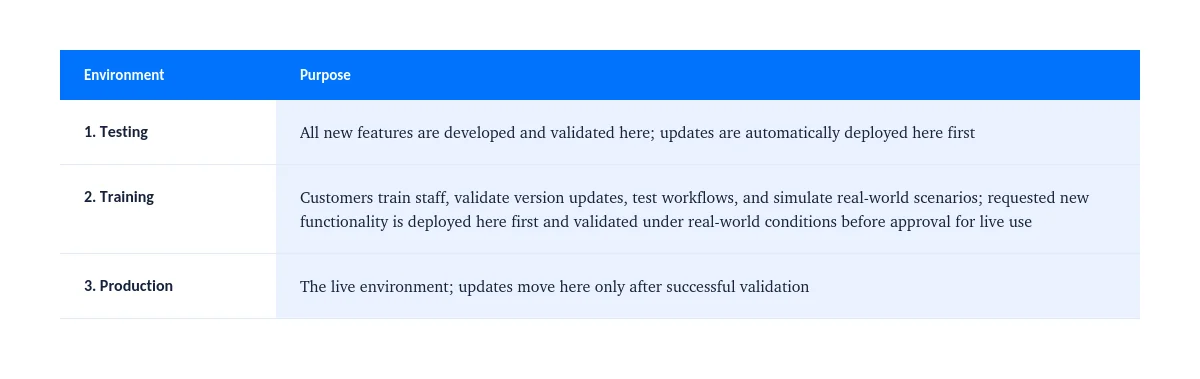
Balancing rapid innovation with operational stability requires discipline. To accomplish this, LigoLab provides three dedicated laboratory information system environments to every customer:
This three-tier structure ensures:
- Quality control
- Reduced risk
- Controlled adoption
- Minimal operational disruption
Rapid innovation without structured testing leads to instability. LigoLab's approach delivers both speed and reliability.
Discover More: LigoLab’s LIS System Training and Support
How Does LigoLab's Platform Support Market Differentiation?
For LigoLab, innovation means creating a competitive advantage for its customers that enables them to differentiate by improving:
- Automation and lab workflow efficiency
- CPT and ICD coding accuracy
- End-to-end sample tracking
- Real-time RCM cycle visibility
- Client reporting customization
- Interoperability with EHR and EMR systems
The best laboratory information system software platforms have evolved from passive record-keeping databases into strategic business engines.
Forward-thinking customers use LigoLab's platform to:
- Increase throughput
- Support digital pathology and molecular expansion
- Enhance client retention
- Reduce denials
- Improve collections
In a competitive diagnostics marketplace, operational efficiency and transparency impact growth.
On-Demand Webinar: From Systems of Record to LIS Systems of Action
Does LIS Medical Innovation Improve Patient Outcomes?
True anatomic pathology LIS and clinical laboratory management innovation extends beyond operational efficiency. It contributes to better patient care.
By transforming traditional pathology and clinical lab workflow, modern LIS systems help labs:
- Reduce manual errors
- Strengthen compliance
- Improve turnaround times
- Enhance data integrity
- Support faster clinical decision-making
Innovation goes beyond simply adopting new LIS medical technology. It requires rethinking and redesigning laboratory operations to meet current operational pressures while strategically preparing for the structural shifts reshaping the future of healthcare.
Get Insight: The Future of Medical Labs - Embracing Tech & Personalization
What Does LigoLab's Unified Informatics Platform Integrate?
Since 2006, LigoLab has consistently emphasized two principles:
- Extreme customer partnership
- Continuous innovation
The LigoLab informatics platform integrates:
- Anatomic pathology LIS workflows
- Clinical laboratory modules
- Molecular diagnostics
- Laboratory billing and lab revenue cycle management
- Direct-to-consumer lab testing support
All within a singular, unified, configurable application.
By combining rapid development cycles, three structured LIS software environments, transparent update policies, and strong customer collaboration, LigoLab has set a new benchmark for enterprise-grade laboratory information system software.
Discover More: Can Your Laboratory Information System Support the Latest LIS System Technology?
What Measurable Results Should Lab Information System Innovation Deliver?
Innovation must solve real-world laboratory challenges. For independent clinical laboratories and pathology groups, that means:
- Managing shrinking reimbursements
- Navigating regulatory complexity
- Competing against national lab consolidators
- Scaling without adding unnecessary administrative overhead
LigoLab's innovation strategy focuses on tangible outcomes:
- Operational efficiency
- Financial optimization
- Scalability
- Workflow automation
- Regulatory compliance
- Long-term sustainability

"The LigoLab team clearly demonstrates through their support and actions that they are interested in keeping up with the latest technology and developments in healthcare. We're a pathology practice that wants to stand out among the rest, and LigoLab supports that mission."
- Kristen Conley, CIO, Eastern Connecticut Pathology Consultants.
Is Rapid Innovation Always What a Lab Needs?
A fast release cadence is valuable for labs that want new capabilities and compliance updates quickly, but not every lab wants constant change. A smaller lab with stable workflows may value predictability over frequency. LigoLab's update policy addresses this: updates aren't forced, and labs choose their timeline. Two things are still worth knowing: validating changes in the Training environment takes staff time, and mandatory upgrades occur after two years because older versions expire for support reasons.
The headline figures, such as more than 50% of revenue reinvested in R&D and three to four new features released daily, are company-reported. Ask any vendor, including LigoLab, for release notes, a roadmap, and references from labs like yours rather than relying on the numbers alone.
Pricing deserves the same scrutiny. Free upgrades, unlimited user seats, and no hidden add-on fees are meaningful, but a fair comparison looks at total cost across vendors, including implementation, interfaces, and support. While customer funding is one way to stay independent, it's not the only credible model, so compare vendors on support quality, product direction, and references as well as ownership structure.
What Is the Bottom Line on LIS System Innovation?
Innovation in the LIS lab industry should be measurable, customer-driven, and operationally transformative.
LigoLab's commitment to reinvesting in development, maintaining structured testing protocols, offering free upgrades, and empowering laboratories with modern LIS system automation reflects a clear philosophy: innovation must create real advantages.
For laboratories seeking a future-ready laboratory information system that supports both clinical excellence and financial performance, LigoLab delivers infrastructure built for growth.
Continue Your Research
- Platform Comparison: Best LIS Systems - Top Laboratory Information Systems Compared for Clinical, Pathology, and Outreach Labs
- Vendor Evaluation: What You Need to Know Before Contracting with a Laboratory Information System (LIS) Company
- Training and Support: LigoLab’s LIS System Training and Support
Ready to Move Beyond Legacy LIS System Limitations?
Stop managing your laboratory with disconnected systems and reactive workflows. Start leading with a fully integrated, automation-driven medical LIS & lab RCM platform built for growth.
Don’t Wait: Connect with a LigoLab Product Specialist!
Frequently Asked Questions About LigoLab's Approach to LIS Laboratory Information System Innovation
When was LigoLab founded, and how is it funded?
LigoLab was founded in 2006. Rather than taking outside investment, LigoLab is funded by customers through pre-orders, subscriptions, and memberships.
How much does LigoLab reinvest in research and development?
According to CEO Suren Avunjian, LigoLab reinvests more than 50% of its revenue in research and development and, on average, releases three to four new features daily across its informatics platform.
Does LigoLab charge for LIS software upgrades?
No. LigoLab provides free LIS software upgrades, unlimited user seats, and no hidden add-on fees. It also does not charge for software modifications required to meet federal or state regulatory requirements.
How do LIS software updates work at LigoLab?
LigoLab offers quarterly updates, but they are not forced, and labs choose their upgrade timeline. Mandatory upgrades occur only after two years, when older versions expire for support reasons, and updates are performed at night on a customer-selected date. Release notes are available inside the application.
What are LigoLab's three LIS system environments?
Every customer gets a Testing environment, where new features are developed and validated; a Training environment, where staff is trained, and updates and workflows are validated; and a Production environment, where updates go live only after successful validation.
Is faster LIS system innovation always better for a lab?
Not always. Labs with stable workflows may prefer predictability, and validating changes takes staff time. Ask any vendor for release notes, a roadmap, references, and a total-cost comparison rather than relying on release speed alone.