Blog
6 Ways to Improve Revenue and Lower Costs to Offset Reimbursement Cuts

September 2, 2026
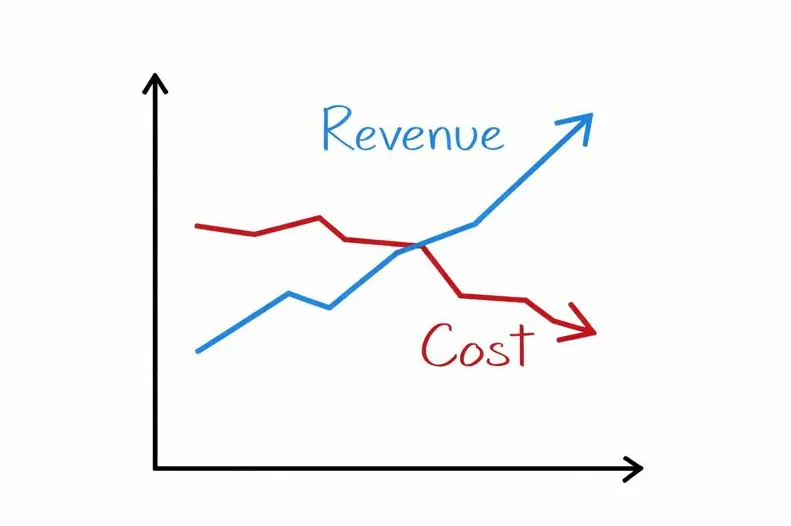
Editor's Note: This article has been updated to reflect recent federal legislation affecting Medicare laboratory reimbursement.
On February 3, 2026, President Trump signed the Consolidated Appropriations Act, 2026 (H.R. 7148) into law. The legislation includes a one-year delay of the Medicare Clinical Laboratory Fee Schedule (CLFS) payment cuts mandated under the Protecting Access to Medicare Act (PAMA), providing temporary financial relief to clinical laboratories and pathology practices.
Specifically, the law postpones the next round of CLFS reductions, previously expected to take effect in early 2026 and affecting nearly 800 tests at reductions of up to 15 percent, until January 1, 2027.
While this action represents continued congressional intervention to delay PAMA-driven cuts and refine the data-reporting methodology, it’s widely viewed as a temporary measure rather than a long-term solution. Laboratory advocates continue to argue that CLFS pricing is still based on incomplete and unrepresentative market data.
Temporary CLFS Relief, Persistent Financial Pressure: Why Labs Must Shift From Cost Cutting to Margin Protection
Even with the delayed action now in place, clinical laboratories and pathology practices remain under sustained financial pressure. Labor and supply costs continue to rise, payer policies are tightening, and reimbursement is still misaligned with the true cost of delivering diagnostic services.
For lab leaders, the implication is clear: temporary relief does not eliminate long-term risk. Cutting expenses alone is not a sustainable path forward without compromising quality, turnaround time, or client satisfaction. A more durable strategy focuses on strengthening revenue integrity while consistently and repeatedly lowering the cost per report.
This is where modern medical laboratory information system (LIS) software shifts from a basic IT requirement to a true margin-protection platform, helping laboratories standardize workflows, reduce leakage, improve laboratory billing accuracy, and operate more efficiently despite ongoing reimbursement uncertainty.
On-Demand Webinar: Leverage LIS System Rules, Automation, and Data Analytics to Increase Efficiency and Cut Costs
Why Advanced Laboratory Information Systems Are Essential for Navigating Reimbursement Cuts
Laboratories are entering a period of sustained financial pressure that they cannot address through cost-cutting alone. To remain viable, leaders must protect revenue, lower the true cost per test, and scale operations without increasing risk or staffing in lockstep. This is where modern laboratory information systems can step in. Far beyond basic result reporting, today's best LIS software platforms embed advanced laboratory revenue cycle management (lab billing) capabilities, workflow automation, and real-time analytics directly into daily operations, giving organizations practical, repeatable ways to offset reimbursement cuts while improving efficiency, compliance, and long-term competitiveness.
Below are six lab information system levers medical laboratories can use to offset reimbursement cuts, each tied to revenue improvement, cost reduction, or both.
1. Lock Down Revenue Integrity With Automated Charge Capture and Rules-Based Laboratory Billing Controls
In many labs, margin leakage doesn't come from one dramatic failure but from dozens of small misses: incomplete demographics, missing ABNs, incorrect provider ordering, uncoded reflexes, unbilled send-outs, or charges that never make it from bench to claim.
The best LIS systems reduce this leakage by embedding laboratory revenue cycle management guardrails upstream and uniting LIS and RCM workflows:
- Front-end validation rules that stop orders from moving forward when required laboratory billing data is missing (coverage policies, diagnosis codes, medical necessity prompts, ordering provider details).
- Automated charge capture tied to actual performed testing (including add-ons, reflexes, and repeats).
- Configurable edits for payer-specific requirements (modifiers, frequency limitations, bundling rules, and test-to-diagnosis logic).
When modern medical LIS software unifies these two interdependent workflows and makes these checks "default behavior," you reduce rework, prevent avoidable denials, and shorten days in A/R without adding headcount. This is one of the fastest ways to boost net collections because it addresses the silent losses that compound over time.
What this offsets: Reimbursement cuts that hit top-line revenue.
What this improves: Net revenue per requisition and first-pass claim acceptance.
Discover More: Reduce Denials and Stop Revenue Leakage With Integrated Laboratory Billing Management

2. Reduce Denials and Underpayments by Unifying LIS System Workflow With Real-Time Claim Readiness
Denials are expensive twice: you lose cash flow, and you pay labor to chase. Underpayments are worse because they often go unnoticed.
A modern LIS system with all-in-one medical laboratory solutions for both technical and financial operations supports denial prevention by making claim readiness a workflow stage, not an afterthought:
- Workflow queues for exceptions (missing authorization, medical-necessity issues, payer edits, demographic mismatches) that route tasks to the right team before claims are released.
- Real-time dashboards that show denial trends by payer, location, provider, test, diagnosis, or client, enabling upstream fixes for root causes.
- Audit trails that prove what was ordered, performed, resulted, and reported; all critical touchpoints when disputes arise.
With the CLFS reductions scheduled to resume soon, laboratories will feel tighter margins and less tolerance for denial-related obstructions. The labs that win won't just "work denials harder"; they'll prevent denials earlier using modern LIS lab rules, automation, and visibility.
What this offsets: Payment cuts by protecting what you're already owed.
What this improves: Cash acceleration, staff productivity, and payer performance management.
Discover More: Improving the Laboratory Billing Process To Prevent Common Errors
3. Grow Outreach Revenue With Provider Portals, Client Services Tools, and Frictionless Ordering
When reimbursement tightens, labs often seek volume growth, but growth only helps if you can scale without proportional increases in staffing. That’s why successful outreach expansion depends on an LIS system that enables laboratories to scale service efficiently while maintaining consistent workflows and quality.
Top-tier LIS software supports outreach growth with:
- Outreach/provider portals for electronic ordering, results delivery, critical value notifications, and document access.
- Client services and customer support queues that provide real-time visibility into status (specimen location, workflow stage, pending issues).
- A connectivity and interface framework that simplifies integrations with EHRs and practice systems, reducing onboarding time for new accounts.
- Standardized client setup templates (test menus, client-specific rules, pickup schedules, reporting preferences).
The result is a better client experience, faster turnaround times, fewer phone calls, and fewer interruptions, which translates into retention and referrals. Outreach is one of the most controllable levers a lab has, and the lab information system is the engine that determines whether outreach is profitable or chaotic.
What this offsets: Medicare fee pressure by balancing mix with sustainable outreach volume.
What this improves: Revenue growth, client satisfaction, and cost per accession through automation.
Industry Insights: The Competitive Edge in Laboratory Outreach - Enhancing Value Beyond Price
4. Optimize Test Utilization, Send-Outs, and Inventory With LIS-Driven Decision Support
Cost reduction is more than just negotiating better pricing; it's reducing unnecessary spend tied to utilization and send-outs.
Advanced and unified LIS medical platforms help labs lower costs by enabling:
- Evidence-based order guidance (reflex algorithms, duplicate test checks, frequency rules, and best-practice prompts).
- Send-out management workflows that standardize routing, tracking, reference lab billing rules, and reconciliation.
- Real-time visibility into test mix so you can identify high-cost patterns, underutilized in-house capacity, and candidates for insourcing or renegotiation.
- Inventory and supply insights connected to volume trends, facilitating proactive procurement.
When margins compress, even small reductions in avoidable send-outs or misrouted work can materially improve operating income. An advanced LIS system doesn't just record what happened; it helps control what should happen.
What this offsets: Reimbursement cuts by lowering direct and indirect costs per test.
What this improves: Utilization discipline, send-out profitability, and operational predictability.
Industry Insights: From System of Record to System of Action - The Next Evolution of Laboratory Information Systems

5. Increase Productivity and Lower Labor Cost Per Report Through Automation and Workflow Orchestration
For most laboratories, labor is the primary controllable expense and the hardest to manage as workforce availability tightens. The best LIS systems reduce labor burden by minimizing "human touchpoints" across the specimen lifecycle.
Key capabilities include:
- Rules-based autoverification to release results that meet criteria while routing exceptions to the right benches.
- Real-time, prioritized departmental queues that optimize workload flow and provide early visibility into emerging bottlenecks.
- Specimen tracking and chain-of-custody to reduce lost samples, redraws, and time wasted searching.
- Standardized SOP-driven workflows that reduce training time and stabilize quality across shifts and sites.
This is where LIS software becomes a cost-reduction tool with compounding returns: fewer manual steps means fewer errors, fewer repeats, less rework, and fewer interruptions. Automation also makes scaling feasible, which is important when reimbursement cuts put pressure to expand volume to maintain revenue.
What this offsets: Labor costs and staffing shortages while preserving service levels.
What this improves: Throughput, turnaround times, and staff capacity.
Discover More: How to Solve the Laboratory Industry's Staffing Shortage Problem
6. Use Real-Time Analytics to Manage Payer Mix, Contracting Strategy, and Performance at the Executive Level
When laboratories reference analytics, they often mean retrospective reporting. This is valuable for review, but insufficient. The best laboratory information system software provides real-time operational and financial analytics that enable leadership to manage performance daily and weekly, not just quarterly.
High-impact analytics use cases include:
- Client profitability and service-cost tracking (who is growing, who is revenue-negative, and why).
- Payer performance scorecards (denials by reason, underpayment detection, reverse on appeals, and net yield by payer).
- Operational KPI dashboards (TAT by test and department, pending volumes, bottleneck stages, instrument downtime impact).
- Forecasting capacity vs. demand to guide staffing models, analyzer utilization, courier routes, and outreach expansion.
In a tighter environment, leaders need clarity on which work to pursue, which accounts to renegotiate, and where workflow friction is creating avoidable costs.
What this offsets: Reimbursement cuts by improving decision quality and margin management.
What this improves: Strategic agility, without relying on spreadsheets and lagging reports.
Industry Insights: Laboratory Information Systems and Their Key Role in Lab Data Analytics
Putting It Together: The Medical LIS is Your “Margin Operating System”
Reimbursement pressure isn't new, but the coming CLFS reductions are a sharp reminder that laboratories must build durable margin protection. The most effective labs treat their laboratory information system as a business system, not simply as a results repository. When an LIS lab platform is designed for automation, real-time visibility, and revenue integrity, it becomes the platform that helps labs:
- Protect every legitimate dollar.
- Reduce avoidable labor and rework.
- Scale outreach without chaos.
- Manage performance with confidence.
If your current LIS software can't support these levers, it's a financial constraint. The labs best positioned for 2026 and beyond will be the ones that utilize advanced LIS lab capabilities to improve revenue and lower costs.
Ready to Future-Proof Your Lab’s Margins?
If your current LIS software can’t protect revenue, reduce avoidable labor, and scale outreach with confidence, it’s time for a better approach. Discover how LigoLab’s all-in-one medical LIS + lab RCM platform helps businesses improve revenue integrity, lower operating costs, and stay ahead of reimbursement pressure.
Act Now: Contact a LigoLab Product Specialist Today!
Frequently Asked Questions About Offsetting Reimbursement Cuts
What did the Consolidated Appropriations Act, 2026 change for lab reimbursement?
Signed into law on February 3, 2026, it delayed the next round of Medicare Clinical Laboratory Fee Schedule (CLFS) cuts, previously set to take effect in early 2026 and affecting nearly 800 tests at reductions of up to 15 percent, until January 1, 2027.
Is the CLFS delay a permanent fix?
No. It's widely viewed as a temporary measure. The underlying PAMA framework remains unchanged, and payment reductions are scheduled to resume in 2027 unless further legislative reform occurs.
Why isn't cost-cutting alone a sustainable strategy for labs?
Cutting expenses without a broader strategy risks compromising quality, turnaround time, or client satisfaction. A more durable approach focuses on strengthening revenue integrity while consistently lowering the cost per report.
How does automated charge capture help protect revenue?
It ties laboratory billing directly to actual testing performed, including add-ons, reflexes, and repeats. At the same time, front-end validation rules prevent orders from moving forward when required billing data is missing, reducing the small, compounding losses that erode margins.
How can labs grow revenue without adding staff?
Outreach growth powered by provider portals, client services queues, and standardized client setup templates enables labs to scale service and onboard new accounts without proportional staff increases.
What role does real-time analytics play in managing reimbursement pressure?
Real-time dashboards covering client profitability, payer performance, operational KPIs, and capacity forecasting enable leadership to manage performance on a daily or weekly basis rather than relying on lagging, retrospective reports.
What is the biggest takeaway for labs preparing for 2027 reimbursement cuts?
Labs that treat their LIS as a business system, not just a results repository, and use it to protect revenue integrity, reduce labor costs, and scale outreach will be best positioned to weather the return of CLFS reductions.