March 2026 Newsletter - LigoLab to Showcase Advanced LIS and Digital Pathology Capabilities at Executive War College 2026
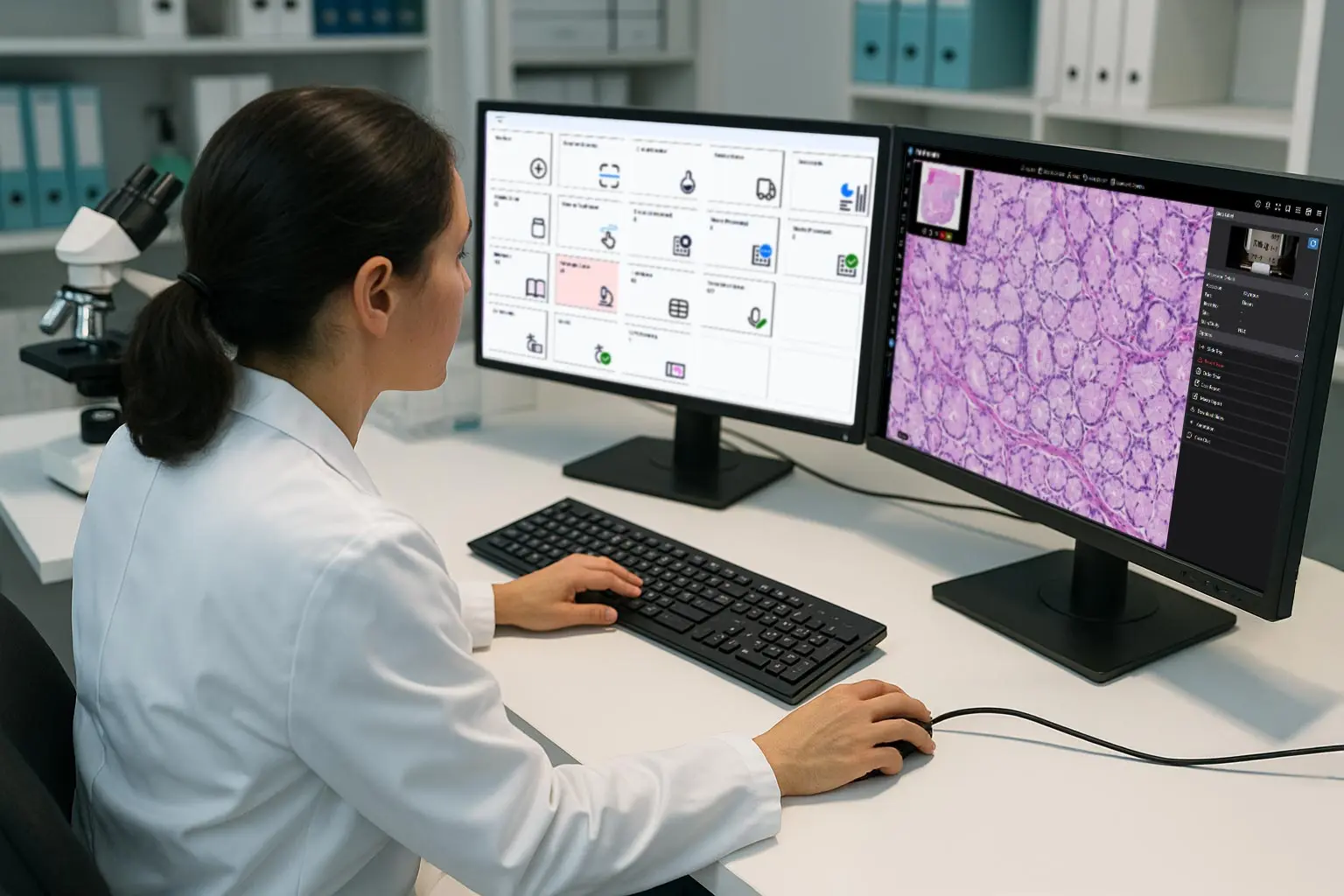

LigoLab is gearing up for one of the most important events in laboratory medicine: this year’s Executive War College on Diagnostics, Clinical Laboratory, and Pathology Management. As a proud Benefactor Sponsor, LigoLab will join more than 1,000 laboratory leaders, innovators, and decision-makers in New Orleans for four days (April 27-30) of collaboration, education, and forward-looking insights into the future of clinical labs and pathology.
This year’s event arrives at a pivotal moment for the industry, as medical laboratories face increasing pressure from multiple serious challenges while still being expected to deliver faster, more accurate results. At EWC, LigoLab will highlight its modern laboratory information system (LIS) software solutions while hosting two informative sessions:
- Suren Avunjian, LigoLab CEO: From System of Record to System of Action: The Next Evolution of LIS (April 29, 8:30 AM, Strand 12) - Focused on how modern LIS platforms are evolving to actively orchestrate workflows, reduce manual work, and use AI-driven automation to improve turnaround time, quality, and financial performance.
- Digital Pathology Forum Sponsor Spotlight (April 30, 9:30 AM) - Presented with PathPresenter, covering seamless IMS-LIS integration to support digital pathology workflows, collaboration, and operational efficiency.
For more details on this year’s Executive War College agenda and the inaugural Digital Pathology Forum, explore the links below:
To experience LigoLab’s advanced LIS platform in action and gain a deeper understanding of frictionless IMS-LIS integration, be sure to schedule time in advance with a LigoLab product expert ahead of the conference.
BOOK MEETING
An AI Strategy to Power the Future of Laboratory Operations
LigoLab has launched a new webpage showcasing its forward-looking AI strategy and its commitment to helping laboratory partners transition from reactive clinical and pathology workflows to autonomous, data-driven performance.
Looking toward 2026 and beyond, LigoLab’s roadmap expands the role of AI agents as embedded digital labor throughout the LIS ecosystem. Building on existing capabilities in accessioning, workflow automation, and decision support, upcoming enhancements include:
- Automated coding & billing optimization
- Predictive denial management
- Natural language analytics
- Advanced quality assurance
These innovations are designed to move laboratories beyond static, rules-based processes toward intelligent, self-optimizing operations, where the LIS continuously learns from data, anticipates challenges, and supports real-time decisions.
The long-term vision: a fully integrated, AI-powered informatics platform that enables scalable growth, strengthens financial performance, and empowers laboratories to deliver faster, more accurate, and more efficient patient care.
VIEW STRATEGY
Choosing the Best LIS Architecture: Why Hybrid Outperforms Thin Web Models
As laboratories continue modernizing their technology infrastructure, many are turning to web-based laboratory information systems in search of greater accessibility, easier deployment, and simplified updates. However, not all web-based LIS software platforms are created equal. A critical distinction has emerged between pure thin web models and hybrid enterprise architectures, an architectural decision that can significantly impact performance, scalability, and long-term success in today’s high-demand laboratory environments.
While thin-client LIS systems prioritize browser-based simplicity, they often struggle with the weight of complex laboratory workflows, large datasets, and rule-intensive processes. In contrast, hybrid enterprise LIS system architectures combine the flexibility of web access with the performance, stability, and control required for high-volume operations.
By enabling server-side processing, persistent session management, and efficient handling of complex workflows, LigoLab is helping its customers overcome the limitations of traditional web-based LIS systems and build a scalable, future-ready informatics foundation.
SEE HOW